-
E-mail
406909520@qq.com
-
Phone
17312275363
-
Address
Mingfa Science and Technology Innovation Headquarters Base, No. 5 Pudong North Road, Pukou District, Nanjing City
Nanjing Weixin Space Information Technology Co., Ltd
Bottom material sampler -2025 sold to Hangzhou/Shanghai/Guangzhou and other places
Date: 2025-11-21Read: 0
Bottom sediment samplerIt is a specialized tool used to collect sediment (sediment) samples from the bottom of water bodies, and its working principle is mainly based onMechanical grasping, gravity/pressure drive or vibration assistanceBy breaking the adsorption force between the sediment and the sampler, the sediment sample at a specific depth can be completely extracted. Different types of samplers have slightly different working principles due to differences in application scenarios (such as oceans, lakes, rivers) and accuracy requirements. The following are the core principles of common types:
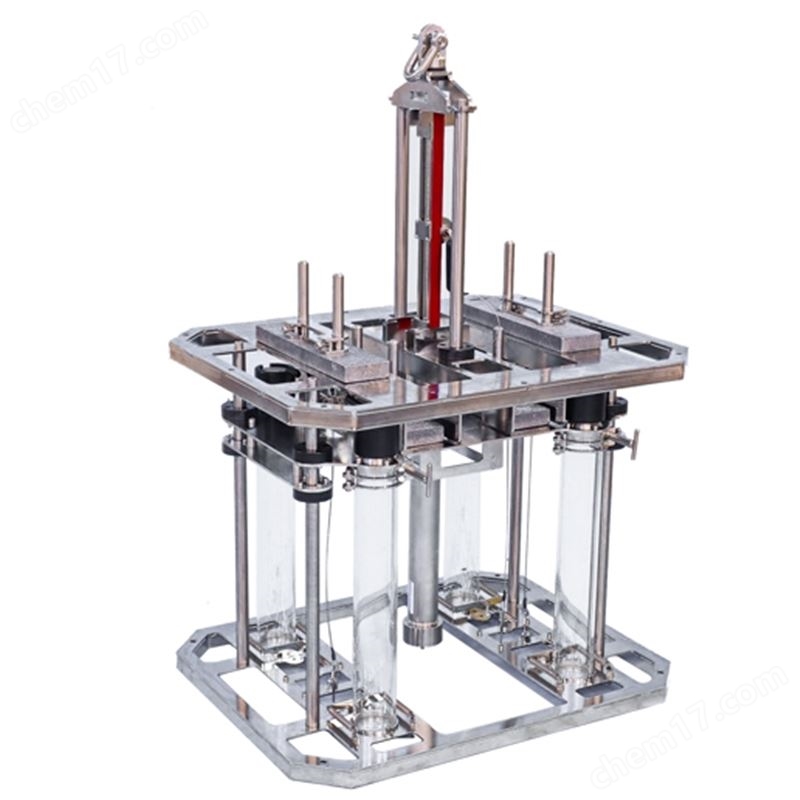
1Grab bucket bottom material sampler: gravity closure+mechanical locking
This is a classic and widely used type (such as Peterson grab, box grab), suitable for medium hard substrates (mud, clay).
structureComposed of two symmetrical semi-circular/square jaw plates (similar to "shells") connected by a pivot, the inner side of the jaw plates is often lined with rubber or metal teeth to enhance gripping force; There is a counterweight at the top to provide initial gravity, and some have triggering mechanisms (such as rope breakage or impact triggering).
working process:
The sampler is lowered to the bottom of the water through a cable, and the counterweight is used to naturally open the jaw plate (or tightly adhere to the bottom due to its own weight);
When the sampler comes into contact with the substrate and is subjected to a certain impact force (or the buckle is triggered by manually tightening the cable), the jaw plate closes and grabs the substrate like a "clamp";
When lifting the cable, the gravity or mechanical lock of the jaw plate remains closed to prevent the sample from falling off, ultimately bringing the deep sediment sample back to the surface.
keyRelying on gravity driven closure, the integrity of grasping soft mud or loose substrates is poor (prone to sample leakage).
IIColumn sampler (piston/gravity): continuous coring+disturbance prevention
Used for obtainingUndisturbed vertical cross-section sediment sample(such as studying the age of sedimentary layers and the vertical distribution of pollutants), commonly used in marine geology and lake sedimentation research.
1. Gravity column sampler
structureA rigid metal tube (sampling tube, usually 5-10cm in diameter and 1-6m in length) with cutting teeth at the bottom; There is a heavy hammer at the top (providing downward force), and some parts have release devices.
principleRelying on the kinetic energy of the heavy hammer to move the sampling tubePress into the substrateBy utilizing the hardness of the pipe wall to cut off the connection between the substrate and surrounding sediments, a continuous columnar core sample can be obtained.
limitationWithout disturbance prevention design, it is easy for the sample inside the tube to compress or mix with the upper layer of water during downward flushing, making it suitable for harder substrates.
2. Piston column sampler (Walker Corer)
structureAdd on to the gravity sampling tubePiston system——There is a movable piston inside the sampling tube, which is connected to the ground control end through a cable; The bottom of the sampling tube also has cutting teeth.
principle:
Before lowering, the piston is fixed at the top of the sampling tube (close to the tube mouth);
When the sampling tube comes into contact with the substrate, the ground end relaxes the piston cable, and the piston sinks along with the sampling tube due to gravityNegative pressure is formed between the piston and the pipe wallIt is equivalent to "sucking" the sample inside the tube to avoid water flow entering the tube and disturbing the sample during downward flushing;
The heavy hammer continues to press down, further pressing the sampling tube into the substrate, while the piston remains at the top of the sample to ensure that the obtained core sample is intact and not compressed.
advantageBeing able to maintain the vertical structure and original state of the sample to a large extent is a core tool for studying sedimentary environments.
IIIVibration based bottom sediment sampler: high-frequency vibration for breaking adsorption
target, aim at, address, focus on, in response toSoft mud, silt, and other easily adsorbable substratesOrdinary grab buckets are difficult to grasp and prone to sample leakage. Vibration is used to break the "vacuum adsorption force" or friction between the substrate and the sampler.
structureBased on grab bucket or cylindrical sampling tube, integratedVibration Motor(or hydraulic vibration device), the vibration frequency is usually several hundred to several thousand hertz.
principle:
After the sampler is lowered to the substrate, the vibration device is activated, and high-frequency vibration causes the sampler to vibrate with the substrateSudden decrease in static friction/adsorption force;
For grab bucket type: vibration assisted jaw plate is more tightly embedded in the substrate to reduce sample leakage; For cylindrical sampling tubes: vibration helps the tube body to press into the soft mud more easily, while avoiding sample adhesion to the tube wall;
When lifting, vibration can still prevent the sample from remaining at the bottom of the water due to excessive adsorption force.
applicationAccurate sampling of marine soft mud areas and eutrophic silt areas in lakes.
4Drilling type bottom sediment sampler: rotary cutting+depth control
forDeep sediment samplingThe underwater version, similar to a land drilling rig, needs to be equipped with a platform (such as a scientific research ship drilling rig or an underwater robot ROV).
principle: ThroughRotating drill bit(with cutting teeth) crushing hard substrates (such as gravel, weathered rock layers), while using drill rods to transport the crushed samples to the ground; By controlling the drilling pressure and speed, precise sampling at different depths can be achieved.
featureThe sampling depth is large, but the equipment is complex and costly, often used for geological exploration or special scientific research needs.
5Other special types
Multi tube samplerMultiple columnar core samples (such as 6 or 12 tubes) can be collected simultaneously in one deployment, improving sampling efficiency and suitable for large-scale area surveys;
Self return samplerNo need for continuous cable connection, it automatically triggers sampling and floats up after reaching the bottom of the water (such as deep-sea lander), used for sampling in unmanned areas or environments (such as deep-sea hydrothermal areas).
Summary: Core Logic
The essence of all sediment samplers isOvercoming the cohesive force of the substrate, the bonding force with surrounding sediments, and the buoyancy/resistance of the water bodySeparate the target substrate and remove it completely. The choice of sampler depends on the type of substrate (soft/hard), the desired sample shape (block/column), the sampling depth, and the research purpose (such as whether an undisturbed profile is required).