-
E-mail
406909520@qq.com
-
Phone
17312275363
-
Address
Mingfa Science and Technology Innovation Headquarters Base, No. 5 Pudong North Road, Pukou District, Nanjing City
Nanjing Weixin Space Information Technology Co., Ltd
【 2025 Instrument Science Popularization 】 Application of Wireless Ground Penetrating Radar in Geological Exploration
Date: 2025-11-24Read: 0

Wireless ground penetrating radar is a non-destructive testing technology widely used in the field of geological exploration. It detects underground materials by sending high-frequency electromagnetic waves and analyzes underground structures based on reflected echoes. It has gradually become an important tool in geological exploration, especially in the exploration of soil, groundwater, mineral deposits, and infrastructure, demonstrating its advantages.
First,Wireless Ground Penetrating RadarIt has high resolution and deep detection capability, which can effectively identify the details of underground structures. Electromagnetic waves emitted can penetrate the surface and image different underground media. The propagation speed and reflection characteristics of radar waves are related to the electromagnetic properties of underground materials, so different underground materials will produce different reflected waves. After receiving these reflected waves, they can be analyzed through signal processing techniques to generate images or data of underground structures. Compared to traditional drilling techniques, real-time and efficient exploration can be carried out without damaging the underground environment, greatly improving the efficiency and safety of exploration.
Secondly, wireless characteristics give it significant advantages in certain specific environments. Compared with traditional wired ground penetrating radar, it avoids the spatial limitations and mobility inconvenience caused by cable connections. Wireless devices are usually compact in size and easy to carry, especially suitable for exploration work in complex terrains and remote areas. For example, in mountainous areas, forests, or coastal areas where it is inconvenient to lay cables, operations can be carried out more flexibly. In addition, with the development of wireless technology, its operation has become more intelligent and convenient. It can remotely control devices through wireless connections, monitor exploration data in real time, and improve the accuracy and efficiency of exploration.
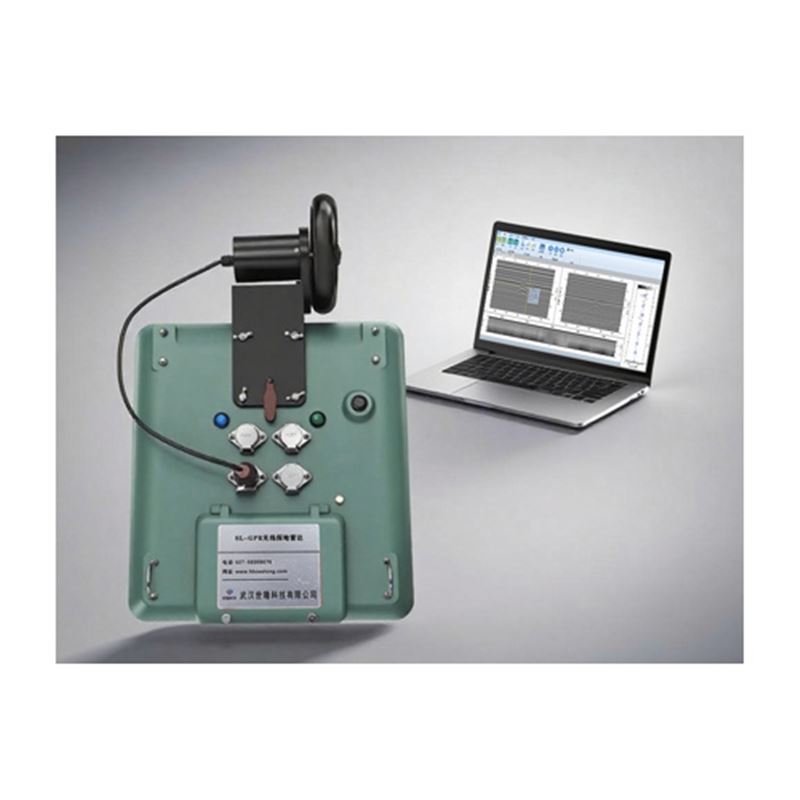
In geological exploration, wireless ground penetrating radar has a wide range of application scenarios. Firstly, it plays an important role in mineral resource exploration. It can be used to detect the depth, distribution, and mining conditions of mineral deposits, helping explorers understand the specific situation of underground mineral resources. For example, in the exploration process of mineral deposits such as oil, natural gas, and metal mines, detailed underground structural maps can be provided to explorers, thereby improving the accuracy of mineral resource exploration. Secondly, it can also be used for hydrological exploration, especially in groundwater resource surveys. It can determine the storage capacity and flow direction of water sources by analyzing the distribution of groundwater layers, providing data support for water resource management and development.
In addition to resource exploration, it is also widely used in infrastructure construction. In the process of urban construction, road construction, and bridge construction, engineers can be assisted in detecting the location of underground pipelines, cables, and other concealed facilities to avoid accidental damage during construction. In addition, it can also be used for post earthquake exploration to quickly detect changes in underground structures and evaluate the stability and safety of post disaster sites.
In short, wireless ground penetrating radar, as an advanced geological exploration technology, is widely used in mineral resource exploration, groundwater resource investigation, infrastructure construction and other fields due to its high efficiency, non-destructive and convenient characteristics. With the continuous advancement of technology, it will play a more important role in geological exploration, especially in applications in complex environments and high-risk areas, providing more accurate data support to facilitate the efficient development of geological exploration work.