-
E-mail
lina-he@zolix.com.cn
-
Phone
13810146393
-
Address
Feihong Road, Nanhu Avenue, Liangxi District, Wuxi City, Jiangsu Province
Jiangsu Shuangli Hepu Technology Co., Ltd
Say goodbye to decision-making difficulties! Principle+Performance Comparison+Hyperspectral Camera Manufacturer Recommendation
Date: 2025-12-15Read: 2
1、 Principles of hyperspectral imaging
The computer equipped with an image acquisition card for the light source camera (imaging spectrometer+CCD) is a hardware component of hyperspectral imaging technology, with a spectral coverage range of 200-400nm, 400-1000nm, 900-1700nm, and 1000-2500nm. The main components of a spectral camera include a collimating lens, a grating spectrometer, a focusing lens, and an array CCD.
The scanning process is when the CCD detector performs a horizontal scan (x) in the vertical direction of the optical focal plane. When the horizontal parallel light is vertically incident on the input grating, a grating spectrum is formed. This is the data obtained by the image element on the CCD through the hyperspectral spectrometer. The pixels in the horizontal x-direction are the scanned image elements, and the overall idea is the information corresponding to each image element. Before the detection system is transported, the detectors are arranged to complete longitudinal scanning (y). The comprehensive scanning information can obtain the three-dimensional hyperspectral data of the object.
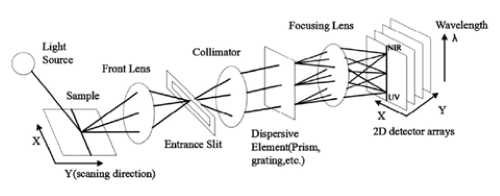
Push broom hyperspectral imaging system
2、 How to choose a hyperspectral camera?
1. Clarify application scenarios and requirements
| Application field | Recommended spectral range |
Key parameter requirements |
|---|---|---|
Agriculture/vegetation monitoring |
400-1700nm (visible light+near-infrared) |
Resolution of 3.5-5nm, high signal-to-noise ratio |
geological exploration |
1000-2400nm (shortwave infrared) |
Resolution ≥ 2.5nm, number of channels ≥ 448 |
food safety |
400-1000nm |
High precision<5nm, portable and easy to use |
Research field |
Full band (400-2500nm) |
Resolution<1nm, high stability |
2. Core parameter selection guide
·Spectral range: Depending on the application, for example, agriculture selects 400-1700nm, and mineral identification selects 1000-2500nm
·Spectral resolution: Fine analysis (medical/pharmaceutical):<2.5nm; Conventional monitoring (agricultural/environmental): 3.5-5nm; General application: 5-10nm
·Spatial resolution: affects imaging clarity, depending on lens focal length and working distance
·Signal to Noise Ratio (SNR): The higher, the better, ensuring weak signal detection capability. Dynamic monitoring requires ≥ 500:1
·Data processing capability: software compatibility (ENVI/MATLAB, etc.); Real time preview and processing; Automatic calibration function (spectrum/radiance/reflectance)
·Portability (for portable): Weight:<3kg (convenient for long-term operation); Battery life: Built in battery ≥ 4 hours; Convenient operation (wireless control/touch screen)
3. Selection process
Requirement analysis: Determine application scenarios, budget, and technical requirements
Parameter matching: Select suitable core indicators such as spectral range and resolution
Brand selection: Compare domestic and foreign brands (domestic 150000 to 300000, imported 250000 to 500000)
Field testing: Verify imaging quality, stability, and software experience
After sales evaluation: technical support response time, warranty period, training service
Practical advice:
Due to limited budget, choose domestic products (such as Shuangli Hepu), and pursue stability by choosing imported products. Prioritize selecting source manufacturers who have independently mastered core technologies and avoid assembling products. Examine the software ecosystem and support for secondary development, and assess their impact on long-term usability
3、 Recommended high-quality products from Shuangli Hepu
Jiangsu Shuangli Hepu is a leader in the domestic hyperspectral field, with the core advantages of "accurate parameter calibration, scene adaptation, and high cost-effectiveness". Its product line covers portable, airborne, laboratory and other full scenario applications.
1. Portable hyperspectral series: GaiaField series
The GaiaField (Pro) system is lightweight and flexible, with excellent battery life, intelligence, complete data analysis and processing functions, real-time monitoring, real-time calibration, and real-time output of inversion results. Widely applicable to outdoor and laboratory applications.
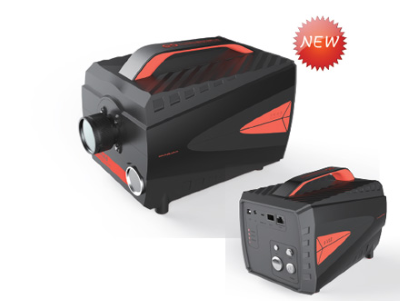
GaiaField Pro Portable Imaging Spectroscopy System
Application Scenario:In military fields such as target detection and recognition, pseudo * and anti pseudo *, ecological environment monitoring fields such as ground object and water telemetry (water quality monitoring), modern precision agriculture (plant phenotype monitoring), criminal investigation, cultural relic protection (authenticity identification), biomedical (cell attribute classification and identification), plastic waste (classification and recognition), industrial sorting of tobacco leaves (quality optimization), chemical gas combustion flames (composition determination and discrimination), geological ore analysis, oil and gas rock fluorescence analysis, biomedical, material performance testing, and other fields.
GaiaField Series Selection Parameters:
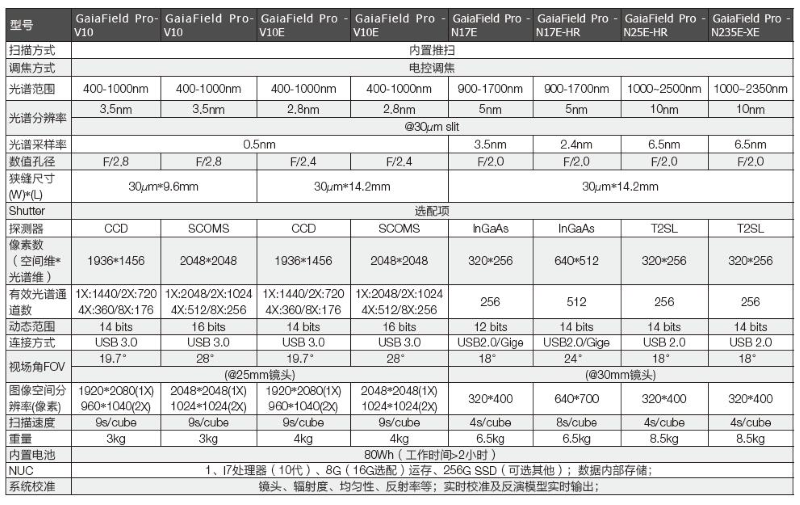
2. Unmanned Aerial Hyperspectral Series: GaiaSky-mini3
The new generation of unmanned aerial vehicle hyperspectral imaging system enables detectors with high acquisition frame rates to output hyperspectral data with high signal-to-noise ratio, high spatial resolution, and high precision under a high light flux and high transmission efficiency front-end optical path. Capable of utilizing built-in push scan imaging during hovering.
Versatile type: GaiaSky-mini3-VN;Spectral range: 400-1000nm
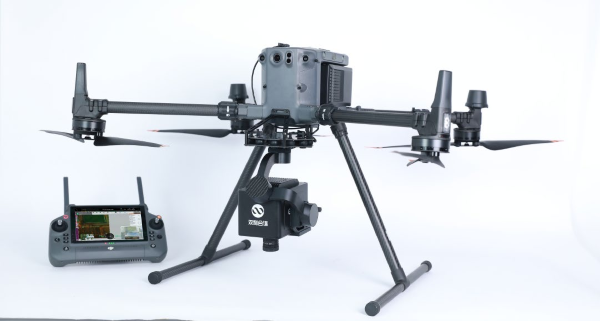
GaiaSky-mini3-VN hyperspectral imaging instrument
model |
Gaiasky-mini 3 -vn |
||
Parameters of airborne hyperspectral camera |
spectral range |
400-1000(nm) |
|
spectral resolution |
5nm(mean) |
||
Number of spatial channels |
1024 |
||
Number of spectral channels |
448(1X),224(2X) |
||
Spectral sampling interval |
2.7nm@224 |
||
Image resolution [1] |
1024×1003 |
||
Imaging lens |
16mm,25mm |
||
Image depth |
12 bit |
||
output interface |
USB3.0 |
||
Working Voltage |
12v |
||
power |
45w |
||
Parameters of airborne hyperspectral imaging system |
Shooting method |
Unmanned aerial vehicle hovering with built-in push scan |
|
Equipped with a platform |
DJI M350 |
||
Installation interface [2] |
Standard Skyport V2 interface |
||
Auxiliary camera |
500W pixel real-time imaging |
||
Lateral field of view angle |
35°@16mm |
23°@25mm |
|
Horizontal field of view width |
63m(@16mm, 高度100m) |
40m(@25mm, 高度100m) |
|
spatial resolution |
0.06m(@16mm, 高度100m) |
0.04m(@25mm, 高度100m) |
|
storage |
240G SSD (512G, 1T optional) |
||
weight |
1.2kg |
||
[1] The image resolution is the resolution of the image captured from a single hover point
[2] Skyport V2 is the communication interface of DJI M350 standard
4、 Summary:
Hyperspectral cameras are the 'golden eyes' of modern precision detection. When choosing, the appropriate spectral range and resolution should be selected according to the application scenario. As a leading domestic brand, Shuangli Hepu provides a full range of products from 250000 to millions, which can meet the needs of different users. It is recommended to conduct on-site testing before purchasing to verify the compatibility between product performance and application scenarios.