-
E-mail
yingtai@sandegroup.com
-
Phone
15274996811
-
Address
101, San De Technology Production Building, 558 Tongzipo West Road, Changsha High tech Development Zone
Hunan Sande Yingtai Environmental Protection Technology Co., Ltd
The key role and operating precautions of sulfur analyzer
Date: 2025-09-16Read: 0
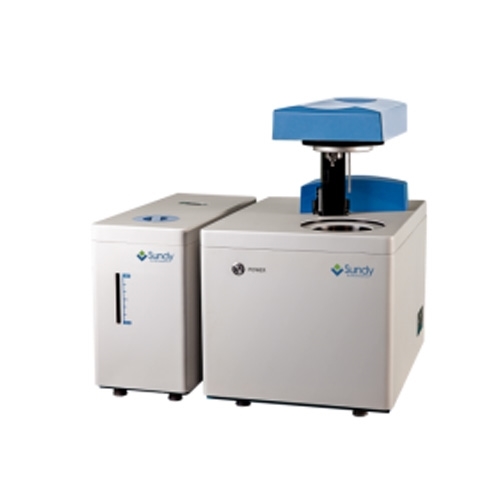
The sulfur analyzer is the core equipment for detecting the total sulfur content (usually 0.1% -5%) of samples in industries such as coal, electricity, and metallurgy. Sulfur not only affects the calorific value of fuel (with a decrease of about 0.2MJ/kg for every 1% increase in sulfur), but also generates sulfur dioxide (SO ₂) and sulfur trioxide (SO 3) during combustion, leading to acid rain, equipment corrosion, and environmental emissions exceeding standards. The standardization of its operation directly affects the accuracy of the test results (error ≤ 0.05%) and environmental compliance.
1、 Key role:
In coal mining,Sulfur analyzerCan screen high sulfur coal (sulfur>3% requires washing and processing) to reduce combustion pollution; In the quality control of coal-fired power plants, real-time monitoring of the sulfur content of the coal entering the furnace (the national standard requires that the sulfur content of power coal should be ≤ 1%), guiding the adjustment of the operating parameters of the desulfurization system; In steel smelting, precise control of coke sulfur content (sulfur>0.7% will reduce steel toughness) is necessary to avoid sulfide inclusions affecting product quality. For example, a certain power plant uses a sulfur analyzer to detect the sulfur content of coal every day, and accurately matches the amount of desulfurizer (limestone) added to the sulfur content, resulting in a stable SO ₂ emission concentration in the flue gas below 35mg/m ³ (better than the national standard).
2、 Precautions for operation:
1. Sample preparation: The coal sample needs to be crushed to a particle size of ≤ 0.2mm (through a 0.2mm standard sieve), mixed evenly, and reduced to about 1g (accurate to 0.0001g) to ensure representativeness; If the sample contains moisture (>5%), it needs to be dried at 105-110 ℃ to a constant weight (to avoid moisture evaporation interfering with sulfur release).
2. Instrument preparation: Check whether the electrolytic cell (core component, used for the electrolysis reaction after sulfur oxidation) is clean (without residual iodine or sulfur dioxide), and the electrolyte (usually potassium iodide+potassium bromide+glacial acetic acid solution) needs to be replaced every 3 days (to avoid changes in ion concentration affecting electrolysis efficiency); The combustion tube (high temperature zone, temperature 1150-1200 ℃) needs to be regularly cleaned of carbon deposits (cleared with a fine steel needle to prevent blockage and incomplete combustion).
3. Parameter setting: Set the combustion furnace temperature (usually 1150 ℃ for high-temperature combustion method and 900-1000 ℃ for low-temperature infrared method), and the recommended heating rate is ≤ 10 ℃/min (to avoid sudden heating causing combustion tube rupture); The ventilation flow rate (oxygen, usually 100-150mL/min) needs to be stable (insufficient flow may result in incomplete entry of sulfur oxides into the electrolytic cell).
4. Operation process: Place the sample into a combustion boat (made of quartz material, high temperature resistant), push it into the high-temperature zone of the combustion tube (the front end needs to be covered with quartz cotton to prevent sample splashing), start the instrument, and observe the electrolysis current (normal>50mA, indicating normal electrolysis reaction); After the test is completed, calibrate the instrument with a standard coal sample (with known sulfur content, such as 0.5%) and compare the measured value with the standard value (if the error is greater than ± 0.05%, adjust the electrolytic cell or temperature parameters).
5. Safety protection: In the high-temperature zone of the combustion furnace (>1000 ℃), direct contact should be avoided (to prevent burns), oxygen cylinders should be fixed upright (pressure ≥ 2MPa), and goggles should be worn during operation (to prevent combustion sparks from splashing).
masterSulfur analyzerThe key points of operation can not only improve the efficiency of sulfur content detection (single sample analysis time ≤ 5 minutes), but also provide accurate data support for environmental emission control and energy quality management.