-
E-mail
yingtai@sandegroup.com
-
Phone
15274996811
-
Address
101, San De Technology Production Building, 558 Tongzipo West Road, Changsha High tech Development Zone
Hunan Sande Yingtai Environmental Protection Technology Co., Ltd
The Golden Rule for Daily Maintenance of Carbon Hydrogen Analyzer
Date: 2025-09-22Read: 0
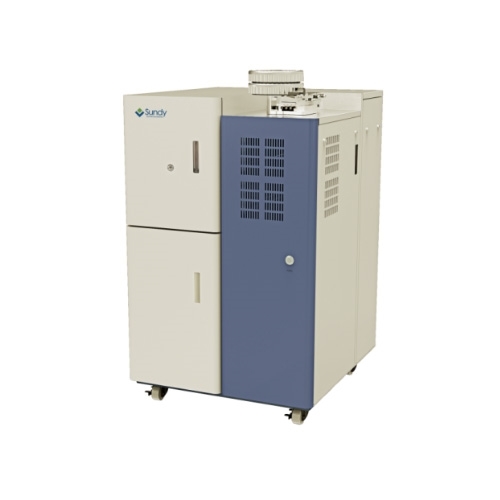
Carbon hydrogen analyzer is a core equipment for determining the content of carbon (C) and hydrogen (H) elements (accounting for 80% -90% of the organic matter composition) in coal, petroleum, catalysts and other samples. Its results directly affect the calculation of fuel calorific value (about 32.8MJ/kg for every 1% carbon and about 120MJ/kg for every 1% hydrogen), combustion efficiency evaluation and chemical raw material evaluation. Its high accuracy (carbon hydrogen determination error ≤± 0.5%) relies on meticulous daily maintenance, following the following "golden rule" can extend equipment life (usually 5-10 years) and ensure stable performance.
1、 Purification system maintenance: the lifeline of gas purity
Carbon hydrogen analyzerBy high-temperature combustion (1000-1200 ℃), carbon in the sample is converted into carbon dioxide (CO ₂) and hydrogen is converted into water (H ₂ O). After separation by adsorbent (CO ₂ is absorbed by alkali asbestos and H ₂ O is absorbed by magnesium perchlorate), the carbon hydrogen content is calculated by weight or electric method. The purification system (including gas drying tubes and absorbents) is key - alkali asbestos (absorbing CO ₂) needs to be replaced every 3 months (failure will result in residual CO ₂ and low carbon value), and magnesium perchlorate (absorbing H ₂ O) needs to be checked monthly for clumping (clumping will reduce water absorption efficiency and high hydrogen value); The gas drying tube (containing color changing silica gel or molecular sieve) needs to be observed for color every week (silica gel changing from blue to pink indicates water absorption saturation and needs to be replaced) to ensure that the carrier gas (usually oxygen, purity ≥ 99.99%) is dry and free of impurities (moisture can interfere with the absorbent reaction).
2、 Maintenance of Combustion Furnace and Combustion Boat: The Core of High Temperature Zone
The combustion furnace (tube furnace or high-frequency furnace) needs to maintain a stable furnace temperature (1000-1200 ℃, deviation ≤± 5 ℃), and the heating elements (such as silicon carbon rods) should be checked every six months for aging (manifested as slow heating or local overheating, which needs to be replaced); After use, the burning boat (made of quartz or corundum material) should be soaked in dilute hydrochloric acid (5% concentration) for 10 minutes (to remove residual carbon and oxides), then rinsed with distilled water until neutral and dried (to avoid residual contamination of the next sample). If there are cracks in the burning boat (which may shatter at high temperatures), it needs to be replaced immediately (to prevent sample leakage).
3、 Calibration of scales and sensors: the cornerstone of accurate data
Carbon hydrogen analyzerThe carbon content is usually calculated by measuring the weight gain of the absorbent (such as the increase in mass after alkali asbestos absorbs CO ₂), and the balance (with an accuracy of 0.1mg) needs to be calibrated daily before use (verified with standard weights, and adjusted for deviations>± 0.2mg) to avoid vibration or airflow interference (the platform should be placed on an anti vibration pad). Sensors (such as infrared detectors used for online monitoring of CO ₂/H ₂ O concentrations) are calibrated quarterly with standard gases (such as a known concentration of CO ₂/N ₂ mixture) (recalibration is required for deviations>± 1%).
4、 Circuit and gas path inspection: guarantee for stable operation
Regularly check whether the power cord is damaged (to avoid the risk of leakage), and whether the grounding wire is reliably connected (to prevent static electricity accumulation); The gas system (oxygen cylinder → pressure reducing valve → flow controller → combustion furnace) needs to be checked monthly for leaks in the pipeline (using soap water to coat the interface, bubbling indicates leakage), and the flow controller (oxygen flow rate usually 120-150mL/min) needs to be kept stable (insufficient flow can cause incomplete combustion and low carbon hydrogen values).
5、 Long term storage and cleaning: protection when idle
If not used for a long time (such as more than one month), empty the residual samples in the combustion furnace (to prevent carbon deposition), close the oxygen cylinder valve and release the pressure in the pipeline; Wipe the inner wall of the instrument with a soft cloth (organic solvents are prohibited), cover the balance with a dust cover, and store the combustion boat in a dryer (to avoid moisture and oxidation).
Following the golden rule of daily maintenance for hydrocarbon analyzers, not only can the measurement error of hydrocarbons be controlled within ± 0.5% (meeting the requirements of the national standard GB/T 476-2008), but it can also ensure the long-term stable operation of the equipment, making it the "precise guardian" of element analysis in the energy and chemical fields.
Last Article: The key role and operating precautions of sulfur analyzer
Next Article: Quantitative analysis of automatic mechanical divider