-
E-mail
yingtai@sandegroup.com
-
Phone
15274996811
-
Address
101, San De Technology Production Building, 558 Tongzipo West Road, Changsha High tech Development Zone
Hunan Sande Yingtai Environmental Protection Technology Co., Ltd
Understand the working principle and application of hydrogen analyzer in one article
Date: 2025-08-25Read: 0
As a specialized equipment for detecting the hydrogen content in substances, hydrogen meters are widely used in fields such as energy, metallurgy, and chemical engineering. Their precise quantitative analysis capabilities provide key data for material characteristic evaluation and process optimization. Understanding its working principle and application scenarios can better leverage the role of equipment in quality control.
Its working principle is based on combustion oxidation thermal conductivity detection technology, and the core process is divided into three stages: sample combustion, gas separation, and signal detection. The sample (solid needs to be crushed to below 80 mesh, liquid needs to be sealed for injection) is fully burned in a high-temperature combustion tube (800-1200 ℃) under the action of oxygen flow, and the hydrogen element is converted into water vapor (H ₂ O). After removing interfering gases through a drying tube, the combustion products enter a chromatography column or condensation collection device to achieve water separation. The separated water vapor is detected by a thermal conductivity detector (TCD), which utilizes the difference in thermal conductivity between hydrogen and other gases (hydrogen has a much higher thermal conductivity than nitrogen and carbon dioxide) to generate an electrical signal proportional to the hydrogen content. After data processing, the percentage content of hydrogen element is directly displayed. The model is equipped with an automatic sampling system and a multi-channel detection module, which can achieve continuous analysis of one sample per minute with a detection accuracy of 0.01%.
The core technical characteristics of a hydrogen analyzer determine its scope of application. The sensitivity of the thermal conductivity cell is a key indicator, and a good instrument can achieve a small detection amount of 0.001mg, meeting the requirements for trace hydrogen detection; The temperature control accuracy needs to reach ± 5 ℃ to ensure complete combustion (especially for high boiling point organic matter samples). To eliminate interference, the equipment usually has built-in deoxygenation devices (such as using copper mesh to remove oxygen at 300 ℃) and carbon capture devices (adsorbing carbon dioxide) to avoid the influence of combustion products of other elements on the detection results. Some models integrate infrared detection modules, which double verify hydrogen content through the infrared absorption characteristics of water vapor, reducing the systematic error of a single method.
Demonstrate its practical value in typical applications across various industries. In the coal industry, this instrument is used to analyze the hydrogen content of coal and is the core parameter for calculating the calorific value and combustion efficiency of coal. The national standard method (GB/T 476-2008) explicitly requires the use of a thermal conductivity hydrogen analyzer for hydrogen content detection. In the field of metallurgy, detecting the hydrogen content in iron ore can prevent the occurrence of hydrogen induced cracks during the smelting process. In chemical production, this instrument can monitor the hydrogen activity of catalysts and guide the adjustment of hydrogenation reaction process parameters. In the field of new energy, it is used to detect the hydrogen content in lithium battery materials to avoid battery safety hazards caused by hydrogen embrittlement.
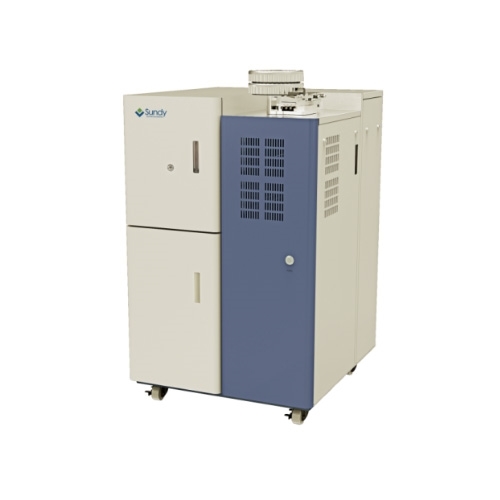
When using a hydrogen analyzer, attention should be paid to sample representativeness (solid samples should be mixed evenly and an average sample of not less than 50g should be taken), instrument calibration (calibrated daily with standard substances such as benzoic acid to ensure an error of ≤ 0.1%), and regular cleaning of the combustion tube (to avoid carbon deposition affecting heat conduction). Mastering these key points can fully leverage the precision of the instrument in material composition analysis, providing reliable data support for quality control in various industries.