-
E-mail
hyydj@hyydj.cn
-
Phone
13012811556
-
Address
Hero Building, 2669 Xietu Road, Xuhui District, Shanghai
Hengyi Precision Instrument Co., Ltd
The importance of Rockwell hardness tester in metal material testing
Date: 2025-11-07Read: 0
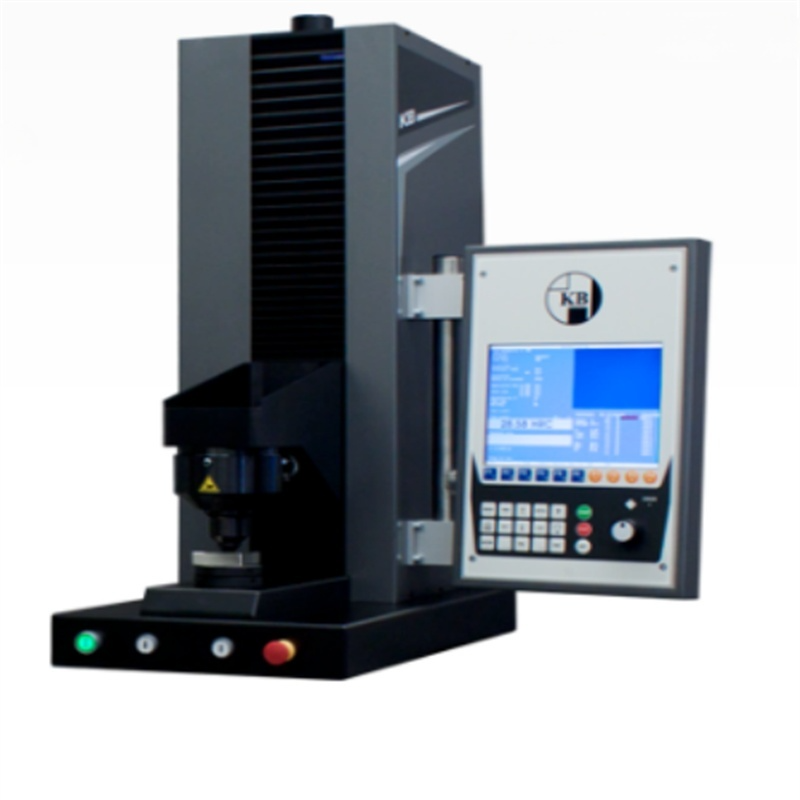
Rockwell hardness tester is a commonly used equipment for measuring the hardness of metal materials. Due to its fast testing, easy operation, and high accuracy, it plays an important role in metal material testing. The Rockwell hardness test evaluates the hardness of a material by measuring the depth of indentation that occurs on its surface after a certain load is applied. Unlike other hardness testing methods, it uses different indenters and loads to provide multiple hardness values, suitable for different types of metal materials. This article will explore in depthRockwell hardness testerThe importance of metal material testing.
1、 Fast measurement speed
Compared to other hardness testing methods such as Vickers hardness and Brinell hardness, the testing speed is faster. During the testing process, the operator only needs to place the sample on the testing platform, apply a load, and wait for the pointer to stabilize before reading the hardness value. This simple operation process makes it a commonly used hardness testing tool in daily production, especially suitable for metal materials that require rapid testing.
2、 Wide applicability
It can also be applied to metal materials of different hardness. By selecting different loads and indenters, hardness can be tested from soft metals such as aluminum alloys and copper alloys to hard metals such as tool steel and alloy steel. Especially in the fields of metal processing and mechanical manufacturing, it can provide effective hardness data for quality control of different materials.
3、 Reliable test results
The Rockwell hardness tester can provide relatively reliable hardness values, especially for surface hardness testing of metal materials. Compared to other hardness testing methods, it has smaller indentation and is less likely to cause excessive damage to the material, making it suitable for hardness testing of large quantities of materials in mass production.
4、 Simplified operation and measurement
Easy to operate, no need for complex microscope measurements or excessive preparation work. This allows operators to complete testing in a shorter period of time and immediately obtain hardness values, which plays an important role in improving production efficiency and quality control.
5、 Suitable for use on production sites
Especially suitable for hardness testing on production sites. It can quickly evaluate the hardness changes of materials during the production process, help detect production problems in a timely manner and make adjustments, ensuring that product quality meets standards. For industries such as metal processing, casting, and forging, Rockwell hardness testing has become a common and necessary inspection method.
6、 Interchangeability with other hardness testing methods
Rockwell hardness has a certain conversion relationship with other hardness testing methods such as Brinell hardness and Vickers hardness. Through these relationships, suitable hardness scales can be selected for measurement according to testing needs, ensuring consistency in hardness test results. This provides convenience for unifying quality standards between different laboratories and production lines.
The Rockwell hardness tester plays an important role in the hardness testing of metal materials. With its advantages of fast measurement speed, easy operation, wide applicability, and reliable test results, it has become the mainstream equipment for hardness testing of metal materials. Whether in metal manufacturing, mechanical processing, quality control, or materials research, important data support is provided to ensure the performance and reliability of materials.