What exactly is Ubbelohde viscosity measuring?
Date: 2025-12-01Read: 0
We have been conducting viscosity testing projects for 16 years and have run to various chemical fiber factories, resin factories, modified material factories across the country. We have also completed numerous laboratory automation projects.But the most common situation is actually very simple and real: many first-time customers who come into contact with us will ask, "What exactly is the Ubbelohde viscosity that you always talk aboutIt's not that they're not professional - it's that the entire industry's way of disseminating knowledge is too 'textbook'. The current situation of 'knowledge not being explained clearly' rather than equipment has become the core obstacle to industry efficiency. Therefore, we plan to interpret the essence of Ubbelohde viscosity in plain language.There is a video version at the end of the articleEveryone measures, reports data, and reads the intrinsic viscosity every day, but no one has ever explained it in an understandable way:
- Why do we have to use Wushi?
- Why can't other viscosity meters replace it?
- Why does a temperature difference of 0.1 ℃ cause data to deviate?
- Why is there a difference of ± 0.03 between two people's measurements for the same sample?
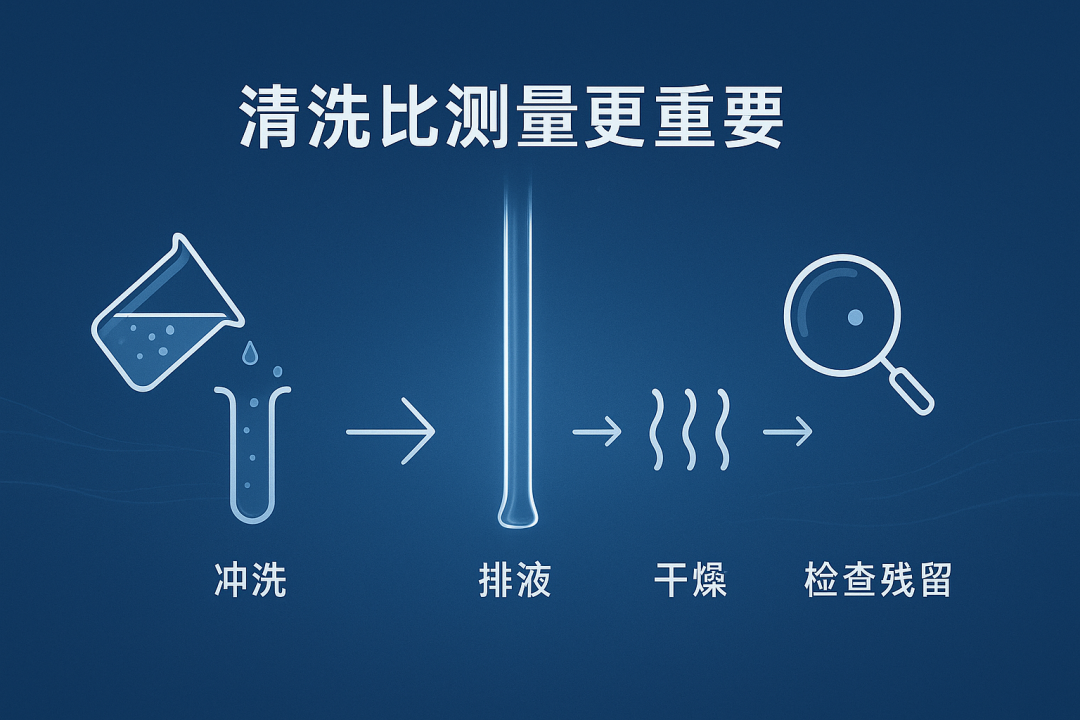
So, the more we communicate with our clients, the more we realize that the real obstacle to industry efficiency is not equipment, but 'no one explains it clearly'.So in this article, we want to use simple language to explain clearly what Ubbelohde viscosity is.You may have heard many definitions of viscosity: "flow resistance", "intermolecular forces", "time difference calculation formula"But these all sound too abstract. To explain the viscosity of Ubud capillary, one sentence is enough:Ubbelohde viscosity does not measure flow rate, but rather the "temper of the material". It tells you whether this batch of materials is stable or reliable.Every factory that produces PET/PA/PAN/PVB is influenced by this indicator every day.Why can't all polymer industries do without Ubbelohde viscosity?Because it is not a 'laboratory data': it is a language system that determines whether raw materials can be sold, whether downstream products can be used, and whether products can be stable.In the chemical fiber industry, it represents molecular weight.In the resin industry, it represents the degree of polymerization.In the modification industry, it reflects changes in the chain segment structure.In the R&D system, it can determine whether the formula is controllable.One sentence: As long as your product structure comes from "ring polymerization/addition polymerization/condensation polymerization", you cannot avoid Ubbelohde viscosity.It is a true industry universal currency.What is the essence of Ubbelohde viscosity?You can understand the entire principle as three metaphors:The liquid flowing inside is like a 'car running on the road'.The same road, different cars (with different materials) come out at different times.③ Time difference=shadow of material 'temper'The longer the polymer chain, the less likely it is to flow, the slower it runs, and the longer the time.Chain broken → running fast → time shortened.This is the essence of intrinsic viscosity, intrinsic viscosity, and relative viscosity.No formula is needed, the logic is:The longer the time, the higher the molecular weightThe shorter the time, the softer the material and the shorter the chainIf you want to judge the quality of materials, just look at this' time temper '.Why is Ubbelohde viscosity so delicate?Measuring Ubbelohde viscosity is simple, but the difficulty in accurately measuring it comes from three aspects:① Extremely sensitive to temperature: ± 0.1 ℃ can significantly bias the resultsUbbelohde viscosity is a "temperature animal". As long as the temperature drifts by 0.1 ℃, there will be significant deviations in the data that are not visible to the naked eye but come at a huge cost.The higher the polymer material, the more sensitive it is.② Cleaning is more important than measurement (90% of errors come from cleaning)If there is any residue in the capillary tube, your data will be biased towards doubting life.So all mature engineering laboratories say:Wushi was not measured, it was washed out③ Operational differences can cause a fluctuation of ± 0.03-0.05 for the same batch of samplesIt is common in the industry for three operators to perform the same task and produce three different numbers.Data stability is a capability, not a device function.How to use Ubbelohde viscosity in a real laboratory?
- Determine whether shipment can be made by measuring the characteristic viscosity
- The pilot test data determines whether it can pass the customer's trial spinning
- The laboratory and production line are almost the same, downstream complaints
In the PA/PVB/modified materials industry:
- Different numbers determine whether the formula judgment is successful
- Molecular weight fluctuations directly affect mechanical properties
- If the viscosity drifts a little, the production capacity and cost of the entire shift will increase
In research and development institutions:
- It is the most critical parameter to determine whether you have become one or not
- It is also the standard data system for papers/projects
You think you are measuring viscosity, but in fact you are measuring whether your material is "controllable".How to truly stabilize Ubbelohde viscosity?The current three underlying principles in the industry are:① Temperature control must be stable at ± 0.01 ℃ (not promotional, industry line)
- You can never eliminate the error of ± 0.02 in intrinsic viscosity
- Different batches never match
- The production line will always blame you for 'inaccurate data'
② Cleaning must be standardized (from "empirical" to "scientific")
- Number of cleaning cycles per round
- Residual pipeline replacement
③ The sample preparation process must be consistent (reducing human variables)
- Sample dissolution temperature
The larger the company, the more important "process standardization" is compared to "buying equipment".How did Zhongwang Technology do this?The pattern we see in various chemical fiber/resin/modified material factories across the country is only one:The challenge of Ubbelohde viscosity is not that it cannot be measured, but that it cannot be measured consistently.In order to address the three major needs of "accuracy+stability+saving people", we have done:
- ± 0.01 ℃ high-precision temperature control system
- Batch constant temperature (multi station)
- Fully automatic cleaning system (eliminating 90% human error)
- Automatic measurement system
- Sample automatic injection+reagent filtration
- Data Full Process Traceability (LIMS/QDS)
We don't want customers to worry about repetition, differences, and team disputes anymore.We hope that viscosity testing can become a 'one click result' thing.Ubbelohde viscosity is not a small parameter in the laboratory, but a "health report" of the material. Only by understanding it can you comprehend the entire material system.If you are also conducting viscosity testing, you can send me your industry and sample system, and I can provide you with a free 'standardized testing suggestion'.