Attention PA Enterprise Manager! The new testing regulations for 2026 are redefining the industry threshold
Date: 2025-12-15Read: 0
In the past two years, if you are in the forefront of the nylon industry, you should have already felt a change:The standards and regulations related to PA have become noticeably busy.
Especially recently, these two items:
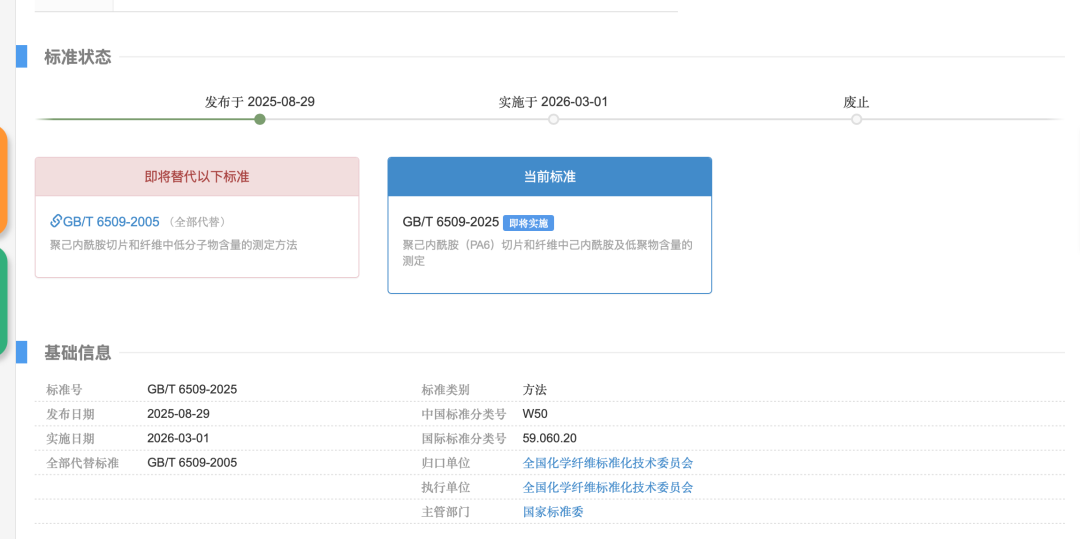
GB/T 6509-2025: Determination of Caprolactam and Oligomer Content in Polycaprolactam (PA6) Slices and Fibers
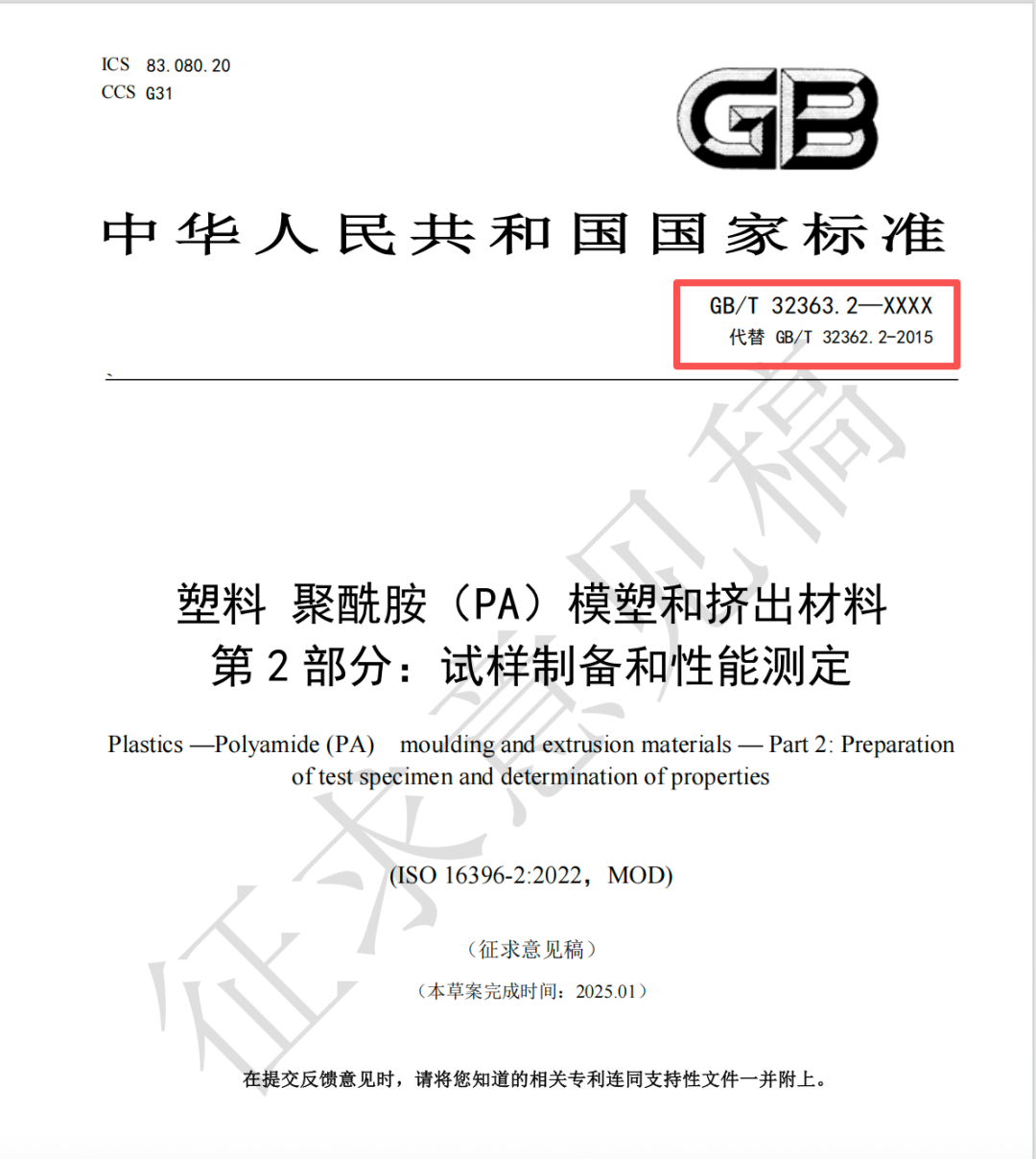
GB/T 32363.2: "Preparation of test specimens and determination of properties for polyamide (PA) molding and extrusion materials - Part 2: PA6 and PA66" is currently being revised.
They are not simply modifying names or adjusting terms, but directly pointing to the fact that 'how to test' is about to change, and 'what to test' is quietly increasing.1、 What have the two PA national standards changed?1. GB/T 6509-2025: Determination of Composition of PA6 Slices and FibersThis standard was released on August 29, 2025 and officially implemented on March 1, 2026, replacing the 2005 version. - The title is clearer: directly mentioning the content of caprolactam and oligomers in PA6 slices and fibers
- Expanded scope of application and more refined terminology
- Add high-performance liquid chromatography (HPLC) for more accurate measurement of component content
- Higher requirements for experimental reports:
○ Key information needs to be recorded○ Provide calculation formula○ Conduct uncertainty assessmentSimple understanding: In the past, it was about "being able to measure roughly", but now it is about "being able to measure accurately, finely, and clearly explain how to calculate".Behind this, the target is very clear: high-quality PA6 spinning, engineering components, high-speed spinning, functional fibers and other applications.2. GB/T 32363.2 (under revision): Test specimens and properties of PA molding/extrusion materialsThe current version is from 2015 and is equivalent to ISO 1874-2:2012. The current direction of revision is to align with new international standards such as ISO 16396-2:2017.The several publicly announced directions of change are roughly as follows: - Use A1 type standard specimen instead of tensile modulus of elasticity
- Clear density testing location: in the middle of the sample
- Adjust the viscosity test conditions
- Added technical annotations and sample substitution rules
- More suitable for modified PA materials such as reinforcement and flame retardancy
It can be simply understood as: standards are being adjusted towards "closer to real PA application scenarios", especially for automotive parts, electronic and electrical components, and modified high-performance PA.2、 Why have PA standards suddenly become so focused recently?From the clients we have encountered, a direct reason is that the application complexity of PA has been significantly increased in the past three to five years by three areas: new energy vehicles, electronic and electrical components, and recycled materials. - New energy vehicles: engine compartment, charging interface, high-voltage wiring harness, structural components, with new requirements for heat resistance, medium resistance, and long-term aging
- Electronic and electrical: miniaturization, high density, flame retardancy, creepage distance, dimensional stability, even slight fluctuations can cause problems
- Recycled materials: Batch fluctuations, residues, oligomer content, and viscosity changes in recycled PA directly affect downstream usage confidence
As downstream becomes increasingly sensitive, upstream has to answer a few questions:1. You said you are PA6, what is the content of your caprolactam and oligomers?2. You said you are a modified PA, how was your spline made, and how were the modulus/density/viscosity measured?Can the data from the buyer's laboratory, seller's laboratory, and third-party laboratory match?At this point, the standard naturally needs to move forward by specifying how to take the sample, how to set the conditions, and how to write the report.
3、 Standing at the time point of 2026, what "hidden tasks" will PA industry laboratories have?We won't draw a conclusion here, just mention a few real-life changes that we can already see.1. HPLC will change from "optional" to "standard"GB/T 6509-2025High performance liquid chromatography methodIt's written in, and it's about the content of caprolactam and oligomers in PA6 slices and fibers. - Spinning factories, differential chemical fiber factories, and engineering material factories, if they want to "speak according to the new national standards", HPLC is basically unable to run away
- It's not just a problem with the equipment, but also:
○ Methods need to be established○ Standard samples need to be managed○ Experimental records must be completeThe uncertainty should be able to be calculatedFor many laboratories that used to focus on "melting fingers and conventional mechanics", this is a significant upgrade.2. The testing conditions related to viscosity and viscosity number will be closely monitoredOne obvious direction in the revision of GB/T 32363.2 is to adjust the viscosity test conditions and clarify the use of standard specimens.In reality, this actually corresponds to: - It is too common for different laboratories to measure viscosity differences for the same brand
- Especially in recycled PA and reinforced/flame-retardant modified PA, this difference will directly affect customer trust
Once the standards are updated, 'Did the laboratory follow the new version?' will become an unavoidable question.4、 How can we guess 2026? Based solely on three very simple observationsAs a company, we dare not make predictions. The following three points are just "personal opinions" summarized based on public information and customer contact experiences:1. The time nodes are indeed stuck around 2026GB/T 6509-2025: Implemented on March 1, 2026GB/T 32363.2: According to the revision schedule, it is highly likely that it will be officially implemented around 2026The complexity of downstream applications is increasing rather than decreasingPA in new energy vehicles is becoming more and more commonly used, and its location is becoming increasingly "critical", making it more sensitive to data stabilityThe size, safety, and reliability requirements for PA components in electronic and electrical systems are all increasingRegenerated PA wants to enter higher value applications, but it cannot avoid stricter testing and traceabilityThe laboratory we have come into contact with is actively "tutoring"A customer asked us how the Ubbelohde/intrinsic viscosity aligns with the new standardA customer is discussing whether to include PA solution viscosity and HPLC in daily quality inspectionSome clients are already reorganizing their internal testing procedures and preparing to rewrite them according to the new standardsSo, we can only say very cautiously:For PA companies, 2026 is likely not a "sudden outbreak year", but a "year where testing and quality systems must keep up".5、 If you are a PA company or laboratory manager, you can think of three things in advanceThis section is summarized from the common questions asked by frontline customers and is for reference only:Do we need to run the method and equipment first? - HPLC: Is there a ready-made method? Are the personnel familiar with each other?
- Solution viscosity/intrinsic viscosity: Are the conditions, formula, and operation aligned with the new standards?
- Can the data match between different laboratories internally?
2. Should the internal inspection procedures be updated synchronously? - Should the project settings for incoming inspection and factory inspection be adjusted according to the new standards?
- Should uncertainty, sample information, etc. be added to the report format and retention content?
Is the laboratory's' production capacity 'and' automation level 'sufficient? - With the update of standards, many tests will become finer and more frequent
- Can the original person and process withstand it?
- Is it possible to make some automation improvements in pre-processing, viscosity testing, and data entry?
6、 Who are we? Why do you care about this matter?In a simple sentence:
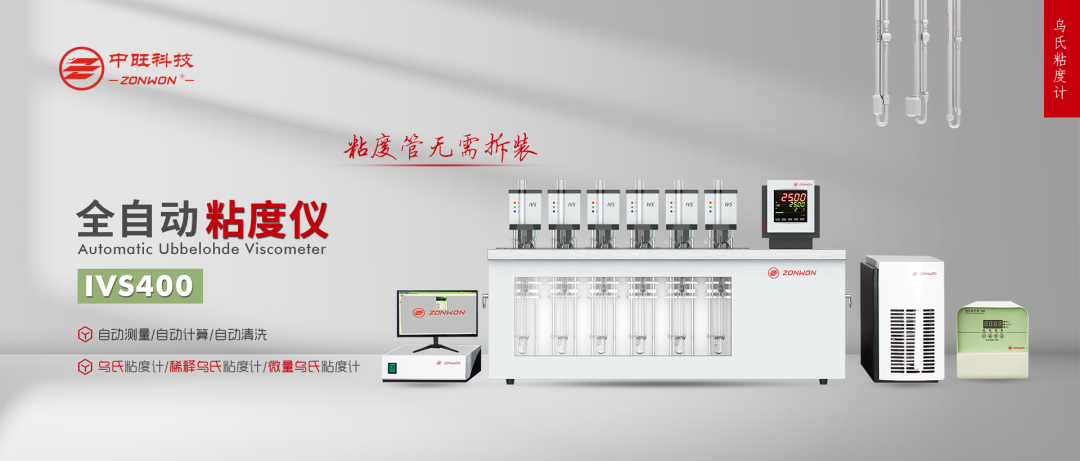
We are Zhongwang Technology, and have been working on viscosity meters and intelligent laboratory testing systems in the materials field for 16 years.In recent years, we have served many nylon, engineering plastics, modified materials, and fiber enterprises, and have increasingly realized that standards are not just a matter of documents, but a matter of daily samples, data, and reports.This article is just a compilation of some standard changes and customer actions that we have seen on the front line, along with a little bit of experience based judgment, to share with you for reference.If you are also preparing for the PA testing system after 2026, feel free to exchange ideas with us at any time - there may not be a standard answer, but from the perspective of an additional laboratory, sometimes you can see a little more risk or think of an opportunity