-
E-mail
277410132@qq.com
-
Phone
15013202531
-
Address
7th Floor, Shangsheng Building, Jiahewanggang, Baiyun District, Guangzhou City
Guangzhou Motiweixi Machinery Equipment Co., Ltd
The "Clean Guardian" and Efficiency Engine of Modern Laboratories for Capacity Bottle Washing Machines
Date: 2025-11-25Read: 1
In precision laboratories, volumetric flasks serve as the core tool for precise measurement, and their cleanliness directly affects the reliability of experimental results. The traditional manual cleaning method is not only time-consuming and labor-intensive, but also prone to problems such as uneven cleaning and residual pollution caused by human factors.The emergence of volumetric flask washing machines has revolutionized the laboratory vessel processing mode through automated and standardized cleaning processes, becoming a key tool to ensure the quality and efficiency of scientific research.
1、 Improve cleaning quality and eliminate pollution risks
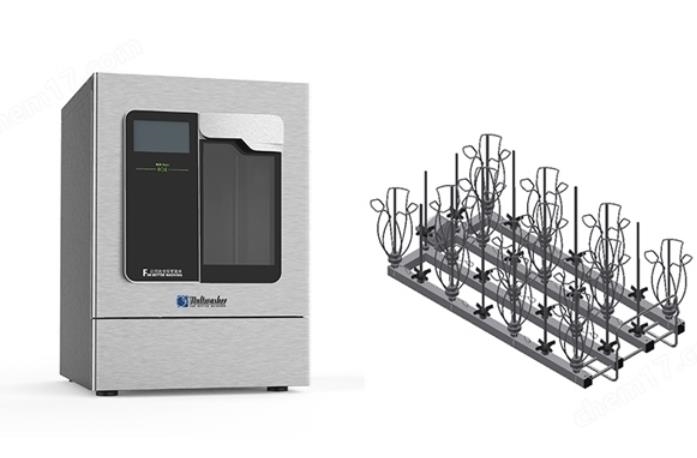
The volumetric flask washing machine achieves deep cleaning of the inner and outer surfaces of vessels through a high-pressure spray system and precise cleaning parameter control. For example, using a 360 ° rotating spray arm and a dedicated basket frame design, the water flow can cover the blind holes and deep cavities of the volumetric flask, effectively removing chemical residues and particulate pollutants. Comparative experiments show that the cleanliness of the volumetric flask after equipment cleaning can reach 98%, much higher than the 85% achieved by manual cleaning, and the conductivity is significantly reduced, proving that it is more effective in eliminating residual pollutants. In addition, the equipment supports high-temperature disinfection and HEPA filtration hot air drying functions, which can eliminate pathogenic microorganisms and avoid secondary pollution, meeting the high standard requirements for sterile environments in pharmaceutical and biological laboratories.
2、 Liberate labor costs and optimize experimental efficiency
Traditional manual cleaning of volumetric flasks takes over an hour, while volumetric flask washing machines can complete the entire process of cleaning, rinsing, and drying hundreds of vessels within 30 minutes. Automated cleaning frees experimenters from repetitive labor and enables them to focus more on core research tasks. At the same time, the equipment optimizes resource consumption through circulating water technology, requiring only 20 liters of pure water for a single cleaning, saving about 75% of water consumption compared to manual cleaning and significantly reducing laboratory operating costs.
3、 Reduce security risks and strengthen compliance management
When handling volumetric flasks contaminated with toxic reagents or pathogenic microorganisms, manual cleaning can easily expose operators to hazardous substances. The equipment adopts a closed cleaning design to avoid direct contact between personnel and pollutants, greatly reducing occupational exposure risks. The equipment is also equipped with soft start frequency conversion technology to alleviate the impact of instantaneous pressure from the water pump on glassware, reducing the damage rate by more than 50% compared to manual cleaning. In addition, the microcomputer system records cleaning parameters in real-time, supports data traceability and export, meets audit requirements of GMP, GLP and other regulations, and provides reliable support for the laboratory quality management system.
4、 Technological Evolution and Industry Application Prospects
Modern bottle washing machines have integrated advanced technologies such as intelligent temperature control, dual circulation pumps, and customized baskets, and can match cleaning programs according to pollutant types. With the trend of laboratory automation, future equipment will further develop towards intelligence and modularity, such as upgrading cleaning programs through USB interfaces to achieve personalized cleaning solution customization. At present, equipment has been widely used in fields such as pharmaceuticals, environmental protection, and food testing, becoming a crucial part of laboratory standardization construction.
Conclusion
The volumetric flask washing machine, empowered by technology, not only solves the traditional problems of cleaning quality, efficiency, and safety, but also promotes the refinement and upgrading of laboratory management. As a "clean cornerstone" in the scientific research ecosystem, it continues to safeguard the accuracy and reliability of scientific exploration.