-
E-mail
277410132@qq.com
-
Phone
15013202531
-
Address
7th Floor, Shangsheng Building, Jiahewanggang, Baiyun District, Guangzhou City
Guangzhou Motiweixi Machinery Equipment Co., Ltd
Guidelines for Using University Laboratory Bottle Washing Machines: Unlocking New Positions for Efficient Cleaning
Date: 2025-11-23Read: 1
In university laboratories, the cleanliness of glassware directly affects the accuracy of experimental results. Traditional manual cleaning is not only time-consuming and labor-intensive, but may also result in experimental failure due to residual impurities or microbial contamination.The bottle washing machine in university laboratories has become a reliable assistant for researchers due to its automated and standardized cleaning capabilities.This article will provide a detailed introduction to the use of bottle washing machines in university laboratories, helping you easily master efficient cleaning techniques.
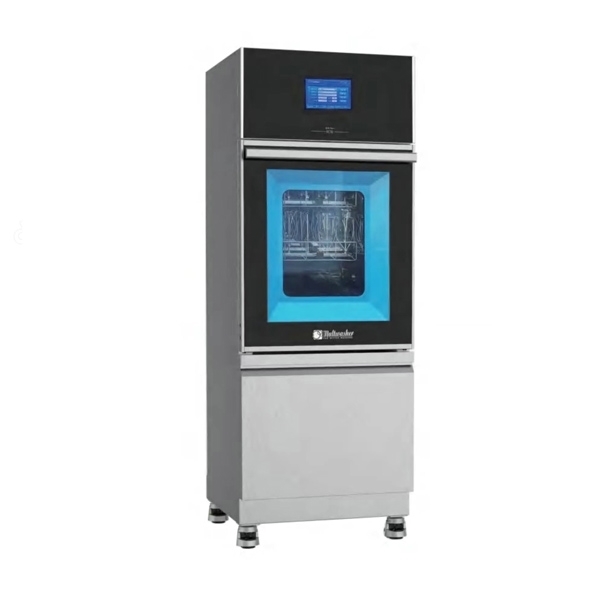
1、 Preparation before use: Details determine success or failure
1. Classification preprocessing: Classify the glassware to be cleaned by type and degree of contamination. For stubborn stains, it is necessary to soak them in advance or pre treat them with neutral detergent to avoid clogging the spray system.
2. Loading specifications: Select a dedicated bracket according to the shape of the vessel, ensuring that the vessel opening is facing downwards and tilted to avoid residual cleaning solution. For example, the test tube should be inverted into the holder hole, while the beaker needs to be tilted 45 ° to increase the water flow impact area.
3. Consumables inspection: Confirm that there is sufficient storage of cleaning agents and pure water, and check whether the spray arm rotates flexibly and whether the filter is clean. Some models require regular replacement of the water softener filter element to prevent scale from affecting the cleaning effect.
2、 Operation process: Complete standardized cleaning in four steps
1. Start the device: Turn on the power switch and select the preset program. Some models support custom parameters that can be adjusted according to the material of the container.
2. Add cleaning agent: Inject an appropriate amount of cleaning agent through a dedicated channel or use an automatic distribution system.
3. Start cleaning: Close the cabin door and press the "Start" button. The equipment will automatically complete pre washing, main washing, rinsing, drying and other processes. During the cleaning process, the spray status can be monitored through a transparent observation window, or real-time temperature and time can be viewed through a display screen.
4. Acceptance of use: After cleaning, open the cabin door after the equipment has cooled to a safe temperature. Check whether there are no water stains or residues on the inner wall of the vessel, and verify the cleanliness using an ATP bioluminescence detector.
3、 Attention: Balancing safety and efficiency
1. Safety protection: Wear laboratory clothes, gloves, and goggles during operation to avoid high-temperature steam or chemical reagent splashing.
2. Regular maintenance: Clean the spray arm and filter weekly, and perform deep descaling every month.
3. Compliance operation: It is strictly prohibited to place non heat-resistant vessels in high-temperature procedures to prevent deformation or release of toxic substances.
Mastering the correct usage of bottle washing machines in university laboratories can not only improve experimental efficiency, but also safeguard the reliability of scientific research data. From pre-processing to acceptance, every step needs to be treated rigorously, making automated cleaning the standard for laboratory standardized management!