-
E-mail
info@felles.cn
- Phone
-
Address
Building 2, No. 38 Debao Road, Waigaoqiao, Shanghai Free Trade Zone, China
Fuguang Precision Instrument (China) Co., Ltd
Environmental guardians under the interweaving of light and shadow: the multidimensional value of aerosol particle optical analyzers
Date: 2025-10-20Read: 0
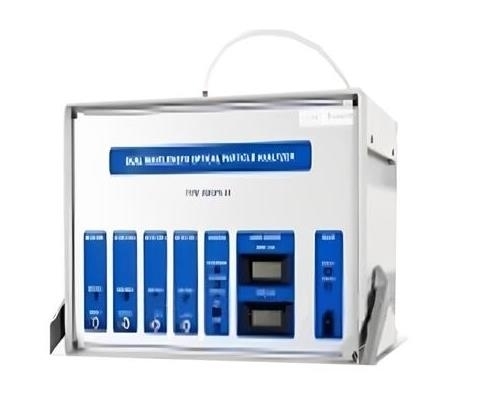
In the current era of frequent air pollution and intensified climate change,The aerosol particle optical analyzer, with its high-precision optical detection technology, has become the "smart eye" in the fields of environmental monitoring, health protection, and industrial governance.This instrument captures the scattering and absorption characteristics of aerosol particles towards light, and real-time analyzes the particle size distribution, concentration, and chemical composition of particles, providing key data support for environmental governance, public health, and scientific research innovation.
1. Environmental Monitoring: The "Scout" for Pollution Traceability and Dynamic Warning
The aerosol particle optical analyzer can synchronously measure the mass concentration of different particle size ranges such as PM1, PM2.5, PM10, etc. through the Mie scattering theory and multi-channel light scattering technology. In the environmental monitoring station, the instrument can track the spatiotemporal distribution of PM2.5 in real time, and combine meteorological data such as wind speed, temperature and humidity to accurately locate pollution sources, providing scientific basis for the government to formulate emission reduction policies.
2. Health protection: a "warning device" for the threat of biological aerosols
In response to the transmission risk of biological aerosols such as viruses and bacteria, some instruments use optical molecular biology combined technology to quickly identify pathogens through specific nucleic acid labeling. For example, a certain bioaerosol detector can complete quantitative analysis of viruses in the air within 15 minutes, with a sensitivity of 0.1 TCID50/m3. In the scenario of hospital infection control, this technology can monitor the microbial concentration in the operating room and ICU in real time. When drug-resistant bacteria exceed the standard, the system automatically triggers the air purification device to block the chain of cross infection.
3. Industrial governance: the "compass" for emission control and process optimization
In high pollution industries such as steel and chemical, aerosol analyzers maintain the cleanliness of the optical chamber and improve equipment reliability through sheath gas systems. For example, after applying this technology in a certain car painting workshop, the spraying process parameters were optimized by analyzing the particle size distribution, resulting in a 42% reduction in VOCs emissions and an annual environmental cost savings of over 2 million yuan.
From urban haze control to factory emission control, from virus transmission warning to climate change research, aerosol particle optical analyzers are using their "optical eyes" to penetrate fog and build a cleaner and safer environmental future for humanity.