-
E-mail
info@felles.cn
- Phone
-
Address
Building 2, No. 38 Debao Road, Waigaoqiao, Shanghai Free Trade Zone, China
Fuguang Precision Instrument (China) Co., Ltd
The Science and Art of Precise Measurement by Aerosol Particle Optical Analyzer
Date: 2025-10-26Read: 0
In the fields of environmental monitoring, industrial production, and scientific research,Aerosol particle optical analyzer has become a crucial high-precision measurement tool.This seemingly complex instrument is actually a product of the combination of science and technology. Its correct use not only affects the accuracy of data, but also directly affects the reliability of scientific research conclusions. Mastering its usage is not only a technique, but also a scientific attitude.
The preparation work before use is the first level to ensure measurement accuracy.The instrument should be placed on a stable and vibration free workbench, away from strong electromagnetic interference sources and direct sunlight exposure. Before starting up, it is necessary to check the stability of the power supply, confirm that the sampling pipeline is clean and unobstructed, and preheat according to the instructions. Just as a precision balance requires zero adjustment, an analyzer also needs baseline calibration, using standard particulate matter or clean air for zero calibration. This step is often overlooked, but it is the cornerstone of data reliability. After preheating is completed, it is also necessary to check the cleanliness of the optical window, as any small contamination may cause distortion of the light scattering signal.
The sampling process is a crucial step in obtaining data.Set appropriate sampling flow rate and sampling time according to measurement requirements, and extend the sampling time appropriately for low concentration aerosols to improve signal-to-noise ratio. When sampling, attention should be paid to the orientation and height of the air inlet to avoid human interference. It is particularly noteworthy that when measuring volatile particulate matter, the influence of temperature on particle evaporation should be considered, and if necessary, a constant temperature device can be installed. Operators should record parameters such as environmental temperature and humidity, atmospheric pressure, etc. These seemingly unrelated data are often crucial for later data analysis. If abnormal fluctuations are found in the data during the sampling process, the measurement should be immediately paused to check the instrument status and sampling environment.
The data processing stage also requires a rigorous scientific attitude.Modern aerosol particle optical analyzers are usually equipped with professional analysis software, but operators need to understand the actual meaning of each parameter. The particle size distribution data should be measured multiple times and the average value should be taken, with the standard deviation marked. For non spherical particles, the influence of shape factor on light scattering should be considered, and data correction should be made if necessary. It is particularly important that all raw data be fully preserved and any data processing steps be traceable, which is a fundamental requirement for scientific integrity. The final generated report should include complete instrument parameter settings, environmental conditions, and data processing methods to enable other researchers to reproduce the experimental results.
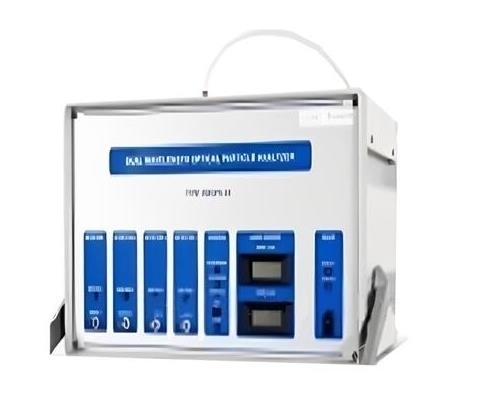
The use of aerosol particle optical analyzer embodies the scientific truth that 'details determine success or failure'. From preparation to sampling and analysis, every step requires the operator to maintain focus and patience. In today's increasingly important environment, accurate aerosol measurement data provides a solid foundation for policy-making and scientific research. Mastering the usage of this instrument is not only a technical improvement, but also a process of cultivating rigorous scientific thinking. When we treat every measurement data with reverence, instruments are no longer cold tools, but become windows to explore the microscopic world.