-
E-mail
info@felles.cn
- Phone
-
Address
Building 2, No. 38 Debao Road, Waigaoqiao, Shanghai Free Trade Zone, China
Fuguang Precision Instrument (China) Co., Ltd
Multi sample thermogravimetric analyzer from sample preparation to data interpretation
Date: 2025-10-17Read: 0
As a core device for studying the thermal stability of materials, multi sample thermogravimetric analyzer (TGA) can simultaneously analyze the mass changes of multiple samples at different temperatures, and is widely used in fields such as polymer materials, pharmaceuticals, catalysts, etc.Its efficiency and accuracy depend on standardized operating procedures. Below is a detailed explanation of the usage method from preparation to data analysis.
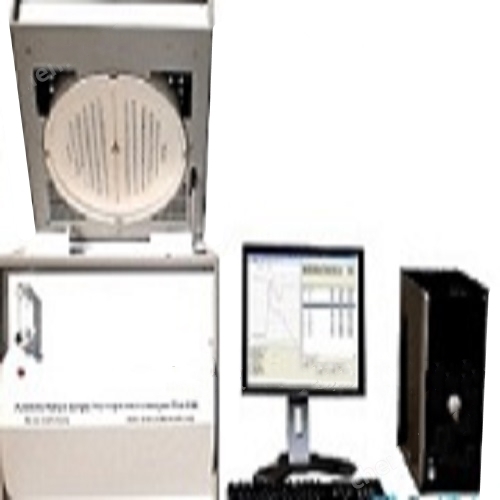
1、 Preparation: Hardware and environmental calibration
Before operation, it is necessary to ensure the stability of the instrument status: check the nitrogen/air atmosphere in the balance room (select protective gas according to the testing requirements, with a flow rate usually set at 20-50 mL/min), confirm that the heating furnace is not contaminated, and preheat it to the target temperature range (common testing range is room temperature~1000 ℃). Sample preparation needs to be strictly controlled: weigh 5-10 mg and place it in alumina or platinum crucibles (avoid using plastic materials). When testing multiple samples, ensure that the mass difference between each crucible is ≤ 0.5 mg (to reduce baseline deviation). If testing volatile substances, an additional sealed crucible cover (leaving small ventilation holes) is required.
2、 Parameter setting: Match material properties
Set key parameters through instrument software:
1. Temperature program: heating rate (commonly 5-20 ℃/min, quick screening selects 10 ℃/min, fine analysis selects 5 ℃/min), target temperature;
2. Atmosphere control: dynamic mode (gas flow rate 50-100 mL/min) or static mode (closed environment);
3. Sample quantity: According to the instrument model (such as 4/6/8-position furnace body), allocate positions reasonably (to avoid cross interference between adjacent samples).
3、 Test execution: Standardized operating procedures
When loading the sample, gently place the crucible onto the sample holder (to avoid collision causing zero drift of the balance), and confirm that all crucible positions are aligned (using positioning fixtures). After starting the program, the instrument automatically performs initial baseline calibration (empty crucible scanning to eliminate background interference), and then heats up according to the set program. During the testing process, it is necessary to observe the stability of the balance reading in real time. If any abnormalities occur, the software can be used to pause and investigate the cause.
4、 Data analysis and maintenance
After the test is completed, the software automatically generates the mass temperature curve (TG curve) and the first derivative curve (DTG curve), focusing on analyzing the characteristic temperature points and weight loss percentage (corresponding to the component content in the material). For example, the first weight loss peak of a polymer is usually the volatilization of small molecule additives, and the second peak is the decomposition of the main chain. Daily maintenance requires regular cleaning of the furnace body (using tweezers to remove residues), calibration of the balance (monthly verification with standard weights), and inspection of gas pipelines (to avoid leaks that may affect the purity of the atmosphere).
Standardized operation of multi sample thermogravimetric analyzer, combined with precise parameter settings and rigorous data interpretation, can efficiently obtain key information on material thermal stability, providing reliable basis for research and quality control.