-
E-mail
1471815660@QQ.COM
-
Phone
18925778253
-
Address
No. 29, Houjie Section, Port Avenue, Houjie Town, Dongguan City, Guangdong Province
Dongguan Baopin Precision Instrument Co., Ltd
Components and functions of melt flow rate machine
Date: 2025-11-06Read: 4
The melt flow rate machine is a very important testing instrument, which provides an effective flow testing tool for the production and research and development of materials such as plastics and rubber. By using reasonable testing methods and data analysis, engineers can better understand the flow properties of materials, optimize production processes, and improve product quality.
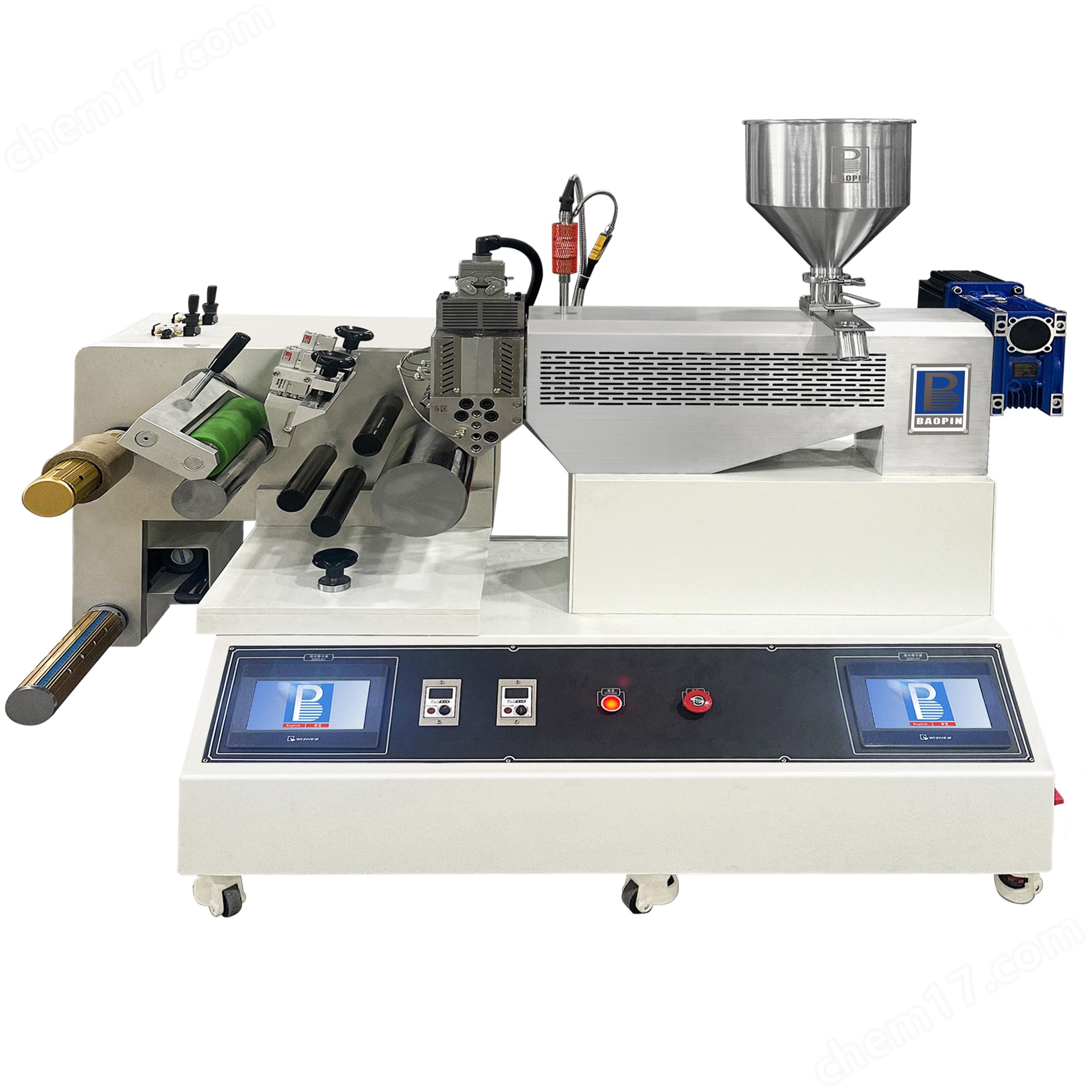
Melt flow rate machinePart of the composition:
1. Heating furnace: used to heat the test sample to the specified temperature, ensuring that the flowability of the sample meets the standard during testing.
2. Feeding cylinder: used to place plastic samples to be tested, usually requiring precise quality control of the samples.
3. Piston and pressurization system: By applying a certain pressure to push the melt through the mold, the flow rate of the melt is measured.
4. Mold and mold holes: The mold has standard fine mouth mold holes, through which the sample melt flows out. The diameter and length of the mold holes are standardized to ensure the consistency of the test results.
5. Temperature control system: Accurately control the temperature of the heating furnace and sample through the temperature control system to ensure the accuracy of the testing temperature.
6. Weighing system: used to accurately measure the mass of molten material passing through the mold per unit time and calculate the flow rate of the molten material.
Working Principle:
1. Sample preparation: First, place plastic pellets or powdered samples into the feeding cylinder. The quality of the sample should meet the standard requirements.
2. Heating: Start the heating system and heat the feeding cylinder and sample to the specified temperature. Usually, the testing temperature is determined based on the characteristics of different plastic materials.
3. Pressurization: After the sample is heated to the set temperature, a certain load is applied through the pressurization system. This load is usually generated by the piston, forcing the sample melt to flow out of the fine hole of the mold.
4. Flow measurement: After the melt flows out, the weighing system starts working to measure the mass of the melt passing through the mold. The melt flow rate is the mass of molten material flowing out per unit time, usually expressed in g/10min.
Testing method for melt flow rate machine:
1. Preparation: Select the sample to be tested, accurately weigh a certain mass of the sample, and place it in the feeding cylinder.
2. Preheating: Start the equipment, set the temperature and load conditions, and wait for the equipment to heat up to the desired temperature.
3. Testing: After the temperature stabilizes, the equipment begins to apply pressure, extrudes the melt through the mold, and records the quality of the melt passing through the mold.
4. Repeated testing: To ensure the accuracy of data, multiple tests are usually required, and the average is taken as the final result.