-
E-mail
sihdgj@qq.com
-
Phone
17091080008
-
Address
Jinyu Dacheng Era 1508, Fengtai District, Beijing
Beijing Sihuan Qihang Technology Co., Ltd
Structural Design and Process Analysis of Desktop Freeze Drying Machine
Date: 2025-11-08Read: 0
Desktop freeze dryer is a device used to dehydrate substances through freezing and vacuum sublimation processes. It is widely used for the preservation and processing of food, medicine, cosmetics, and biological samples. Compared to industrial freeze dryers, which are smaller in size, they are more suitable for laboratory and small-scale production. This article will analyze it from two aspects: structural design and process flow.
1、 Structural Design
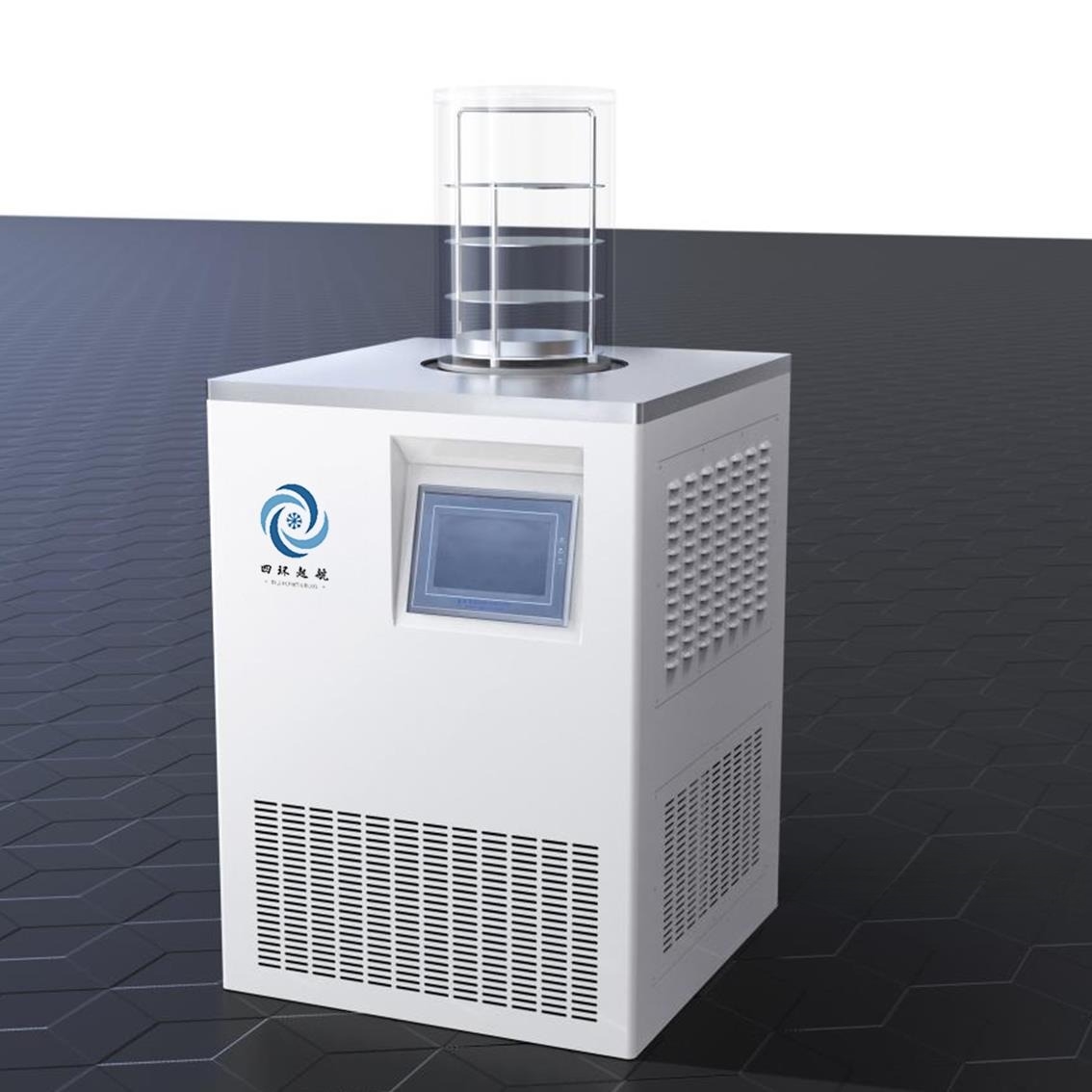
Desktop freeze dryerThe structural design mainly includes the following core components:
1. Freezing system: The freezing system is its key component, mainly composed of a compressor, evaporator, and condenser. The function of a refrigeration system is to freeze substances to a specified temperature in a low-temperature environment. This process ensures that the moisture in the material freezes into ice, providing conditions for subsequent vacuum sublimation.
2. Vacuum system: A vacuum system is a device connected by a vacuum pump and its pipelines, which can reduce the air pressure in the freeze-drying chamber to a state close to vacuum. The low-pressure state helps the moisture in the material to sublime rather than melt and directly change from solid to gas, thereby avoiding the loss of liquid moisture in traditional evaporation processes and ensuring that the nutritional components and active substances of the material are not destroyed.
3. Sublimation chamber (freeze-drying chamber): The sublimation chamber is the core part, which is a closed space equipped with temperature control devices and temperature sensors to control the temperature during the freeze-drying process. The temperature inside the sublimation chamber is relatively low, ensuring that moisture is removed from the substance in the form of sublimation.
4. Heating plate: The heating plate is usually placed at the bottom of the sublimation chamber, and its function is to provide heat to frozen substances, helping them complete the sublimation process under low temperature conditions. By precisely adjusting the temperature of the heating plate, the sublimation speed can be controlled to ensure product quality.
5. Control system: The control system is an important component that includes the control of parameters such as temperature, pressure, and time. Users can set and monitor various parameters of the freeze-drying process through the display screen or touch screen. Most of them use microcomputer control systems to achieve fully automated operations.
2、 Process flow
The core principle of freeze-drying technology is to remove the moisture in the substance through freezing and sublimation, thereby extending the shelf life of the substance while maximizing the retention of its nutritional components and active substances. The process flow of a desktop freeze dryer usually includes the following steps:
1. Pre processing stage: Before freeze-drying, the material needs to undergo certain pre-treatment. Food generally requires cutting, cleaning, soaking, and other steps, while drugs or biological samples may need to be frozen or their pH values adjusted. The main purpose of this stage is to remove unnecessary impurities and improve the freeze-drying effect.
2. Freezing stage: Place the material into the sublimation chamber, start the freezing system to cool the material to the specified temperature, usually -40 ℃ to -80 ℃. At this temperature, the moisture in the material rapidly freezes into ice. The freezing speed should be moderate, as too fast or too slow can affect product quality.
3. Initial sublimation stage: After freezing is completed, start the vacuum pump to reduce the air pressure inside the sublimation chamber. At this point, the frozen water begins to sublime, directly transforming from a solid state to a gaseous state, avoiding the formation of liquid water in the material.
4. Secondary sublimation stage: In order to ensure the removal of moisture from the material, a more detailed vacuum and heating process will be carried out during the secondary sublimation stage. At this point, the temperature of the material will gradually increase to promote the sublimation process. This stage usually takes several hours to several days, depending on the type of material and moisture content.
5. Drying completion and packaging stage: After the freeze-drying process is completed, the system automatically heats up to room temperature and gradually returns to normal pressure. At this point, the dried materials can be taken out for packaging and storage. Freeze dried materials usually have a longer shelf life and their morphological structure remains largely unchanged.
Desktop freeze-drying machines, as small equipment, have the characteristics of simple operation and compact equipment, and are suitable for laboratories and small-scale production. Through rational structural design and precise process flow, it is possible to efficiently remove moisture from materials, retain their nutritional components and activity, and is widely used in fields such as food and medicine. In future research and application, freeze-drying technology is expected to be further optimized, improve production efficiency, and broaden its application scope.