-
E-mail
email@jzpykj.com
-
Phone
18910378570
-
Address
3rd Floor, Building C, No. 6 Chaoqian Road, Changping District, Beijing
Beijing Jiuzhou Pengyue Technology Co., Ltd
The correct use of atmospheric particulate matter monitoring instruments is the key to ensuring the authenticity and reliability of data
Date: 2025-09-23Read: 2
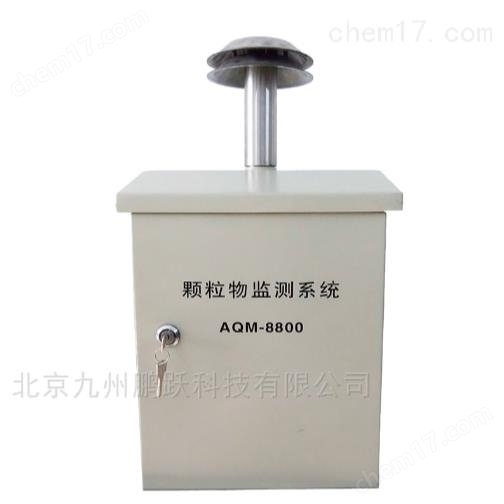
As an environmental monitoring instrument, the atmospheric particulate matter monitoring instrument directly relates its measurement data to pollution warning, scientific research analysis, and policy formulation. However, the accuracy of the instrument is highly dependent on scientific and standardized operation. Mastering the correct usage of atmospheric particulate matter monitoring instruments is the key to ensuring the authenticity and reliability of data.
1、 Site selection and distribution
The location of monitoring points directly affects the representativeness of data. An open and well ventilated area should be chosen, avoiding obstacles or sources of pollution such as walls, trees, chimneys, or air conditioning units. The recommended height of the sampling port from the ground is 1.5-3 meters (for near ground exposure assessment) or according to standard specifications (such as 3-15 meters for urban stations). Avoid strong electromagnetic interference, direct rain or sunlight, and install rain and sun shields if necessary, but do not obstruct airflow.
2、 Instrument calibration
Zero and span calibration must be performed before use. Zero point calibration uses high-efficiency particulate air (HEPA) filters to purify the air and confirm that the reading is close to zero; The span calibration criteria are compared using a standard particle generator with known concentration or a certified calibration source. It is recommended to perform comprehensive calibration every 3-6 months or after instrument maintenance and handling, and record the calibration certificate.
3、 Sampling operation
After turning on the instrument, preheat for 10-30 minutes and wait for the system to stabilize before starting the measurement. Ensure that the sampling inlet is unobstructed and regularly check for spider webs, dust, or insect blockages in the inlet. For instruments using the beta ray method or the micro oscillation balance (TEOM) method, it is necessary to ensure that the paper tape, filter membrane, or oscillation element is sufficient and installed correctly. Attention should be paid to avoiding sensor saturation caused by high concentration dust in laser scattering instruments.
4、 Parameter settings
Set appropriate time resolution based on monitoring purposes (such as 1-minute, 5-minute, 1-hour average). Choose the correct particle cutter (PM2.5 or PM10) to ensure accurate particle size separation. For multi parameter instruments, confirm that auxiliary sensors such as temperature, humidity, and air pressure are working properly, and some instruments require input of local altitude for pressure compensation.
5、 Data reading and recording
When monitoring in real-time, focus on data trends rather than instantaneous fluctuations. Record the measurement time, location, meteorological conditions, instrument model, and calibration status. When abnormal peak values are detected, investigate whether they are caused by temporary sources such as local dust and combustion to avoid misjudging them as regional pollution.
6、 Daily maintenance
Daily inspection of instrument operation status and data transmission; Clean the sampling head, fan, and casing weekly; Replace filters, check desiccants, and clean pipelines every month. When not in use for a long time, remove the filter membrane or paper tape and keep the interior dry.