-
E-mail
info@bjhaman.com
-
Phone
17346546283
-
Address
Room 105, 1st Floor, Building 20, North District, No. 8 Dahui Temple, Haidian District, Beijing
Beijing Harman Electronics Co., Ltd
The steel billet laser rangefinder is based on the principle of laser pulse reflection or phase difference for distance measurement
Date: 2025-10-13Read: 67
The steel billet laser rangefinder is mainly used for real-time monitoring of the size of the steel billet (length, width, thickness, etc.) to ensure that it meets the production process requirements and improve production accuracy and efficiency. The steel billet laser rangefinder is a non-contact measuring device designed for high-temperature, high dust and harsh environments in the steel industry. It is mainly used for real-time and accurate detection of parameters such as steel billet length, thickness, position, etc. It is one of the core equipment for automation control of steel production lines.
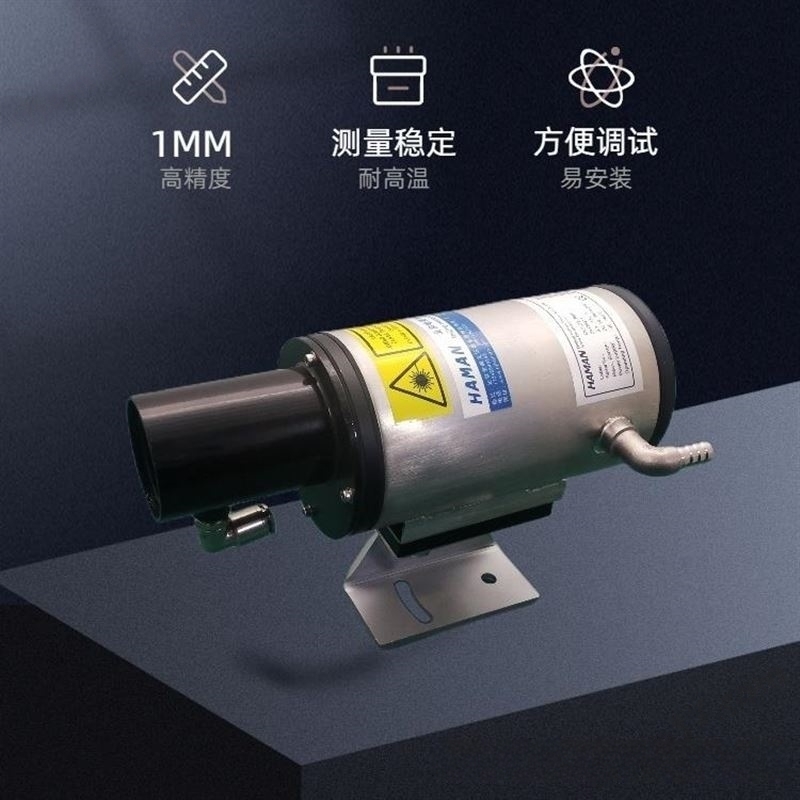
The steel billet laser rangefinder is based on the principle of laser pulse reflection or phase difference for distance measurement. The equipment emits laser pulses to the steel billet, which are reflected by the surface of the billet and captured by the receiver. By measuring the round-trip time or phase difference of the laser, combined with the constant of light speed, the system can accurately calculate the distance between the steel billet and the rangefinder. This technology ensures the accuracy and reliability of measurement results.
Product Features
High precision measurement: using laser pulse reflection or phase difference technology, the measurement accuracy can reach millimeter level, meeting the strict requirements of steel billet size control.
Non contact measurement: does not require direct contact with the steel billet, avoiding damage to high-temperature or fragile surfaces, while reducing manual intervention and errors.
Real time monitoring capability: able to provide real-time feedback on steel billet size data, support dynamic adjustments during the production process, and improve production efficiency and product quality.
Strong anti-interference ability: The laser has good directionality, concentrated energy, and is not easily affected by environmental light or electromagnetic interference, ensuring measurement stability.
Main application scenarios
Hot/Cold Rolling Production: Real time monitoring of steel billet size to provide data support for rolling process adjustment.
Inventory management: Count the size of steel billets, optimize warehouse scheduling and resource allocation.
Quality inspection: Quickly verify whether the steel billet meets national standards and improve product qualification rate.
Heating furnace monitoring: detecting changes in the position of steel billets during the heating process to avoid collisions or positional deviations.