-
E-mail
2212240822@qq.com
-
Phone
18911395947
-
Address
514, Unit 1, Building 2, Xingfu Square, Gu'an County, Langfang City, Hebei Province
Beijing Beiguang Jingyi Instrument Equipment Co., Ltd
Principle and Application of Integrity Tester
Date: 2025-11-21Read: 0
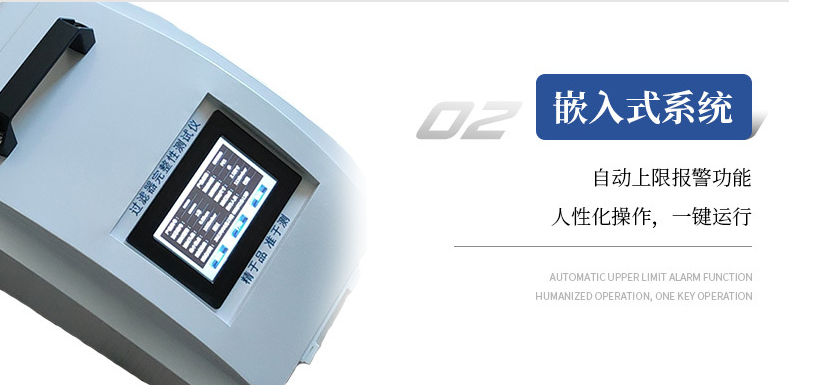
Integrity tester is a key equipment used to test the sealing performance of packaging or filtration systems. Its core principle is to identify leakage defects by monitoring changes in parameters such as pressure and current. According to different application scenarios, it is mainly divided into two categories: packaging integrity testers and filter integrity testers.
working principle
Packaging integrity testing
High voltage discharge method: suitable for packaging containing liquids (such as penicillin bottles, infusion bags). By scanning the surface of the packaging with high-frequency and high-voltage electrodes, if there is a leakage, the current will increase sharply due to the low resistance path. The instrument determines the leakage by detecting the current peak.
Vacuum decay method: Place the sample in a vacuum chamber. If there is a leak, the internal gas will diffuse into the test chamber, causing a decrease in vacuum degree. Quantitative detection is achieved by monitoring the pressure change rate (Pa/s) or total change amount (Δ P) through high-precision sensors.
Pressure decay method: After applying pressure to the packaging, monitor the rate of pressure drop. If the pressure drop is too fast, it indicates the presence of a leak, similar to the principle of detecting a tire leak on a bicycle.
Filter integrity test
Bubble point test: Gradually apply pressure to the wetted filter membrane, and the pressure value at which gas penetrates the maximum pore size (bubble point pressure) reflects the maximum pore size of the filter membrane.
Diffusion flow test: Measure the diffusion flow rate of gas through micropores at a pressure below the bubble point to evaluate the uniformity of the filter membrane.
Water intrusion test: For hydrophobic filter membranes, measure the volume required for water to invade the membrane at a specific pressure to determine its hydrophobicity.
Application field
Pharmaceutical industry: testing the sealing of pharmaceutical packaging such as penicillin bottles, ampoules, and pre filled needles to ensure sterility; Verify the integrity of filters (such as filter cartridges) to prevent contamination.
Food industry: Ensure that food packaging is protected from contamination during transportation and storage, and extend shelf life.
Electronics industry: Testing the sealing effect of moisture-proof and anti-static packaging to avoid product damage.
Cosmetics industry: Ensure packaging sealing and durability to maintain product condition.
technical advantage
High sensitivity: High voltage discharge method can detect defects of 2-5 μ m level, while vacuum attenuation method has a sensitivity of 5 μ m.
Non destructive testing: Most methods (such as vacuum attenuation method, high-voltage discharge method) do not damage the sample and can still be used after testing.
Automation and Intelligence: Fully automated processes reduce human error, and some devices support audit tracking, electronic signatures, and other functions, meeting industry regulatory requirements.
Precautions
Test condition selection: If the bubble point test pressure requires a critical value, excessive pressure may damage the filter membrane.
Sensor accuracy: High precision sensors (such as 0.01min level) should be selected to capture small leaks.
Through the above principles and applications, integrity testers play an irreplaceable role in ensuring product quality, safety, and compliance