-
E-mail
85405976@qq.com
-
Phone
13955096002
-
Address
No. 20 Renhe South Road, Tianchang City
Anhui Tiankang (Group) Co., Ltd
Full analysis of performance characteristics of zirconia (oxygen analyzer)
Date: 2025-08-25Read: 41
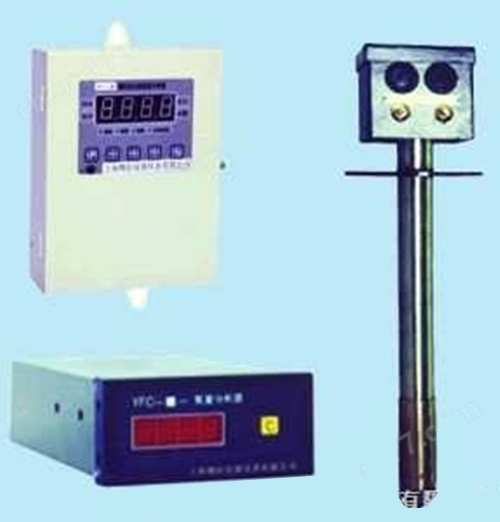
Zirconia (oxygen analyzer) is a core equipment for industrial process control and environmental monitoring, which achieves combustion efficiency optimization and emission control by measuring the oxygen concentration in flue gas. Based on the electrochemical principle of solid-state electrolyte zirconia sensors, modern instruments have achieved a qualitative leap in measurement accuracy, response speed, and environmental adaptability. This article analyzes its core performance characteristics from three dimensions.
1、 Accurate measurement under high temperature conditions: a breakthrough from theory to practice
1. Wide temperature range working ability
Using nanoscale zirconia solid electrolyte (ZrO ₂ · Y ₂ O ∝) and platinum electrode catalytic layer, it can be directly measured at high temperatures of 300-1200 ℃ without the need for cooling devices. The analysis case of blast furnace gas in a certain steel enterprise shows that after continuous operation at 950 ℃ for 6 months, the measurement deviation is always less than 0.2% O ₂, far exceeding the limit of traditional electrochemical sensors at 300 ℃.
2. Thermal shock resistant structural design
The sensor head is made of gradient functional material (FGM), and the coefficient of thermal expansion varies linearly from inside to outside, capable of withstanding instantaneous temperature changes of 800 ℃/min. Experimental results have shown that after 1000 repeated thermal shocks at 600-1000 ℃, the lifespan of the sensor decreases by less than 15%.
3. Adaptive compensation for smoke composition
Built in SO ₂ and NOx cross interference compensation algorithms, by dynamically adjusting the parameters of the Nernst equation, suppress acidic gas interference to within 0.05% O ₂. The application data of a denitrification system in a power plant shows that under the condition of NOx concentration of 500ppm, the deviation between the measured value and the laboratory infrared spectrometer is less than 0.1% O ₂.
2、 Millisecond level response speed: key support for combustion optimization
1. Breakthrough in ion conduction of solid-state electrolytes
By doping 3mol% scandium oxide (Sc ₂ O3), the oxygen ion mobility is improved, and the conductivity of the sensor reaches 0.1S/cm at 800 ℃, which is three times that of traditional yttria stabilized zirconia. Actual testing shows that it only takes 15 seconds from cold start to 90% stable reading, and the response time (T90) is shortened to 80ms.
2. Microfluidic field optimization design
Using 3D printing technology to manufacture honeycomb shaped reference gas channels, the exchange efficiency between reference gas and flue gas is increased by 40%. At a flue gas flow rate of 10m/s, the pressure loss is less than 50Pa, and the response delay is controlled within 20ms.
3. Intelligent transmitter algorithm
Integrating Kalman filtering and adaptive prediction models can eliminate measurement oscillations caused by flow velocity fluctuations. The application case of a petrochemical heating furnace shows that when the burner frequently switches operating conditions, the fluctuation amplitude of the output signal decreases from ± 0.5% O ₂ to ± 0.1% O ₂.
3、 Industrial grade reliability: hardcore verification from laboratory to site
1. Poison prevention and protection system
The sensor surface is coated with a 5 μ m thick fluorocarbon resin film, which can block 99.9% of dust and oil mist. Cooperate with the regular blowback system (0.5MPa compressed air, pulse once every 2 hours), operate continuously for 2 years without blockage under the condition of a dust content of 100g/m ³.
2. Self diagnosis and warning function
By monitoring the internal resistance of the sensor (normal range 1-10k Ω) and the reference battery voltage (stable value ± 1mV), component aging can be alerted 30 days in advance. According to application data from a cement plant, this feature reduces unplanned downtime by 75%.
3. Long life core components
The optimized sensor design has a lifespan of 5 years (traditional products only have 1-2 years), and with modular design, the replacement time has been reduced from 2 hours to 15 minutes. Statistics showing that the global cumulative installed capacity exceeds 500000 units indicate an average time between problems (MTBF) of 80000 hours.
From direct measurement at high temperatures to millisecond level response, zirconia (oxygen analyzer) is redefining industrial oxygen monitoring standards. Its performance breakthrough is not only reflected in hard indicators such as 0.01% O ₂ resolution or 80ms response speed, but also in transforming 'laboratory level accuracy' into 'field level reliability' through material innovation and intelligent algorithms. Selecting equipment with Sc ₂ O ∝ doping, microfluidics optimization, and self diagnostic functions is necessary to achieve precise control under abnormal conditions such as high temperature, high dust, and strong corrosion, providing key data support for energy conservation, emission reduction, and process optimization.