-
E-mail
market@exponentsci.com
-
Phone
13322809603
-
Address
Room 403, Building B, Huicheng Building, No. 602 Guangshan 2nd Road, Tianhe District, Guangzhou City
Aibo Neng (Guangzhou) Science and Technology Co., Ltd
Ultraviolet rays: from skin health to daily applications
Date: 2025-12-05Read: 1
Ultraviolet radiation is the invisible radiation in sunlight. According to wavelength and its biological effects, it can be divided into three main bands: UVA, UVB, and UVC. Although excessive exposure to ultraviolet radiation can cause damage to the skin, moderate exposure also has important value for human health.
Spectral characteristics of ultraviolet radiation and its impact on the skin
1UVA(315-400nm)As long wave ultraviolet radiation, it has strong penetration and can not only reach the dermis layer of the skin, but also easily penetrate ordinary glass. This means that even in indoor window positions, the skin will still be exposed to UVA radiation. After UVA penetrates deep into the dermis, it produces reactive oxygen species and other free radicals that attack and degrade key structural proteins such as collagen and elastin fibers. Long term and repeated exposure to UVA can cause collapse of the dermis layer structure, manifested as deep wrinkles, sagging, and loss of elasticity in the skin.
In the previous issue, we introduced that for UVA protection, we need to pay attention to the PA label on sunscreen products. The higher the PA value, the better the protection effect.
2UVB(280-315nm)As a medium wave ultraviolet, it mainly affects the epidermal layer. When the skin is exposed to excessive UVB, epidermal cells are directly damaged. In response to this injury, the body will initiate an inflammatory response, forming visible red spots on the surface of the skin, known as sunburn, and increasing the risk of skin cancer. The SPF value specifically indicates the level of protection against UVB, and daily use of SPF30 can block about 97% of UVB.
3UVC(200-280nm)Although the energy is strong, the vast majority is absorbed by the atmosphere and does not pose a threat to human health in the natural environment. However, it should be noted that artificial UVC light sources (such as sterilization lamps) should not directly irradiate the human body. Short term exposure can burn the skin and eyes, and strict and standardized use is required.

The positive effects and daily applications of ultraviolet radiation
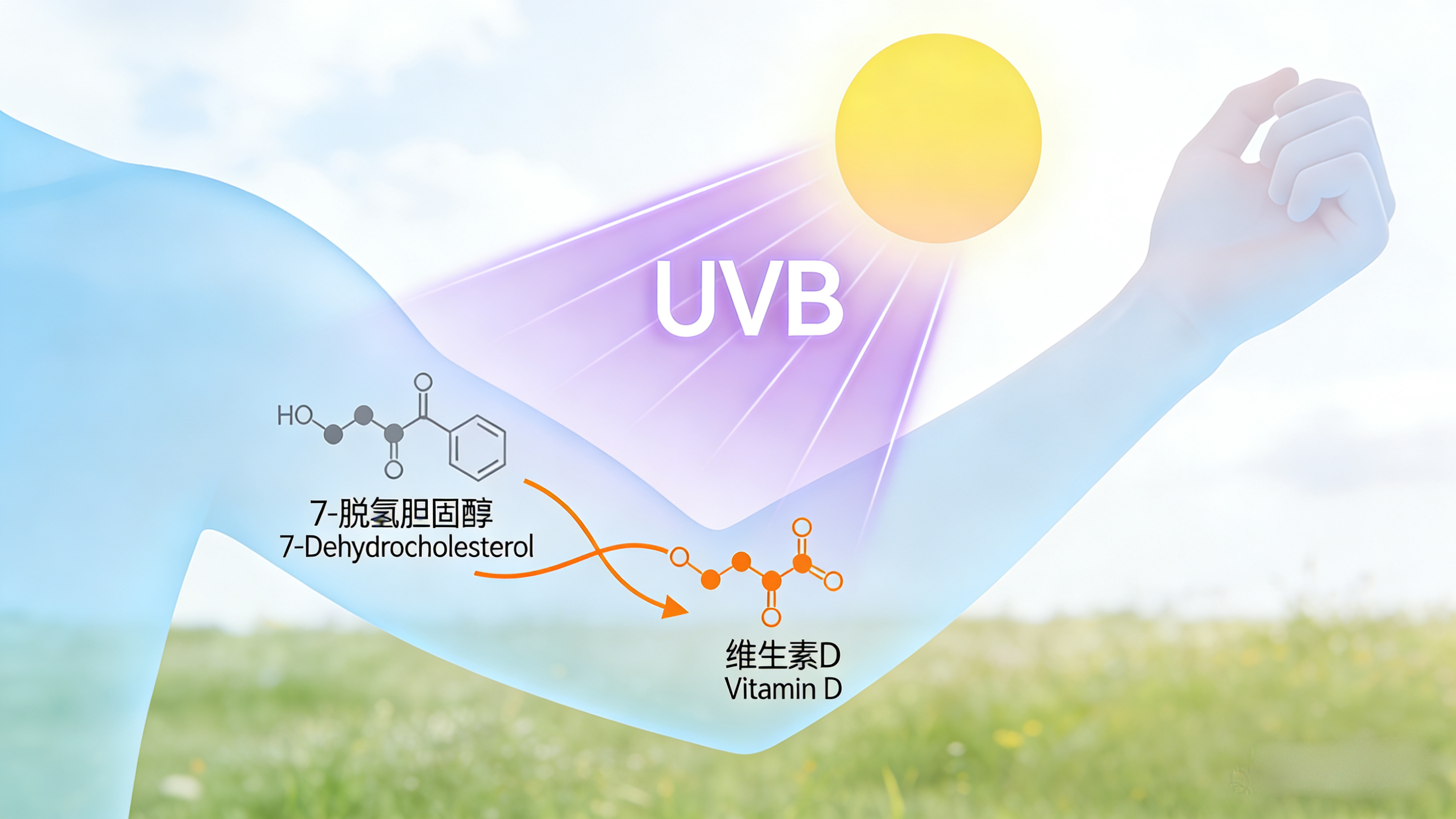
Moderate ultraviolet radiation is crucial for human health. UVB can promote the synthesis of vitamin D in the skin, which plays an irreplaceable role in calcium absorption and bone health.
UVA, with its excellent penetration and fluorescence excitation capabilities, is commonly used for anti-counterfeiting identification of money and documents, criminal investigation and evidence collection. Its light curing properties are also widely used in dental restoration, electronic product coatings, and rapid curing of printing inks.
In the medical field, narrow spectrum UVB is an effective method for treating skin diseases such as psoriasis; In agriculture, it can be used to increase the content of vitamin D in greenhouse crops.
UVC is widely used for drinking water purification, air disinfection, and aseptic treatment of medical devices due to its efficient sterilization and disinfection capabilities.
These applications fully demonstrate the "duality" of ultraviolet radiation: scientific utilization can benefit humanity, while excessive exposure can cause harm. We should neither overly fear ultraviolet radiation nor avoid unprotected long-term exposure. Through reasonable sun protection measures, while enjoying outdoor life, minimize the damage of ultraviolet rays to the skin as much as possible, and achieve harmonious coexistence between humans and ultraviolet rays.
Ultraviolet Radiation: From Skin Health to Practical Applications
Ultraviolet (UV) radiation is an invisible component of sunlight. Based on wavelength and biological effects, it is divided into three main bands: UVA, UVB, and UVC. While excessive exposure to UV radiation can damage the skin, moderate exposure also holds significant value for human health.
「Spectral Characteristics of UV Radiation and Its Effects on the Skin」
1. UVA (315–400 nm), as long-wave ultraviolet radiation, has the strongest penetrating ability. It can reach the dermis layer of the skin and easily pass through ordinary glass. This means that even indoors near a window, the skin remains exposed to UVA radiation.
Upon penetrating the dermis, UVA generates free radicals such as reactive oxygen species, which attack and degrade key structural proteins—collagen and elastic fibers. Long-term and repeated UVA exposure leads to the breakdown of the dermal structure, manifesting as deep wrinkles, skin laxity, and loss of elasticity.
As discussed in our previous issue, protection against UVA requires attention to the PA rating on sunscreen products. A higher PA value indicates better protective efficacy.
2.UVB (280–315 nm), as medium-wave ultraviolet radiation, primarily affects the epidermal layer. When the skin is exposed to excessive UVB, epidermal cells are directly damaged. In response, the body triggers an inflammatory reaction, resulting in visible erythema (sunburn) on the skin surface and an elevated risk of skin cancer. The Sun Protection Factor (SPF) specifically indicates the level of UVB protection. Daily use of SPF 30 can block approximately 97% of UVB radiation.
3.UVC (200–280 nm), although the most energetic, is largely absorbed by the atmosphere and does not pose a threat in the natural environment. However, it is important to note that artificial UVC sources (e.g., germicidal lamps) must not be directly exposed to the skin or eyes, as even brief exposure can cause burns. Strict safety protocols are essential when using such devices.
「Positive Effects and Practical Applications of UV Radiation」
Moderate UV exposure is crucial for human health. UVB stimulates the skin’s synthesis of vitamin D, a process indispensable for calcium absorption and bone health.
Thanks to its strong penetrating and fluorescence-inducing properties, UVA is widely used in anti-counterfeiting technologies for banknotes and official documents, as well as in forensic investigations. Its photopolymerization characteristics are also applied in dental restorations, electronic product coatings, and the rapid curing of printing inks.
In the medical field, narrowband UVB therapy is effective in treating skin conditions such as psoriasis and vitiligo. In agriculture, it can be used to enhance vitamin D levels in greenhouse-grown crops.
UVC’s potent germicidal properties make it valuable for disinfecting drinking water, purifying air, and sterilizing medical equipment.
These applications highlight the 'dual nature' of UV radiation: when used scientifically, it benefits humanity, but overexposure can cause harm. We should neither fear UV radiation excessively nor neglect protection during prolonged exposure. With reasonable sun protection measures, we can minimize skin damage while enjoying outdoor activities, achieving a harmonious coexistence with ultraviolet radiation.
