-
E-mail
market@exponentsci.com
-
Phone
13322809603
-
Address
Room 403, Building B, Huicheng Building, No. 602 Guangshan 2nd Road, Tianhe District, Guangzhou City
Aibo Neng (Guangzhou) Science and Technology Co., Ltd
How is the sun protection factor (SPF) determined? Understand international standards and testing instruments
Date: 2025-12-19Read: 1

When choosing sunscreen products, you must have paid attention to labels such as SPF, PA+, critical wavelength (CW), or Boots star rating. These seemingly simple numbers and symbols are actually scientific conclusions drawn through a series of rigorous and standardized tests.
International Standard System for Sunscreen Efficacy Testing
The commonly used standards in the industry currently include:
·ISO 24444: In vivo determination of sun protection factor (SPF)
·ISO 24442: In vivo testing methods for UVA protection (UVA-PF)
·ISO 24443: In vitro testing methods for UVA protection (UVA-PF)
·ISO 23675: In vitro determination method for sun protection factor (SPF)
·ISO 23698: Measurement of Sunscreen Effect by Diffuse Reflectance Spectroscopy
In addition to ISO standards, the industry also widely adopts the COLIPA (now Cosmetics Europe) guidelines and Boots Star Rating system, which provide a complete technical framework for evaluating the efficacy of sunscreen products.
Classification and Application of Testing Methods
The sunscreen efficacy testing in the cosmetics industry is mainly divided into two categories: in vivo testing and in vitro testing.
In vivo testingEvaluate the ability of sunscreen products to prevent sunburn (evaluate SPF value) or tanning (evaluate PA level) directly on the skin of volunteers using human subjects as test subjects. This method is considered the traditional "gold standard", but it has certain damage to the human body and may pose a risk of cancer. It also has limitations such as high cost, long cycle time, and being greatly affected by individual differences.
In vitro testingUsing professional laboratory instruments, simulate the irradiation process of ultraviolet rays on specific substrates coated with samples, measure the ultraviolet transmittance or absorbance of the samples, and then calculate the sun protection index through formulas and standards.
In vitro testing has the advantages of convenience, controllable cost, and not being affected by human variation factors, and is becoming an important part of research and quality control.
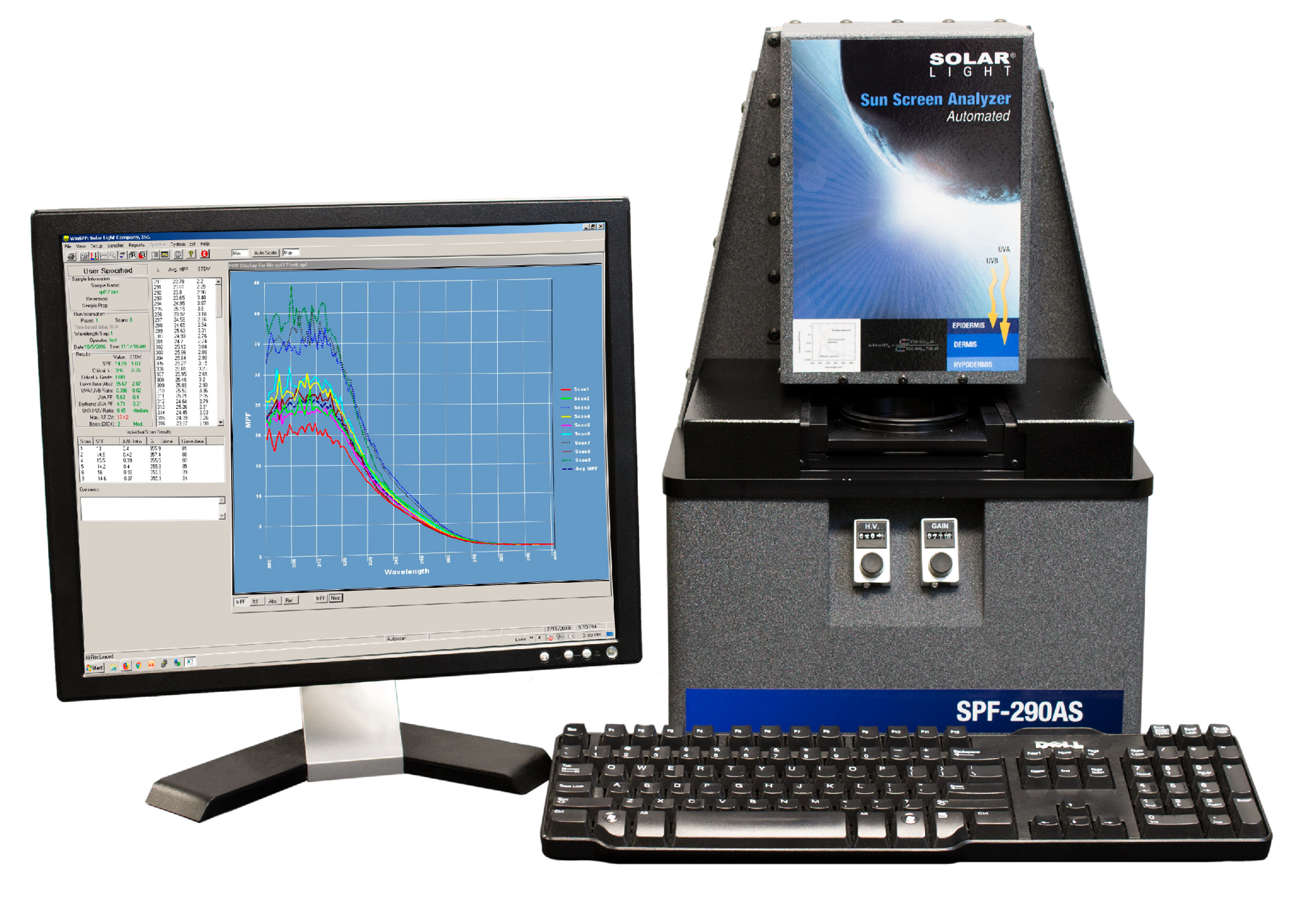
「Sunscreen testing instrument: SPF-290AS UV transmittance/sun protection index analyzer''
In vitro testing, SOLAR LIGHT's SPF-290AS UV transmittance/sun protection index analyzer can be used for efficacy testing of sunscreen products. This instrument evaluates the sun protection effect by measuring the transmittance of the sample in the ultraviolet band.
The optical system of SPF-290AS adopts a power stable 150W ozone free xenon lamp, combined with a photomultiplier tube (PMT) detector, which can measure the changes in optical signals in the wavelength range of 290nm~400n. The automated X-Y sample platform equipped with the instrument can achieve multi-point positioning and scanning, and the shortest time to complete a full band measurement is 24 seconds.
The testing method of this instrument complies with international standards such as ISO 23675 and ISO 24443, and can calculate parameters such as SPF, critical wavelength (CW), UVA-PF, etc. The software supports users to adjust testing parameters according to their needs.
In terms of sample processing, for lotion, cream and other samples, a syringe can be used to coat the samples on the PMMA board with a specific roughness for testing; For spray products, quartz plate can be used as the test carrier.
You may want to know more about SPF-290AS
1) Is its test result accurate? How does it compare to in vivo experiments?
Its accuracy has been extensively validated. Based on long-term usage and customer feedback, the results measured by the instrument are very close to those obtained from human skin testing.
2) Can SPF-290AS directly replace in vivo testing?
Unfortunately, it's not possible at the moment. According to regulations such as the US FDA, the final SPF value of the product must be based on in vivo testing. But SPF-290AS can save a lot of time and capital investment in the early stage of formula screening and optimization.
3) Why detect the range of 290-400nm?
This is the standard range for sun protection. This wavelength range precisely covers all the UVA and UVB bands of ultraviolet radiation that affect our skin, and is the benchmark for calculating sun protection index in international regulations and the scientific community.
4) What is special about the light source of SPF-290AS?
It uses a continuous ultraviolet light source to simulate real sunlight as much as possible. This design is closer to the environment of in vivo testing and the sunlight we encounter outdoors, making the measurement results more practically referenceable.
5) Is the measured data convenient for further analysis?
Very convenient. The SPF data of the instrument is stored in standard ASCII format and can be read by commonly used software such as Excel and Access.
6) How to apply the sample?
The operation process is very intuitive: first, perform a "blank" measurement on a dedicated test board (such as PMMA board) as a reference. Then, apply a certain amount of sunscreen product evenly on the board in the form of spot coating, forming a thin film of uniform thickness. The online help section of WinSPF software provides detailed instructions on the operation steps.
7) Does the instrument produce harmful ozone during operation?
Strict verification has been conducted to address the issue of potential ozone generation from the equipment. Although some electronic devices do produce trace amounts of ozone during operation, the ozone concentration produced by the SPF-290AS analyzer is below the detection limit of any known testing method.
Actual testing was conducted using the professional ozone detection tools from Lab Safety Supply (specific item numbers: 1A-5155-6 and 1A-5154-6). During the testing process, technicians allowed the equipment to run continuously for several hours and monitored it nearby. The detection tools did not show any reaction to the presence of ozone.
It should be noted that the sensitivity of the detection tool used this time is: within a 15 minute detection cycle, it can detect 0.1 ppm of ozone. The test results are far below this limit, fully demonstrating the safety of the device's use.
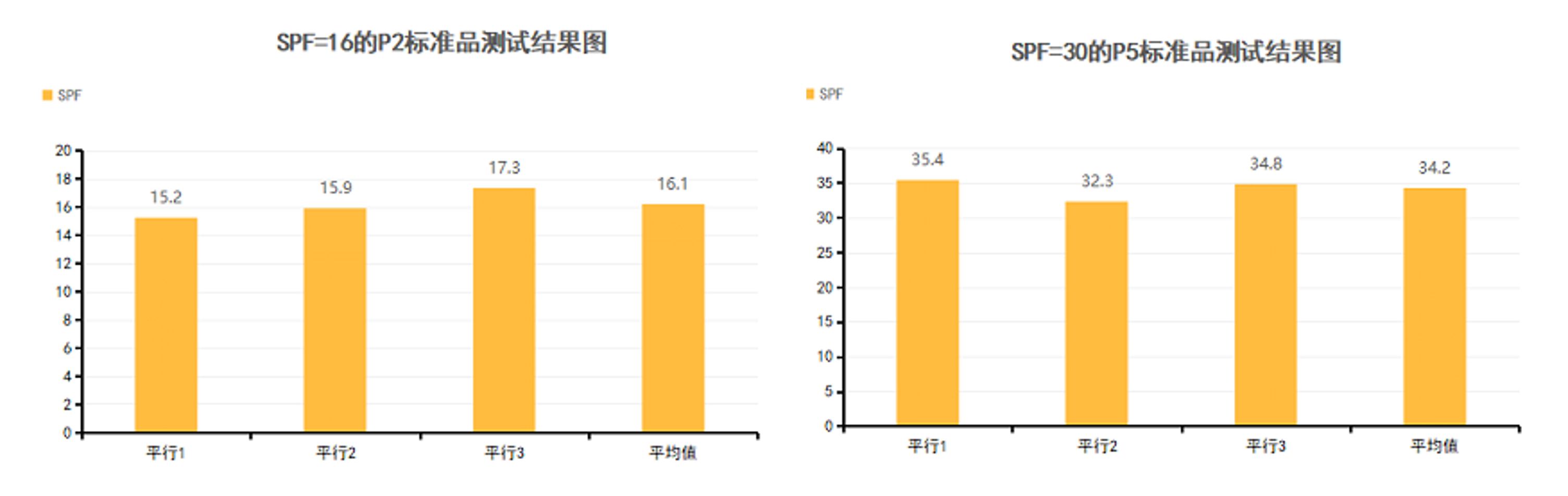
Shanghai Microspectral Testing was conducted using SPF-290AS for testing: two sunscreen standards were used for method validation, and the test results met the requirements of the SPF standards
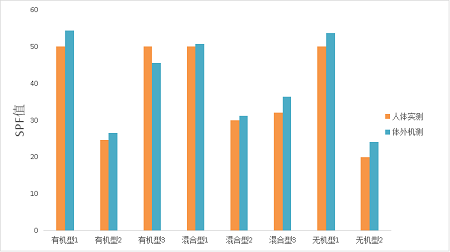
Shanghai Microspectral Testing was conducted using SPF-290AS, and the consistency of in vivo and in vitro testing was good for different types of sunscreen products
The Application Value of Testing Instruments
In the process of cosmetics research and development, the use of instruments such as SPF-290AS can help researchers test the sun protection performance of different formulas and provide data support for formula optimization.
In the production quality control process, regular testing of products can ensure the stability of sun protection effects for different batches of products. Based on the data obtained from instrument testing, technical support can be provided for product efficacy claims, which helps enterprises cope with market supervision and quality audits.
「Conclusion''
The testing of sunscreen efficacy needs to follow scientific methods and standard specifications. The international standard system provides a complete technical framework for the efficacy evaluation of sunscreen products, from in vivo testing to in vitro testing. SOLAR LIGHT's SPF-290AS provides a technological option for the development and quality control of sunscreen products.
As a partner of Solar Light, we are committed to providing sun protection testing technology support for the cosmetics industry. If you need more detailed instrument information or testing methods, please feel free to contact us!
How is Sun Protection Factor (SPF) Measured? Understanding International Standards and Testing Instruments
When selecting sun protection products, you have likely noticed labels such as SPF, PA+, Critical Wavelength (CW), or Boots Star Rating. These seemingly simple numbers and symbols are, in fact, scientific conclusions derived from a series of rigorous and standardized tests.
「International Standard System for Sun Protection Efficacy Testing''
The standards currently widely adopted in the industry include:
·ISO 24444: In vivo determination of sun protection factor (SPF)
·ISO 24442: In vivo UVA protection (UVA-PF) test method
·ISO 24443: In vitro UVA protection (UVA-PF) test method
·ISO 23675: In vitro determination of sun protection factor (SPF)
·ISO 23698: Measurement of sunscreen efficacy by diffuse reflectance spectroscopy
In addition to ISO standards, the industry also widely adopts the COLIPA (now Cosmetics Europe) guidelines and the Boots Star Rating system. These standards provide a complete technical framework for evaluating the efficacy of sun protection products.
「Classification and Application of Testing Methods''
Sun protection efficacy testing in the cosmetics industry is mainly divided into two categories: in vivo testing and in vitro testing.
In vivo testing: Uses human subjects to directly evaluate the ability of a sun protection product to prevent sunburn (assessing SPF value) or tanning (assessing PA grade) on volunteers' skin. This method is considered the traditional 'gold standard. ' However, it poses some potential harm and carcinogenic risk to humans, along with limitations such as high cost, long cycles, and significant influence from individual variations.
In vitro testing: Utilizes specialized laboratory instruments to simulate the process of ultraviolet (UV) radiation on specific substrates coated with the sample. The sun protection factor is calculated via formulas and standards by measuring the sample's UV transmittance or absorbance.
In vitro testing offers advantages such as convenience, controllable costs, and freedom from human variability factors. It is becoming an indispensable part of research & development and quality control.
「Sun Protection Testing Instrument: Model SPF-290AS Automated UV Transmittance / SPF Analyzer''
In in vitro testing, SOLAR LIGHT's SPF-290AS (Automated UV Transmittance / SPF Analyzer) can be used for efficacy testing of sun protection products. This instrument evaluates sun protection effectiveness by measuring the sample's transmittance in the ultraviolet wavelength band.
The optical system of the SPF-290AS uses a 150W ozone-free xenon lamp with stable power output, coupled with a photomultiplier tube (PMT) detector, capable of measuring light signal changes in the 290nm to 400nm wavelength range. The instrument's automated X-Y sample stage enables multi-point positioning and scanning, with a minimum time of 24 seconds to complete a full spectrum measurement.
The testing methodology of this instrument complies with international standard requirements such as ISO 23675 and ISO 24443, and can calculate parameters like SPF, Critical Wavelength (CW), and UVA-PF. The software allows users to adjust testing parameters as needed.
Regarding sample handling, for samples like emulsions and creams, a syringe can be used to apply the sample onto a PMMA plate with specific roughness for testing. For spray products, a quartz plate can be used as the test substrate.
「Things You Might Want to Know About the SPF-290AS''
1) How accurate are its test results? How do they compare to in vivo tests?
Its accuracy has been extensively validated. Based on long-term usage and customer feedback, the results measured by the instrument are very close to those from human skin tests.
2) Can the SPF-290AS completely replace in vivo testing?
Unfortunately, not yet. According to regulatory requirements like those from the U.S. FDA, the final labeled SPF value of a product must be based on in vivo testing. However, the SPF-290AS can save significant upfront time and financial investment during the formulation screening and optimization stages.
3) Why is the detection range 290~400nm?
This is the standard range for sun protection testing. This wavelength interval precisely covers both UVA and UVB bands of ultraviolet radiation that affect our skin. It is the baseline recognized by international regulations and the scientific community for calculating sun protection factors.
4) What is special about the SPF-290AS light source?
It uses a continuous UV light source, simulating real sunlight as closely as possible. This design more closely resembles the environment of in vivo testing and the sunlight we are exposed to outdoors, making the measurement results more practically meaningful.
5) Is the measured data convenient for further analysis?
Very convenient. The instrument's SPF data is stored in standard ASCII format, readable by common software like Excel and Access.
6) How should the sample be applied?
The procedure is straightforward: First, perform a 'blank' measurement on the dedicated test plate (e.g., PMMA plate) as a baseline. Then, evenly spread a quantified amount of the sun protection product in a dotted pattern on the plate to form a film of consistent thickness. The online help section of the WinSPF software details the operating steps.
7) Does the instrument produce harmful ozone during operation?
Rigorous verification was conducted regarding concerns about potential ozone generation. While some electronic devices can produce trace amounts of ozone during operation, the ozone concentration generated by the SPF-290AS analyzer is below the detection limit of any currently known testing method.
Practical tests were performed using professional ozone detection tools from Lab Safety Supply (specific catalog numbers: 1A-5155-6 and 1A-5154-6). During testing, technicians operated the device continuously for several hours while monitoring beside it. The detection tools showed no indication of ozone presence.
It should be noted that the sensitivity of the detection tools used is: they can detect 0.1 ppm of ozone within a 15-minute detection cycle. The test results were well below this limit, fully demonstrating the safety of the device.
Shanghai Weipu Testing used the SPF-290AS to conduct testing: two sunscreen standards were used for method validation, and the test results of both met the required range for SPF standards.
Shanghai Weipu Testing used the SPF-290AS to conduct testing: the consistency between in vivo and in vitro testing for different types of sunscreen products was good.
「Application Value of Testing Instruments''
During cosmetic product development, using instruments like the SPF-290AS can help R&D personnel test the sun protection performance of different formulations, providing data support for formulation optimization.
In production quality control, regular testing of products can ensure the stability of sun protection efficacy across different batches. Data obtained from instrument-based testing provides technical support for product efficacy claims, helping companies respond to market supervision and quality audits.
「Conclusion''
Testing sun protection efficacy requires adherence to scientific methods and standard specifications. From in vivo to in vitro testing, the international standard system provides a complete technical framework for evaluating the efficacy of sun protection products. SOLAR LIGHT's SPF-290AS offers a technological option that can be used in the research, development, and quality control of sun protection products.
As a partner of Solar Light, we are committed to providing technical support for sun protection testing to the cosmetics industry. If you need more detailed information about the instrument or testing methods, please feel free to contact us!