-
E-mail
554377110@qq.com
-
Phone
15201768300
-
Address
No. 329 Yangyue Road, Yangwang Economic Park, Fengxian District, Shanghai
Product Categories
- Rust proof performance tester
- Wire bending and swinging testing machine
- Fully automatic burst strength testing machine
- Ultrasonic welding machine
- Sulfur dioxide corrosion test chamber
- Manufacturer of high and low temperature testing equipment
- Frame front and rear fork vibration testing machine
- Paper box packaging testing machine compression test
- Zero drop testing machine
- Shanghai plug-in force testing machine
- Mechanical impact test bench
Shanghai Xiangfeng Experimental Instrument Equipment Factory
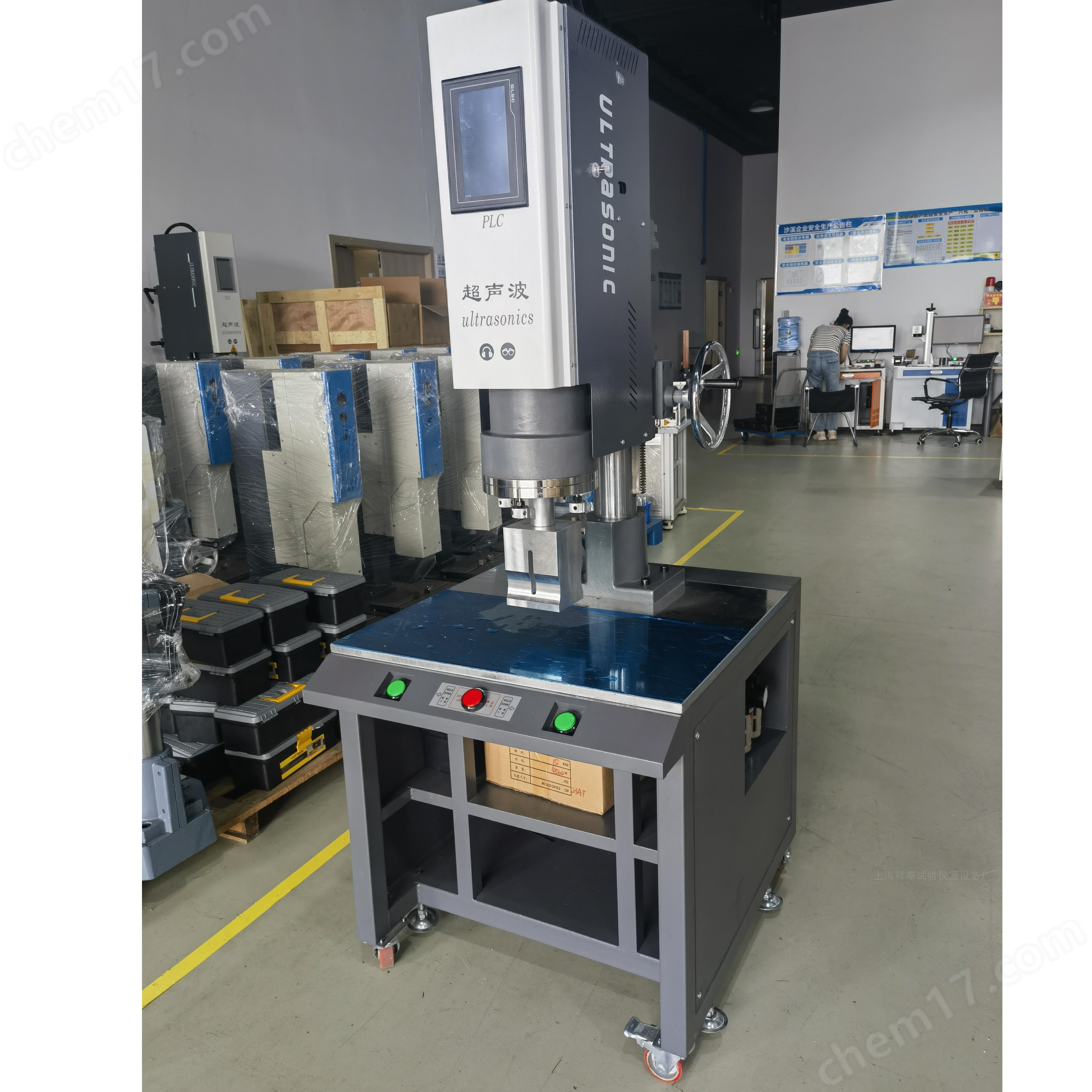
ultrasonic welding machine
NegotiableUpdate on 12/28
- Model
- Nature of the Manufacturer
- Producers
- Product Category
- Place of Origin
Overview
Ultrasonic Welding Machine $r $nXF/CS-15K $r $n Ultrasonic Welding Machine is a machine that transmits ultrasonic waves through the welding head to the plastic processing parts, causing severe friction between the two plastic joint surfaces due to the action of ultrasonic waves. The frictional heat melts the plastic joint surfaces and completes bonding. This technology has the advantages of fast speed, strong welding seams, and more importantly, it can automate the production and processing of plastic products. Ultrasonic plastic welding machine can perform plastic welding, embedding, forming, riveting, spot welding, cutting, sewing and other operations. As long as the welding head is changed, it can be used for multiple applications on one machine.
Product Details
ultrasonic welding machine
XF/CS-15K
Ultrasonic welding machine is a device that transmits ultrasonic waves to plastic processing parts through a welding head, causing severe friction between the two plastic joint surfaces due to the action of ultrasonic waves. The frictional heat melts the plastic joint surfaces and completes bonding. This technology has the advantages of fast speed, strong welding seams, and more importantly, it can automate the production and processing of plastic products. Ultrasonic plastic welding machine can perform plastic welding, embedding, forming, riveting, spot welding, cutting, sewing and other operations. As long as the welding head is changed, it can be used for multiple applications on one machine.
Chinese name: Ultrasonic welding machine, foreign name: Ultrasonic welding machine. Advantages: fast speed, strong weld seam. Engineering technology in the field of welding
catalogue
1 Working principle
2 components
3 Application Methods
4 Characteristics
5 Scope of application
6 Maintenance and upkeep
7 Technical specifications
Working principle editor
By transferring ultrasonic energy to the welding area through the upper welding component, local high temperatures are generated due to the high acoustic resistance at the interface between the two welds. Due to the poor thermal conductivity of plastics, they cannot dissipate in a timely manner and accumulate in the welding area, causing the contact surface of the two plastics to quickly melt. With a certain amount of pressure, they fuse into one. After the ultrasound stops acting, let the pressure continue for a few seconds to solidify and form a strong molecular chain, achieving the purpose of welding. The welding strength can be close to the strength of the raw material.
Principle of Ultrasonic Mechanism
Convert 220V, 50HZ into high voltage electrical energy of 15KHZ (or 20KHZ), and use vibrators to convert it into mechanical energy. Such mechanical vibration is transmitted to the workpiece through the transmission element and welding head, and utilizes air pressure to generate frictional effects on the working interface. The oscillator and transmission device are located inside the vibration tube, with an external welding head. They are lifted and lowered under pre-set conditions using an air compression system and control circuit to complete the operating procedure.
Principles of Ultrasonic Applications
The correct physical definition of wave is: the transmission of vibration in an object forms a wave. The formation of such waves requires two conditions: one is the vibration source, and the other is the propagation medium. There are generally several classifications of waves: one is based on the direction of vibration and propagation. When the direction of vibration is perpendicular to the direction of propagation, it is called a transverse wave. When the direction of vibration is consistent with the direction of propagation, it is called a longitudinal wave. Secondly, based on frequency classification, we know that the human ear is sensitive to the auditory range of 20HZ-20000HZ, so waves within this range are called sound waves. Waves below this range are called infrasound waves, while waves beyond this range are called ultrasonic waves.
The propagation of waves in an object mainly involves the following parameters: velocity V, frequency F, and wavelength λ. The relationship between the three is as follows: V=F. λ. The speed at which waves propagate in the same substance is constant, so different frequencies result in different wavelengths. Additionally, it is important to consider that waves always experience attenuation when propagating within an object. The farther the propagation distance, the more severe the energy attenuation, which is also a consideration in ultrasonic machining.
The application principle of ultrasound in plastic processing
The ultrasonic waves used in plastic processing have several working frequencies, including 15KHZ, 18KHZ, 20KHZ, and 40KHZ. The principle is to use the peak position of longitudinal waves to transmit amplitude to the gap of plastic parts. Under pressure, the molecules at the contact area between two plastic parts or other parts collide with each other to melt, causing the plastic at the contact area to fuse and achieve the processing purpose.
Composition editor
The ultrasonic welding machine mainly consists of the following parts: generator, pneumatic part, program control part, and transducer part.
The main function of the generator is to convert the 50HZ power supply into high-frequency (such as 20KHZ) high-voltage electric waves using electronic circuits.
The main function of the pneumatic part is to complete pressure work such as pressurization and holding during the processing.
The program control part controls the workflow of the entire machine to achieve consistent processing results.
The transducer part converts the high-voltage electric waves generated by the generator into mechanical vibrations, which are transmitted, amplified, and reach the machined surface.
Application Method Editing
ultrasonic welding machine
XF/CS-15K
1、 Welding method:
The welding head, which vibrates at ultra-high frequency with ultrasonic waves, generates frictional heat on the joint surface of two plastics under moderate pressure and instantly melts and joins them. The welding strength is comparable to that of the main body. By using suitable workpieces and reasonable interface design, it can achieve water tightness and air tightness, and eliminate the inconvenience caused by the use of auxiliary products, achieving efficient and clean welding.
2、 Rivet welding method:
Press the ultrasonic high-frequency vibration welding head against the protruding tip of the plastic product, causing it to instantly heat up and melt into a rivet shape, mechanically riveting different materials together.
3、 Implant:
By using the transmission of the welding head and appropriate pressure, metal parts (such as nuts, screws, etc.) are instantly squeezed into the reserved plastic holes and fixed at a certain depth. After completion, regardless of tension or torque, the strength can be comparable to that of traditional molds, which can avoid the disadvantages of damage to the injection mold and slow injection.
4、 Forming:
This method is similar to the riveting welding method, in which a concave welding head is pressed against the outer ring of a plastic product. After the welding head emits ultrasonic and ultra-high frequency vibration, the plastic is melted and formed, and then wrapped around a metal object to fix it. The appearance is smooth and beautiful. This method is commonly used for fixing and forming electronic and horn products, as well as for fixing lenses in cosmetics.
5、 Spot welding:
A、 Welding two pieces of plastic at different points does not require pre designed welding lines to achieve the purpose of welding.
B、 For larger workpieces that are difficult to design welding lines, spot welding can be performed at multiple points simultaneously to achieve fusion effect.
6、 Cutting and sealing:
Using the principle of ultrasonic instantaneous vibration, cutting synthetic fabrics has the advantages of smooth and non cracking incisions and no wire drawing.
Feature Editor
The Japanese EK series transducer and Italian cylinder have strong power and good stability.
Generator plate, crystal plate all in Taiwan, China, China
Alloy layer welding mold, not easily worn, sturdy and durable.
The horizontal screw design makes the mold easy to adjust.
Welding limit system ensures that the workpiece will not overflow after welding.
Clever structure, reasonable design, and beautiful appearance.
Working characteristics of ultrasonic welding machine
Fast - Each welding time is 0.01-99.9 seconds.
Strength - able to withstand high tensile and compressive forces.
Quality - no water leakage, no air leakage, can be air tight welded.
Economy - No need for screws or glue. Reduce labor and lower costs.
Scope of application editing
Ultrasonic welding machines are widely used in the automotive industry, electronics industry, medical industry, home appliance industry, non-woven clothing, office supplies, packaging industry, toy industry, etc. For example, plastic parts of the car body, car doors, car instruments, headlights and mirrors, sun visors, interior parts, filters, reflective materials, reflective road studs, bumpers, cables, plastic filters for motorcycles, radiators, brake fluid tanks, oil cups, water tanks, fuel tanks, air ducts, exhaust purifiers, and tray filter plates; Plastic electronics: prepaid water meters, electricity meters, communication equipment, cordless phones, mobile phone accessories, phone cases, battery cases, chargers, valve controlled sealing maintenance
1. Keep the welding head, bottom mold, and workpiece clean regularly.
2. Regularly check whether the cable joints are loose.
3. Regularly clean the air filter using cleaning agents or water, and do not use volatile solvents.
4. Mechanical cleaning should be carried out regularly, but liquid cleaning should not be used. Do not place heavy pressure or fluid objects above the vibration box.
5. Keep the air clear in the workplace and the surrounding temperature should not be too high. (Below 40 ℃).
When handling the machine, the vibration box should be separated from the body (by disconnecting the cable socket), and care should be taken during handling to avoid impact.
When not in use for a long time, please wipe the appearance of this machine, lubricate it for maintenance, and place it in a dry and ventilated place.
8. The top cover of the control box should be opened every month and the inside should be cleaned thoroughly.