-
E-mail
liufeng@hignal.com
-
Phone
18066728578
-
Address
No. 211 Fute North Road, China (Shanghai) Pilot Free Trade Zone
Product Categories
Higona (Shanghai) Technology Co., Ltd
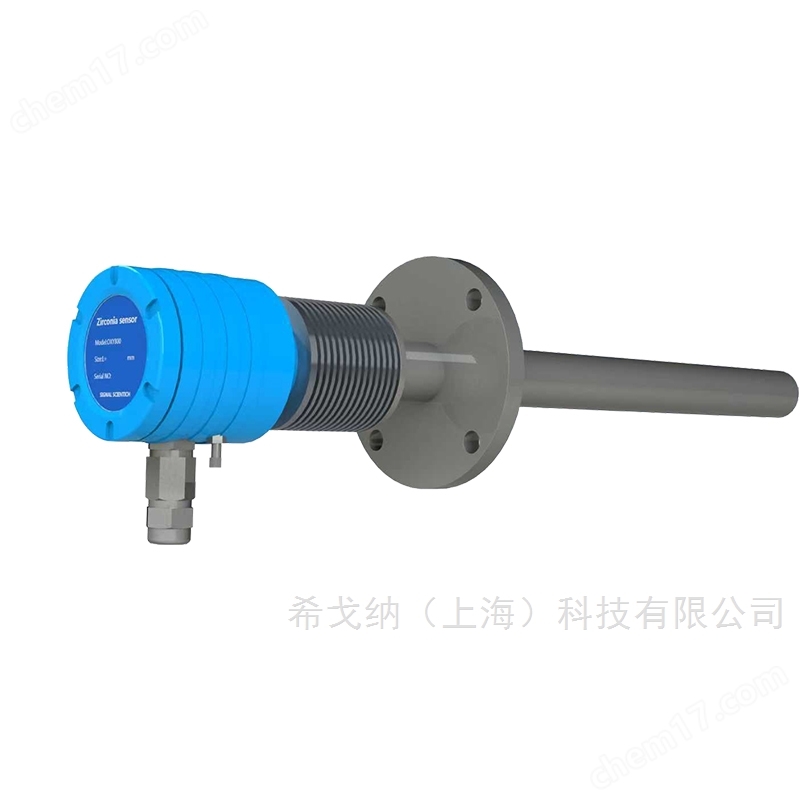


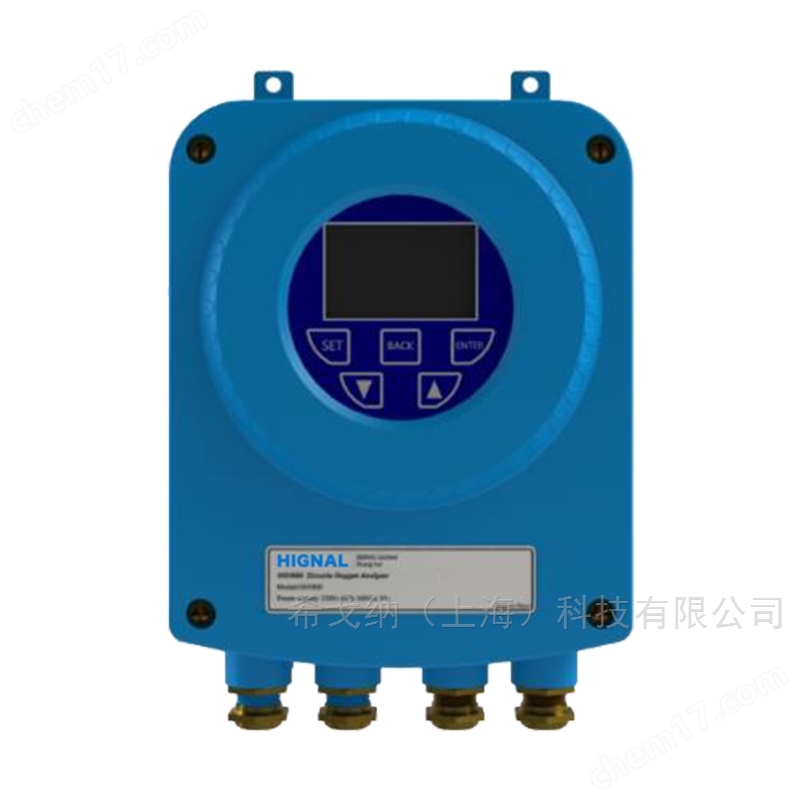
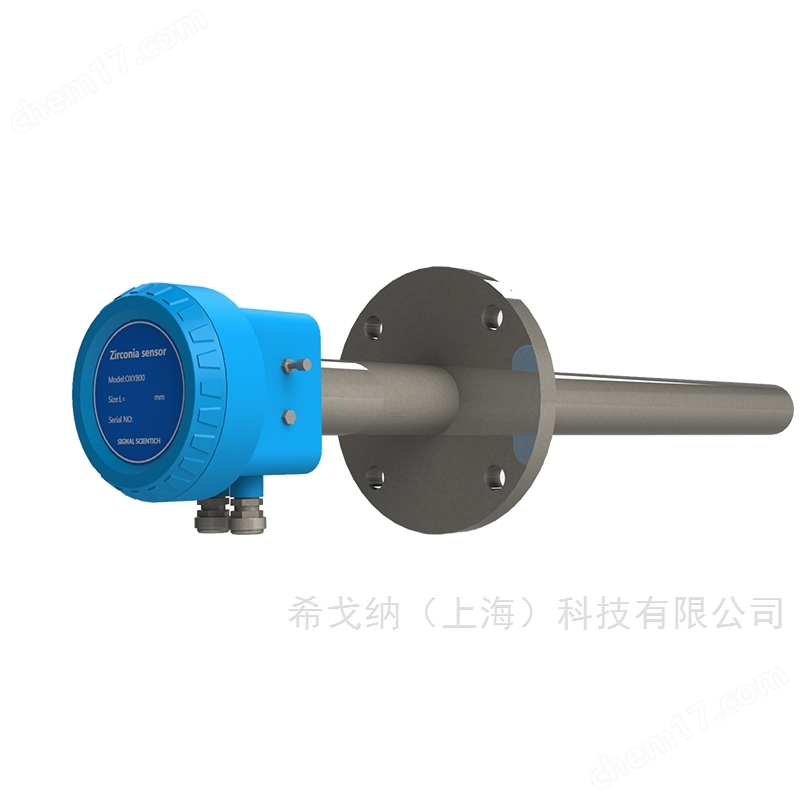
Zirconia gas analyzer
NegotiableUpdate on 01/16
- Model
- Nature of the Manufacturer
- Producers
- Product Category
- Place of Origin
Overview
The application of OXY800 zirconia gas analyzer in combustion monitoring can help the industry achieve significant achievements in energy conservation. It can be widely used in energy consuming industries such as steel, electricity, petrochemicals, ceramics, papermaking, food, and textiles; It can also be applied to various combustion equipment, such as incinerators and small and medium-sized boilers. By using an analyzer for combustion monitoring, fuel can be burned more thoroughly, which helps reduce emissions of CO2, SOx, and NOx, thereby preventing climate change and air pollution.
Product Details
OXY800Zirconia gas analyzerBased on the principle of zirconia, zirconia cells are installed on top of sensors and directly inserted into the flue for measurement. Direct measurement and in-situ measurement provide accurate and rapid measurement readings for combustion optimization control and smoke emission detection.
The application of OXY800 in combustion monitoring can help the industry achieve significant achievements in energy conservation. It can be widely used in energy consuming industries such as steel, electricity, petrochemicals, ceramics, papermaking, food, and textiles; It can also be applied to various combustion equipment, such as incinerators and small and medium-sized boilers. By using an analyzer for combustion monitoring, fuel can be burned more thoroughly, which helps reduce emissions of CO2, SOx, and NOx, thereby preventing climate change and air pollution.
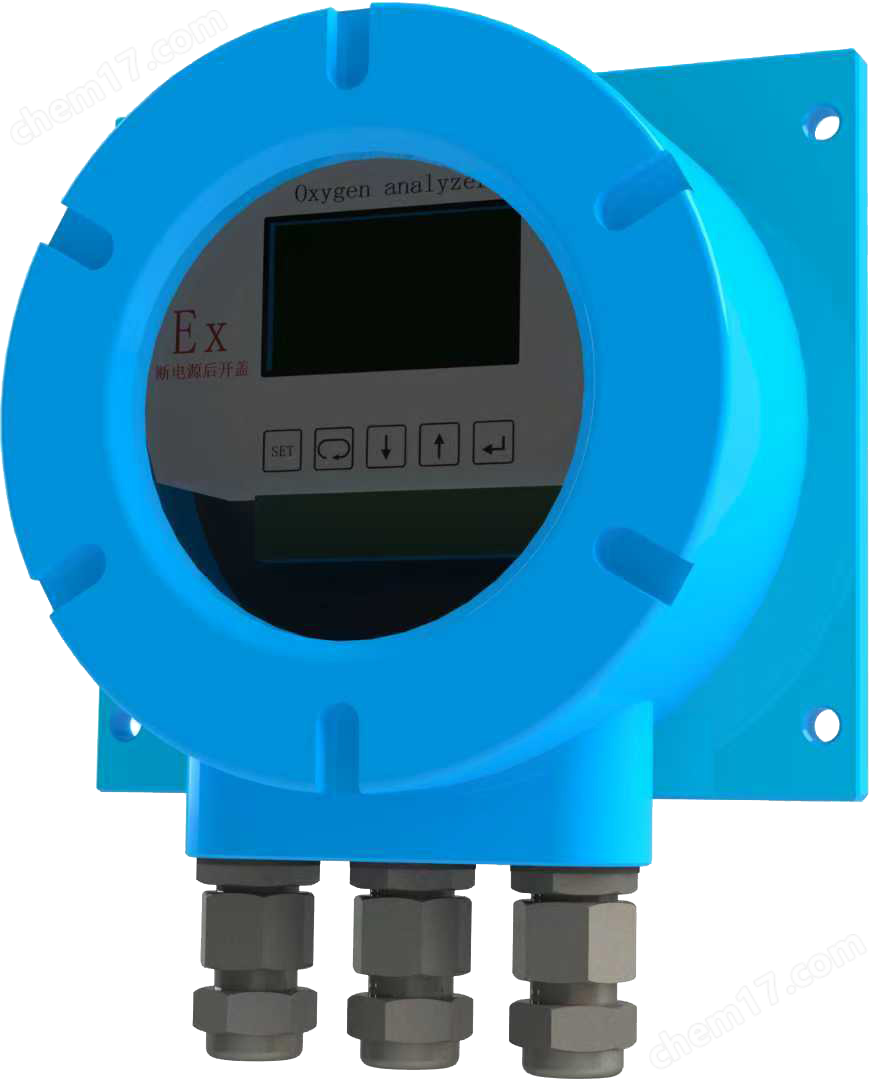
The OXY800 is equipped with a LEL display screen, which can display various setting screens, calibration screens, and oxygen concentration trend screens, making it easier to operate and more powerful in display function. The converter has various standard functions, such as measurement, computation, and maintenance functions such as self diagnosis.
Zirconia gas analyzerprinciple
Zirconia (ZrO2) is a ceramic, a solid with ion conductive properties. At room temperature, it is a monoclinic crystal. When the temperature rises to 1150 ℃, the crystal structure transforms into a cubic form, with a volume shrinkage of about 7%; When the temperature decreases, it becomes a monoclinic crystal again. If heated and cooled repeatedly, ZrO2 will break. Therefore, pure Zr02 cannot be used as a measuring element. If a certain amount of calcium oxide (CaO) or yttrium oxide (Y2O3) is added as a stabilizer in ZrO2, and then high-temperature calcination is carried out, it becomes a stable zirconia material. At this time, tetravalent zirconium is replaced by divalent calcium or trivalent yttrium, and oxygen ion holes are generated, so ZrO2 belongs to anionic solid electrolytes. ZrO2 mainly conducts electricity through the movement of holes, and when the temperature reaches above 600 ℃, ZrO2 becomes a good oxygen ion conductor.
Sintering a platinum electrode on each side of the zirconia electrolyte, when the oxygen partial pressure on both sides of the zirconia is different, the oxygen on the side with higher oxygen partial pressure migrates in the form of ions to the side with lower oxygen partial pressure. As a result, the platinum electrode on the side with higher oxygen partial pressure loses its electron positive charge, while the platinum electrode on the side with lower oxygen partial pressure gains electron negative charge, thus generating an oxygen concentration potential between the two platinum electrodes. This potential is only related to the difference in oxygen content (oxygen concentration difference) between the gases on both sides at a constant temperature. If the oxygen content on one side is known (such as the oxygen content in the air being constant), the oxygen content on the other side (such as the oxygen content in smoke) can be represented by the oxygen concentration potential. By measuring the oxygen concentration potential, the oxygen content in the smoke can be determined.
OXY800 zirconia (non explosion proof type)

Unique design concept and precise manufacturing process
- Durable, long-lasting sensors with a process temperature of up to 1500 ° C
Years of experience in zirconia production and manufacturing
- Able to respond quickly to process changes
- Stable and accurate oxygen measurement
Unique integrated automatic calibration system
- Convenient to meet emission monitoring regulations
- Reduce installation costs without the need for additional external calibration boxes
- Reduce maintenance costs
The sensor length can be customized, with a variety of industrial standard flanges available for selection
- Meet a wide range of application requirements
- Diverse installation options
Convenient sensor replacement
- Structure of on-site repairable sensors
- Easy to disassemble and replace internal components on site
Good transmitter
- Easy to set up, monitor, and intuitive HMI interface
- HART communication protocol
- Sensor performance recording and diagnostic function
Technical Specifications
Measurement object: Oxygen concentration in combustion exhaust gas and mixed gas
Detection principle: Zirconia
Measurement range: 0.01-100 vol% O2
Output signal: 4-20 mA DC
Set range: 0-5 vol% O2; 0 - 100 vol%O2
Sample gas pressure: -5-+250 KPa
Sample gas temperature: 0-700 ℃; 700-1500 ℃ (with high temperature probe adapter)
Probe length: 0.15, 0.5, 0.8, 1.0, 1.5, 2.0, 2.5, 3.0, 3.5, 4.0, 4.5, 5.0m
Power supply: 200-240 V AC, 50/60 Hz
Protection level: IP66
OXY800 zirconia (explosion-proof type)

Technical Specifications
Measurement object: Oxygen
Measurement method: Direct insertion zirconia type
Measurement range: 0-2-50vol%, O2 range can be set arbitrarily
Repeatability: within ± 0.1% FS
Linearity: within ± 2% FS
Response time: 90% response time of 4-7 seconds (through calibrated gas inlet)
Preheating time: more than 10 minutes
Analog output: DC4-20mA (allowable load resistance below 500 Ω)
Power Supply:
Or DC0-1V (output resistance above 100 Ω)
Rated voltage AC100-120V (operating voltage AC90-132V)
AC220-240V (operating voltage AC190-264V)
Rated frequency 50/60Hz
Electricity consumption:
240VA (detector: about 200VA, converter: about 40VA)
Usually 70VA (detector: about 50VA, converter: about 20VA)
Detector specifications
Measuring gas temperature:-10~+600 ℃ (generally used, corrosion-resistant);Jet type: -10~+1500 ℃ (for high temperature use);-10 to+800 ℃ (generally used)
Measurement of gas pressure: 3 to+3kPa
Insertion length: 0.3, 0.5, 0.75, 1m/0.8m (standard) for high dust (with blowing nozzle) without cover, with cover
ejector:Probe for introducing the measuring gas into the detector
Insertion length: 0.5, 0.75, 1, 1.5m (can be specified)
Ambient temperatureTesting department: -10 to+60 ℃;;Injector section: -5 to+100 ℃;Detector flange surface: below 125 ℃ when powered on
Storage temperature: Testing department: -20 to+70 ℃; Injector section: -10 to+100 ℃
Structure: Dustproof and rainproof structure (standard IP66), insulation cover is required in cold regions (can be specified)
Filter: alumina (filtration accuracy 50 μ m) and quartz filter paper
Main material (gas receiving part):Detector: Zirconia, SUS316, platinum, SUS304;Injector (generally used): SUS316, SUS304;Injector (for high temperature use): SiC, SUS316, SUS304
Calibration gas port: connector for 6mm hose, connector for 1/4 inch hose or ball valve
Reference gas port: connector for 6mm hose, connector for 1/4 inch hose
Detector installation: Horizontal ± 45 °, surrounded by clean air
Quality: The detector weighs about 1.6kg; the injector weighs about 15kg (with an insertion length of 1m)
