-
E-mail
2213832271@qq.com
-
Phone
18761897960
-
Address
Zhenjiang City, Jiangsu Province
Product Categories
Jurong Tiandao Instrument Co., Ltd
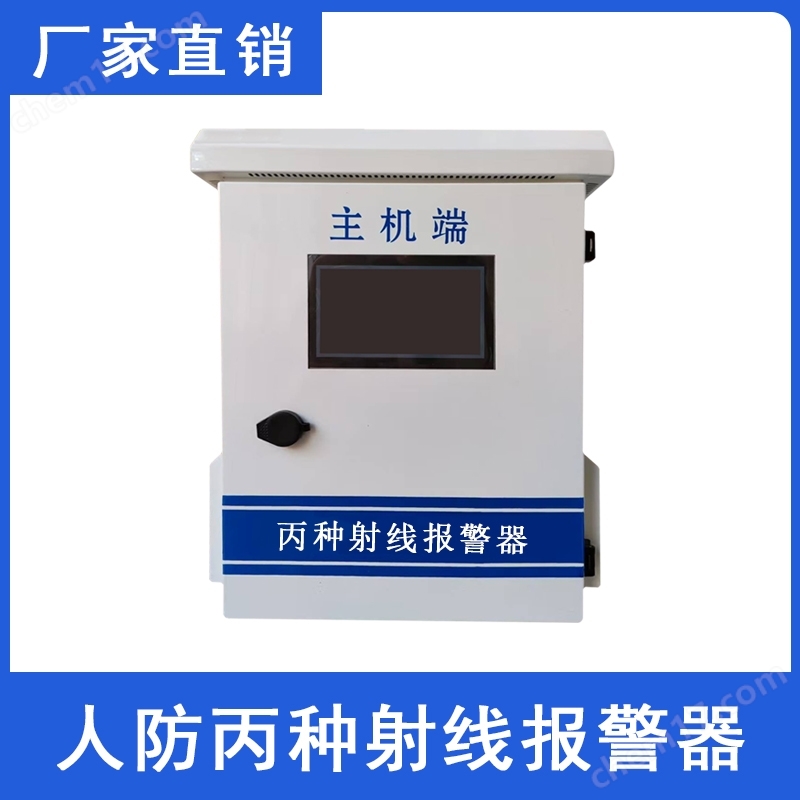


Zhouning County Hospital Civil Air Defense Type C Radiation Alarm
NegotiableUpdate on 02/05
- Model
- Nature of the Manufacturer
- Producers
- Product Category
- Place of Origin
Overview
A gamma ray detector is a safety instrument specifically designed to monitor the intensity of gamma rays, which are widely used in fields such as nuclear industry, radiation medicine, geological exploration, and environmental monitoring where there is a risk of gamma ray radiation. Zhouning County Hospital Civil Air Defense Type C Radiation Alarm
Product Details
A Type C radiation alarm is a device specifically designed to monitor Type C radiation (i.eγRadiation intensity safety instruments are widely used in nuclear industry, radiation medicine, geological exploration, environmental monitoring, and other fieldsγThe field of radiation risk. Its core function is achieved through built-in radiation detection sensors (such as Geiger)-Miller counter tube, scintillation detector, etc.) for real-time sensing of environmental conditionsγRadiation dose rate or cumulative dose, and when the radiation level exceeds the preset threshold, immediately emit an audible and visual alarm signal to remind relevant personnel to take protective measures to avoid excessive radiation hazards.Zhouning County Hospital Civil Air Defense Type C Radiation Alarm
This alarm usually has the characteristics of high sensitivity, fast response, stability and reliability, and can accurately identifyγThe existence and quantification of radiation intensity. Its working principle is based onγThe ionization effect or scintillation phenomenon generated by the interaction between radiation and detector materials is converted into electrical signals by sensors. After amplification, processing, and analysis by electronic circuits, the microprocessor determines whether to trigger an alarm. Alarm devices are generally equipped with multi-level alarm thresholds, which can be customized according to safety standards in different scenarios. They may also be equipped with digital display screens to display real-time information such as current radiation dose rate, cumulative dose, and working status, making it convenient for users to intuitively understand the environmental radiation situation.Zhouning County Hospital Civil Air Defense Type C Radiation Alarm
In terms of design, Type C radiation alarms focus on portability and durability, often using small and lightweight shells, suitable for handheld inspection or fixed installation. Some models also have data storage and transmission functions, which can be connected to computers or monitoring systems to achieve continuous recording and remote monitoring of radiation data. In addition, to ensure measurement accuracy, instruments need to be calibrated and maintained regularly to meet relevant metrological regulations and safety standards, providing important technical support for the safety protection of radiation work environments.
Similar Product Recommend