- Phone
-
Address
Fuxing Industrial Park, Chuangye 1st Road, Jiangbian, Songgang Town, Bao'an District, Shenzhen City
Product Categories
Shenzhen Enyang Technology Co., Ltd


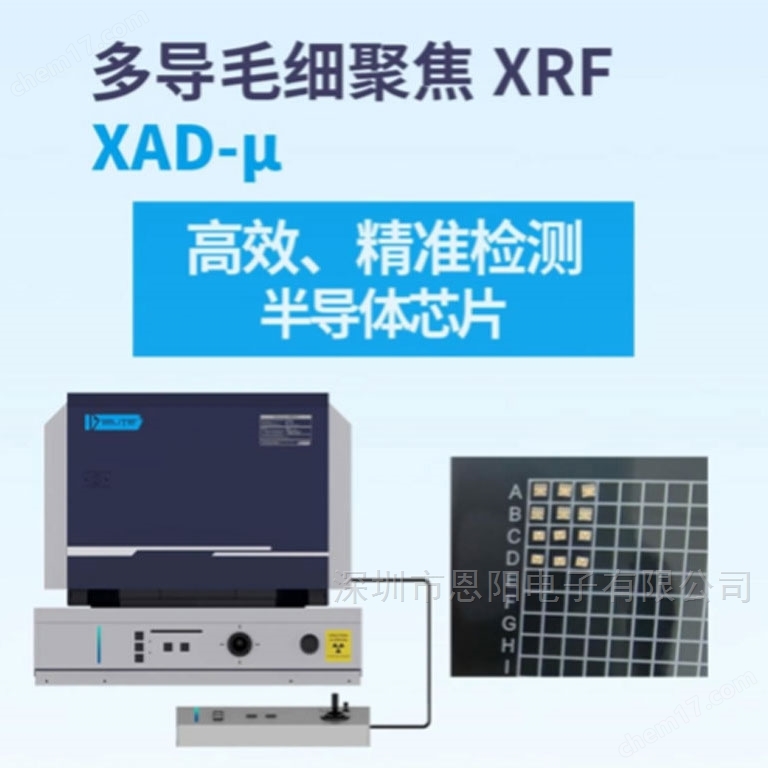
X-ray fluorescence xrf detector
NegotiableUpdate on 05/14
- Model
- Nature of the Manufacturer
- Producers
- Product Category
- Place of Origin
Overview
X-ray fluorescence (XRF) detector is a non-destructive testing technique widely used in material analysis. It can quickly and accurately detect the elemental composition in samples, especially suitable for the analysis of solid, powder, and liquid samples. XRF technology has been widely applied in fields such as environmental monitoring, metal smelting, mining, archaeology, and materials science due to its high efficiency, convenience, and accuracy.
Product Details
I. Overview
X-ray fluorescence (XRF) detector is a non-destructive testing technique widely used in material analysis. It can quickly and accurately detect the elemental composition in samples, especially suitable for the analysis of solid, powder, and liquid samples. XRF technology has been widely applied in fields such as environmental monitoring, metal smelting, mining, archaeology, and materials science due to its high efficiency, convenience, and accuracy.
2、 Working principle
The working principle of XRF detector is based on the emission of X-rays and fluorescence radiation. The basic process is as follows:
1. Motivation: When the sample is irradiated with high-energy X-rays, the atoms in the sample are excited, producing high-energy states.
2. Fluorescent radiation: Excited atoms release energy and emit characteristic X-rays during their return to the ground state. The wavelength and energy of these X-rays are related to the atomic structure of different elements in the sample.
3. Detection: Collect these fluorescent X-rays through a detector and convert them into electrical signals.
4. Data analysis: The computer system inside the instrument analyzes these signals to generate quantitative or qualitative results of element content.
The X-ray fluorescence (XRF) detector can not only provide the types of elements in the sample, but also their concentration information, making it suitable for various research and industrial application scenarios.
3、 Product Features
3.1 High sensitivity and high resolution
Adopting advanced detector technology, such as Si PIN detectors or CDD detectors, with high sensitivity and resolution. It can detect a range of elements from lead (Pb) to uranium (U), even trace elements.
3.2 Quick Analysis
Compared with traditional chemical analysis methods, XRF detectors can complete sample detection and analysis in a few minutes, greatly improving work efficiency, especially suitable for work environments that require a large number of sample detection.
3.3 Non destructive testing
XRF technology adopts the principle of non-destructive testing, without the need for sample pretreatment, making it particularly suitable for the analysis of valuable samples, ensuring that the samples are not damaged after analysis.
3.4 Multi sample adaptability
Suitable for various types of samples, including solids, liquids, powders, etc., widely used for analysis of metals, ores, plastics, soils, oils, and other samples.
3.5 Simple operation
Generally equipped with user-friendly interface and software, the operation is relatively simple, and users only need to follow the instructions to set up and easily complete the detection.
4、 Application Fields
4.1 Environmental Monitoring
X-ray fluorescence (XRF) detectors can be used in environmental monitoring to detect the presence and concentration of heavy metals in soil and water, helping environmental scientists and management agencies assess the degree of soil and water pollution.
4.2 Industrial Production
In the metal processing and material manufacturing industry, it can be used for quality control of materials to ensure that products comply with relevant safety and quality standards.
4.3 Geological Exploration
Mining companies use XRF detectors for ore exploration and resource assessment, which can quickly identify the metal composition in ores and improve the efficiency and accuracy of exploration.
4.4 Archaeology
The application of XRF in archaeology is mainly reflected in the analysis of cultural relics and antiques. Scientists can identify the material composition of ancient objects, helping to reveal their historical value and production processes.
4.5 Food Safety
XRF technology has also begun to be applied in the field of food safety, detecting whether food contains heavy metal components that are harmful to health and ensuring the safety of food.
Similar Product Recommend