- Phone
-
Address
2209, Building 4, No. 134 Chengshousi Road, Chaoyang District, Beijing
Product Categories
Beijing Braun Ning Technology Co., Ltd
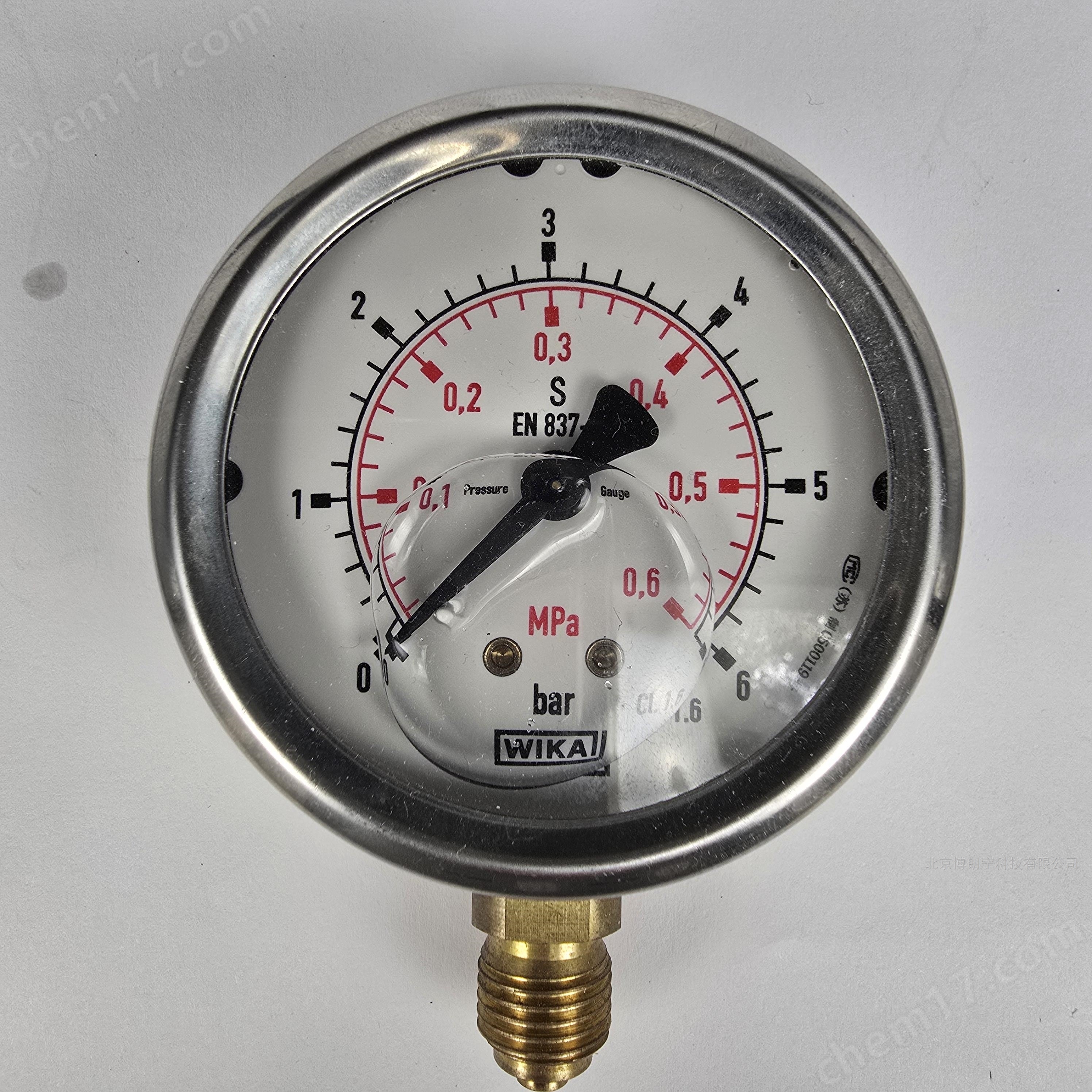


Wika authorized dealer Wika pressure gauge EN837-1
NegotiableUpdate on 05/12
- Model
- Nature of the Manufacturer
- Producers
- Product Category
- Place of Origin
Overview
A pressure gauge can measure gauge pressure, absolute pressure, and differential pressure. In addition, the Vicat pressure gauge can be used not only to measure positive gauge pressure, but also to measure negative gauge pressure. The working mode of pressure gauges varies depending on the type. In industrial measurement technology, two different types of pressure gauges are used - Bourdon tube pressure gauges and diaphragm pressure gauges. These two types of pressure gauges have different functional principles and are therefore suitable for different applications. When using a Bourdon tube pressure gauge, the Bourdon tube directly transmits pressure to the pointer for measurement. There is a bend inside the shell, and the medium enters the bend and causes the Boden tube to extend. This extension is transmitted to the movement through connecting rods and sector gears, and displayed on the dial
Product Details
EN 837-1 pressure gauge is a Bourdon tube pressure gauge manufactured according to the European standard EN 837-1, widely used in the industrial field for measuring the pressure of gases or liquids. The following is key information about the standard pressure gauge:
1. Main features
Measurement principle: Based on the elastic deformation principle of Bourdon tube, suitable for static or slowly changing pressure measurement.
Applicable media: gas, liquid (non corrosive or compatible media).
Pressure range: typically from -1 bar (vacuum) to 1000 bar, depending on the model.
Accuracy level: commonly 1.0, 1.6, 2.5 levels (the smaller the number, the higher the accuracy).
Dial size: standard diameters of 40mm, 50mm, 63mm, 100mm, 160mm, etc.
Connection method:
Threaded interfaces (such as G1/4 ', G1/2', M20 × 1.5, etc.).
Installation method: radial (bottom connection) or axial (back connection).
2. Meet the key requirements of EN 837-1 standard
projectrequirement
precision1.0 level (± 1% full scale), 1.6 level (± 1.6%), 2.5 level (± 2.5%)
Overvoltage protectionUsually able to withstand 130% full range pressure (brief overload)
ambient temperatureStandard type: -20 ° C~+60 ° C (oil filled type can be extended to -40 ° C~+80 ° C)
Protection levelUsually IP54 (dustproof and splash proof), optional IP65 (dustproof and waterproof)
safety requirementsNeed to pass tests such as pressure resistance, leakage, vibration, etc
3. Typical applications
Industrial process control (chemical, petroleum, natural gas)
Water treatment&HVAC system (water pump, compressor)
Mechanical equipment (hydraulic system, air compressor)
Energy industry (boiler, pipeline pressure monitoring)
4. Selection precautions
Medium compatibility: Stainless steel (316L) or oil filled pressure gauges should be selected for corrosive media.
Special requirements:
Seismic resistant type (used in vibration environments such as pumps or compressors).
Explosion proof type (Ex certified, used in flammable and explosive environments).
Sanitary type (food and pharmaceutical industry, compliant with EHEDG/3A standards).
5. Relevant standards
EN 837-2: Diaphragm pressure gauges (suitable for low pressure or corrosive media).
EN 837-3: Diaphragm pressure gauges (for high viscosity or solid particle media).
ISO International Standards: Similar standards include ISO 5171 (Acetylene Pressure Gauge).
6. Certification requirements
CE certification (compliant with EU directives).
PED 2014/68/EU (Pressure Equipment Directive, applicable to high-pressure applications).
ATEX (Explosion proof Certification, for use in hazardous areas).
summary
EN 837-1 pressure gauge is the most commonly used mechanical pressure gauge in the industrial field, characterized by high reliability, easy installation, and low cost. When selecting, attention should be paid to parameters such as range, accuracy, material, and environmental adaptability to ensure long-term stable operation.

application
Suitable for measuring points with high pulse pressure loads or vibrations
Suitable for gas and liquid media that are not high viscosity, difficult to crystallize, and will not corrode copper alloy components
hydraulic device
Compressor and shipbuilding
Features
Excellent vibration and impact resistance
Durable and sturdy design
Type certification for shipbuilding industry
Range: 0 100 MPa or 0 .. 15,000 psi
description
The pressure shell of the 213.53 liquid filled Bourdon tube is made of stainless steel, and the liquid receiving part is made of copper alloy.
WIKA manufactures and certifies pressure gauges in accordance with the requirements of EN 837-1 and ASME B40.100 standards. To ensure safety performance, the instrument is equipped with an anti spray and pressure relief device. In the event of a malfunction, overvoltage can be dissipated and released from here.
Due to the liquid filling inside the case, the pressure elements and movements are effectively buffered. Therefore, these instruments are particularly suitable for measuring positions with high dynamic loads, such as frequent pressure fluctuations or vibrations.
The standard sizes of the 213.53 liquid filled pressure gauge case are 50 [2] ', 63 [2] and 100 [4]', and comply with the IP65 protection level. The accuracy of this pressure gauge can reach level 1.0 and can be widely used in industry.
Users can install this pressure gauge with axial installation process connectors to the control panel by using installation flanges or triangular brackets and mounting brackets.
Similar Product Recommend


