-
E-mail
DCQ@SZFORBETTER.COM
-
Phone
18662699877
-
Address
No. 148 Kangzhuang Road, Zhoushi Town, Kunshan City, Jiangsu Province, China
Product Categories
Suzhou Fubaite Instrument Technology Co., Ltd
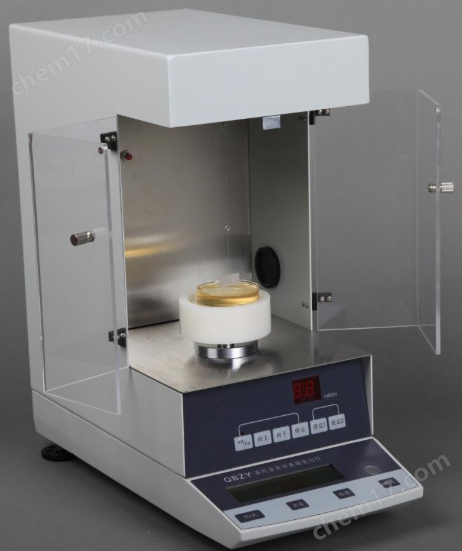
What are the requirements for cleaning the interface surface tension meter
NegotiableUpdate on 01/11
- Model
- Nature of the Manufacturer
- Producers
- Product Category
- Place of Origin
Overview
The cleanliness level of a surface tension meter is a key factor affecting the accuracy, repeatability, and reliability of measurement data. Its core impact stems from the changes in gas-liquid/liquid-liquid interface properties caused by pollutants, which can be analyzed from three dimensions: data deviation, repeatability, and instrument damage. At the same time, Huanfa needs to combine the differences in the impact of different types of pollutants (organic/inorganic/residual) to determine the requirements for cleaning an interface tension meter
Product Details
The cleanliness level of a surface tension meter is a key factor affecting the accuracy, repeatability, and reliability of measurement data. Its core impact stems from the changes in gas-liquid/liquid-liquid interface properties caused by pollutants, which can be analyzed from three dimensions: data deviation, repeatability, and instrument damage. At the same time, it is necessary to further explain the differences in the impact of different types of pollutants (organic/inorganic/residual):
surface tensiometer
1、 Core impact: Directly causing measurement data deviation (high or low)
The essence of surface tension is the "imbalance of intermolecular forces at the interface". Any pollutant attached to the measuring component (such as platinum rings, platinum plates, capillaries) or sample surface will directly change the molecular composition and forces at the interface, leading to a deviation between the measured value and the true value. This can be divided into two categories:
1. Pollution increases interfacial intermolecular forces → measurement values are higher
If the pollutant is a high surface tension substance (such as inorganic salt residue, metal oxide, uncleaned solid particles), it will adhere to the platinum ring/plate surface or sample interface:
For example, when measuring the surface tension of pure water, if there is residual NaCl solution from the previous measurement on the platinum ring (surface tension ≈ 72.8 mN/m, slightly higher than the 72.0 mN/m of pure water), the residual NaCl will form a thin film on the ring surface, increasing the molecular attraction at the interface, resulting in a larger "tension/buoyancy" detected by the instrument, and the final calculated surface tension value may be higher than the true value (possibly misjudged as 73-74 mN/m).
Principle: High surface tension pollutants are equivalent to superimposing stronger intermolecular forces on the original interface. The "interfacial tension" perceived by the instrument is actually the mixed tension of the "target sample+pollutant", which is overestimated.
2. Pollution reduces intermolecular forces at the interface → measurement values are low
If the pollutant is a low surface tension substance (such as organic residue, oil, surfactant, alcohol/acetone residue), it will significantly disrupt the molecular arrangement at the interface and weaken the intermolecular attraction:
Typical scenario: When measuring the interfacial tension between crude oil and water, if there is residual sodium dodecylbenzenesulfonate (LAS, a surfactant with a surface tension of only 30-40 mN/m) from the previous experiment on the inner wall of the capillary tube, LAS will form a monolayer at the oil-water interface, reducing the cohesion of the interface and causing the instrument to measure a lower rise height through the "capillary rise method". The calculated interfacial tension value is much lower than the true value (possibly mistakenly measured from 30 mN/m to below 20 mN/m).
Principle: low surface tension pollutants will "dilute" the molecular force at the target interface, and even form an "interface facial mask" to isolate the target molecules, so that the interface tension detected by the instrument is close to the tension of the pollutants themselves, and the result is underestimated.
2、 Key impact: Disrupting data repeatability and stability
The measurement of surface tension needs to meet the industry standard of "parallel experimental error ≤ 1%", and insufficient cleanliness can lead to unstable attachment and distribution of pollutants, resulting in significant fluctuations in multiple measurement results and inability to meet repeatability requirements:
For example, using the same uncleaned instrument to measure the same batch of ethanol solution (surface tension ≈ 22.3 mN/m), a small amount of grease remained on the platinum plate during the first measurement (resulting in a lower result of 20.1 mN/m), the residual grease was partially washed during the second measurement (resulting in a higher result of 21.5 mN/m), and the residue fell off during the third measurement (resulting in a result close to the true value of 22.2 mN/m) - the deviation of the three data exceeded 10% and lost reference value.
Root cause: The "non-uniform adhesion" and "dynamic detachment" of pollutants result in different "interface states" measured each time, and the instrument cannot output stable data based on consistent interface conditions, directly affecting the credibility of experimental conclusions (such as misjudgment when determining whether the surfactant concentration meets the standard).
3、 Hidden impact: damage to instrument components, shorten service life
Long term unclean cleaning can cause irreversible damage to the core components of the surface tension meter due to pollutants, indirectly affecting the accuracy of all subsequent measurements
Platinum ring/platinum plate corrosion: If there are residual acidic/alkaline samples (such as hydrochloric acid, NaOH solution) or solutions containing heavy metal ions, they will undergo chemical reactions with platinum (such as the formation of platinum oxides or salts), causing the surface of the ring/plate to become rough and deformed (such as the roundness of the ring being destroyed).
Consequence: During measurement, the "lifting force of the ring" or "contact angle of the plate" may deviate from the standard value, and even after subsequent cleaning, the deformed parts cannot be restored and need to be replaced (platinum parts have higher costs).
Capillary blockage or inner wall contamination: Instruments using the "capillary rise method" may block the capillary channel if the sample contains high viscosity substances (such as glycerol) or solid suspensions (such as sediment); Even if not blocked, pollutants will adhere to the inner wall of the capillary, changing its "wettability" (such as from hydrophilic to hydrophobic).
Consequence: The height of the capillary tube will significantly decrease or become unstable, and the instrument will not be able to calculate the surface tension properly. It needs to be disassembled and cleaned (the operation is complex and the capillary tube is prone to damage).
Sensor contamination: Some instruments are equipped with "force sensors" or "optical sensors" (such as detecting interface deformation through laser). If pollutants (such as oil and dust) adhere to the surface of the sensor, they will interfere with the signal acquisition of the sensor (such as decreased sensitivity of the force sensor or blocked optical path of the optical sensor).
Consequence: There are systematic errors in the raw data output by the sensor, and subsequent calibration is difficult to eliminate, resulting in a decrease in the overall measurement accuracy of the instrument.
summary
The cleanliness of the surface tension meter directly determines the accuracy and repeatability of the measurement data and the service life of the instrument. If not cleaned thoroughly, it may not only result in invalid single experiment data (such as misjudging whether the surface tension of the sample meets the standard), but also increase maintenance costs due to component damage. Therefore, before and after each measurement, appropriate cleaning agents (such as acetone, ethanol, deionized water) must be used to clean the platinum ring/plate, capillary tube, and sample container according to the instrument instructions. If necessary, "blank verification" should be performed (such as measuring the surface tension of pure water, if the result is within the range of 71.8~72.2 mN/m, it indicates that the cleaning is qualified).
Similar Product Recommend