- Phone
-
Address
No. 818, 8th Floor, Tianhui Building, No. 29 Yeqin 1st Road, Longcheng Street, Longgang District, Shenzhen
Product Categories
Shenzhen Lituo Optoelectronics Co., Ltd


Wavelength 2121.8nm laser for hydrogen detection of H2
NegotiableUpdate on 05/19
- Model
- Nature of the Manufacturer
- Producers
- Product Category
- Place of Origin
Overview
Laser with a wavelength of 2121.8nm is used for detecting H2 concentration in hydrogen gas. The center wavelength of the laser is 2121.8nm. Its purpose is to detect H2 in hydrogen gas
Product Details
Wavelength 2121.8nmLaser used for hydrogen detection of H2
Laser center wavelength:2121.8nm
Purpose:hydrogen detectionH2Spectral analysis, laser analysis of hydrogen concentration

Principle of laser gas detection:TDLAS,TDLASisTunable Diode Laser Absorption Spectroscopyabbreviation,Namely:Tunable semiconductor laser absorption spectroscopy
Packaging form:14Needle butterfly shaped packaging,TO39encapsulationTO56encapsulation
Brand: IrelandReferences
Supplier: Shenzhen Lituo Optoelectronics Co., Ltd
delivery cycle: 4-6week
EP2121-8-DM –H2hydrogen
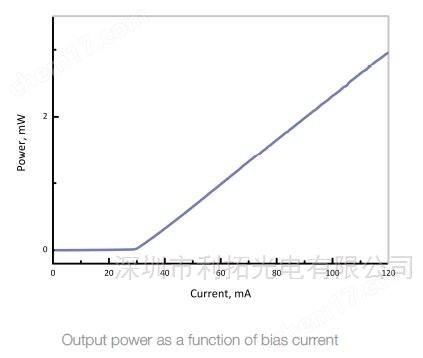
EP21218-DMThe series adopts2121.8nmAbsorption line pairsH2 hydrogenConduct testing. based onReferencesThe Discrete Mode Technology Platform, in2121.8nmProvides stable laser performance within the wavelength range, suitable for hydrogen detection applications.
•packaging options:14Needle butterfly shaped packaging,TO39 (beltTEC),TO56, DX-1module(Drivers andTEC)
•Common wavelengths in this area:2121.8nm
• Excellent and stable spectral performance
•Integrated no external cavity design
•The center wavelength can be adjusted by temperature or current adjustment range: +/-1nm
•Low sensitivity to mechanical vibration
Can provide wavelengths and applications:
2332nm -carbon monoxideCO
2330nm -carbon monoxideCO
2327nm -carbon monoxideCO
2325nm -carbon monoxideCO
2051nm -carbon dioxideCO2
2121.8nm –hydrogenH2
2020nm FPlaser diode
2004nm -carbon dioxideCO2
2003nm -carbon dioxideCO2
1981nm -ammoniaNH3
1950nm -laser(Quantum communication, medical equipment)
1877nm -water moleculeH2O
1854nm -water moleculeH2O
1742.2nm -hydrogen chlorideHCl
1686.4nm –acetoneC3H6O
1683nm –ethaneC2H6
1680.2nm –ethaneC2H6
1654nm -methaneCH4
1651nm -methaneCH4
1629.5nm -ethyleneC2H4
1625nm –ethyleneC2H4
1603nm -carbon dioxideCO2
1590nm -hydrogen sulfideH2S
1578nm - CO / CO2/H2S
1574.5nm -hydrogen sulfideH2S
1572nm –carbon dioxideCO2
1573.3nm -carbon dioxideCO2
1564.5nm - CO / CO2
1566nm -carbon monoxideCO
1550nm -Narrow linewidth laser (LiDAR)
1540nm -Hydrogen cyanideHCN
1531nm -ammoniaNH3
1521nm -acetyleneC2H2
1512.2nm -ammoniaNH3
1398nm -water moleculeH2O
1392.5nm -water moleculeH2O
1343.5nm -water moleculeH2O
1278.1nm -hydrogen fluorideHF
1273nm -hydrogen fluorideHF
780nm -laser
764nm -oxygenO2
761nm -oxygenO2
760nm -oxygenO2
Wavelength 2121.8nmLaser used for hydrogen detection of H2
Due to the weak absorption strength of hydrogen, the following technologies need to be applied:
Off-axis integrating cavity(Off-Axis Integrated Cavity)
Off axis integration cavity is an optical technique used for high-sensitivity absorption spectroscopy measurement, which is an improved form of traditional cavity enhanced absorption spectroscopy technology.
Basic Principles
Off axis configurationLaser is incident into a resonant cavity composed of high reflectivity mirrors at an off-axis angle to avoid direct resonance between the laser and the cavity mode.
Integral effectThe light beam undergoes multiple reflections inside the cavity, forming a dense pattern of light spots, effectively increasing the absorption path length.
Light intensity integrationThe detector measures the sum of all transmitted light, not a single mode.
Main Features
No need for cavity matchingOvercoming the requirement of precise matching between laser frequency and cavity mode in traditional cavity enhanced spectroscopy technology
Long effective optical path lengthUsually it can reach several kilometers or even longer
high sensitivityCan detect low concentration gases or weak absorption
Wide spectral rangeSuitable for continuous or broadband light sources
application field
Trace gas detection
Atmospheric environment monitoring
industrial process control
Combustion diagnosis
Isotope ratio measurement
Advantage comparison
Compared to traditional cavity oscillation spectroscopy(CRDS)Compared with off-axis integrated cavity technology, off-axis integrated cavity technology has simpler operation, lower requirements for laser linewidth and frequency stability, and is more suitable for using broadband light sources or low-cost lasers.
This technology is developed byO'KeefeWaiting for people1999It was proposed in the year and has now become one of the important tools in high-sensitivity absorption spectroscopy measurement.
Cavity enhanced absorption spectroscopy technology(Cavity-Enhanced Absorption Spectroscopy, CEAS)
Cavity enhanced absorption spectroscopy technology(CEAS)It is a type of high-sensitivity absorption spectroscopy method based on optical resonant cavities. By confining light within a cavity composed of high reflectivity mirrors, the effective absorption path is significantly increased, thereby significantly improving detection sensitivity. This technology is widely used in trace gas detection, atmospheric chemistry, combustion diagnosis, biomedical and other fields.
1. Basic Principles
CEASThe core is to utilize high precision(Finesse)Optical resonant cavity (usually composed of two high reflectivity lenses, with reflectivity)R≈99.9%)Make the incident light reflect multiple times inside the cavity, forming a long effective absorption path (up to several kilometers). The sample to be tested is placed inside the cavity, and its absorption signal is enhanced and detected.
2. Main technical categories
CEASIt includes multiple implementation methods, mainly divided into:
(1)Cavity decay spectroscopy(Cavity Ring-Down Spectroscopy, CRDS)
principleMeasure the time of light attenuation inside the cavity,By monitoringnumerical valueCalculate the absorption signal based on the changes.
characteristic:
Not affected by fluctuations in laser intensity
Ultra high sensitivity (measurable)10−12 cm−110−12cm−1Scale absorption)
Need narrow linewidth laser and fast detector
(2)Off axis integration cavity output spectrum(Off-Axis ICOS, OA-ICOS)
principleThe laser is incident at an off-axis angle to avoid resonance with the cavity mode and form a dense spot. The detector integrates all transmitted light intensity.
characteristic:
No need for precise pattern matching, suitable for broadband light sources
High system stability, suitable for industrial applications
(3)Continuous wave cavity enhanced absorption spectroscopy(CW-CEAS)
principleMeasure the absorption spectrum of transmitted light intensity with wavelength using a continuous laser.
characteristic:
Suitable for high-resolution spectroscopy
Active frequency stabilization technology is required (such asPound-Drever-HallLock cavity)
(4)Noise immune cavity enhanced optical heterodyne spectroscopy(NICE-OHMS)
principleCombining frequency modulation spectroscopy(FMS)AndCEASEliminate laser noise and achieve high sensitivity(~10−14−14 cm−1−1).
applicationMainly used for ultra trace gas detection and precision spectroscopy.
3. technical advantage
Ultra high sensitivity: Detectableppb(10−9−9)Even more soppt(10−12−12)Grade gas concentration.
Long optical path lengthThe effective absorption path can reach several kilometers, far exceeding traditional multi-channel pools (such as...)WhitePoolHerriottPool).
compact structureCompared to traditional long path absorption cells,CEASThe system has a small volume and high stability.
Wide applicabilityCan be used in the ultraviolet, visible, near-infrared, and mid infrared bands.
4. Typical Applications
environmental monitoring: In the atmosphereNO2NO2TheCH4CH4TheCO2CO2TheH2OH2OWaiting for trace gas detection.
industrial process controlSemiconductor manufacturing, combustion analysis, chemical reaction monitoring.
Medical diagnosisBreath analysis (such asNONOTesting is used for asthma diagnosis.
Laboratory Spectral ResearchMeasurement of molecular spectra and isotopic ratios.
5. Development Trends
miniaturization&PortabilityCombining quantum cascade lasers(QCL)Developing portable technology with optical frequency comb technologyCEASEquipment.
Multi component detectionCombining broadband light sources (such as supercontinuum lasers) to achieve synchronized measurement of multiple species.
Artificial intelligence assistedUsing machine learning to optimize spectral inversion algorithms and improve detection accuracy.
summary
The cavity enhanced absorption spectroscopy technology significantly improves detection sensitivity through optical resonant cavities and has important applications in environmental, industrial, medical and other fields. differentCEASVariants (such asCRDSTheOA-ICOSTheNICE-OHMS)Each has its own advantages, and future development trends include higher sensitivity, more compact systems, and intelligent data analysis.
Shenzhen Lituo Optoelectronics Co., Ltd. specializes in the research and development, production, and sales of semiconductor lasers for gas sensing, measurement and detection, and fiber optic communication. We provide a full range of 650nm-2350nm full wavelength semiconductor laser products in bulk, and can customize 760nm-2330nm laser devices according to customer requirements.
Founded in 2011, Shenzhen Lituo Optoelectronics has numerous cooperative partners and years of experience in semiconductor laser research and manufacturing. The company has huge potential in the fields of toxic and harmful gas detection, coal mine safety production, power, chemical, petroleum, and military. Shenzhen Lituo Optoelectronics Co., Ltd. has close strategic partnerships with Chongqing University, Shenzhen University, and Eblana Photon Company in Ireland. Currently, it is a top global supplier of gas detection lasers and has developed multiple products for institutions such as the European Union, European Space Agency, and NASA.


