-
E-mail
DCQ@SZFORBETTER.COM
-
Phone
18662699877
-
Address
No. 148 Kangzhuang Road, Zhoushi Town, Kunshan City, Jiangsu Province, China
Product Categories
Suzhou Fubaite Instrument Technology Co., Ltd
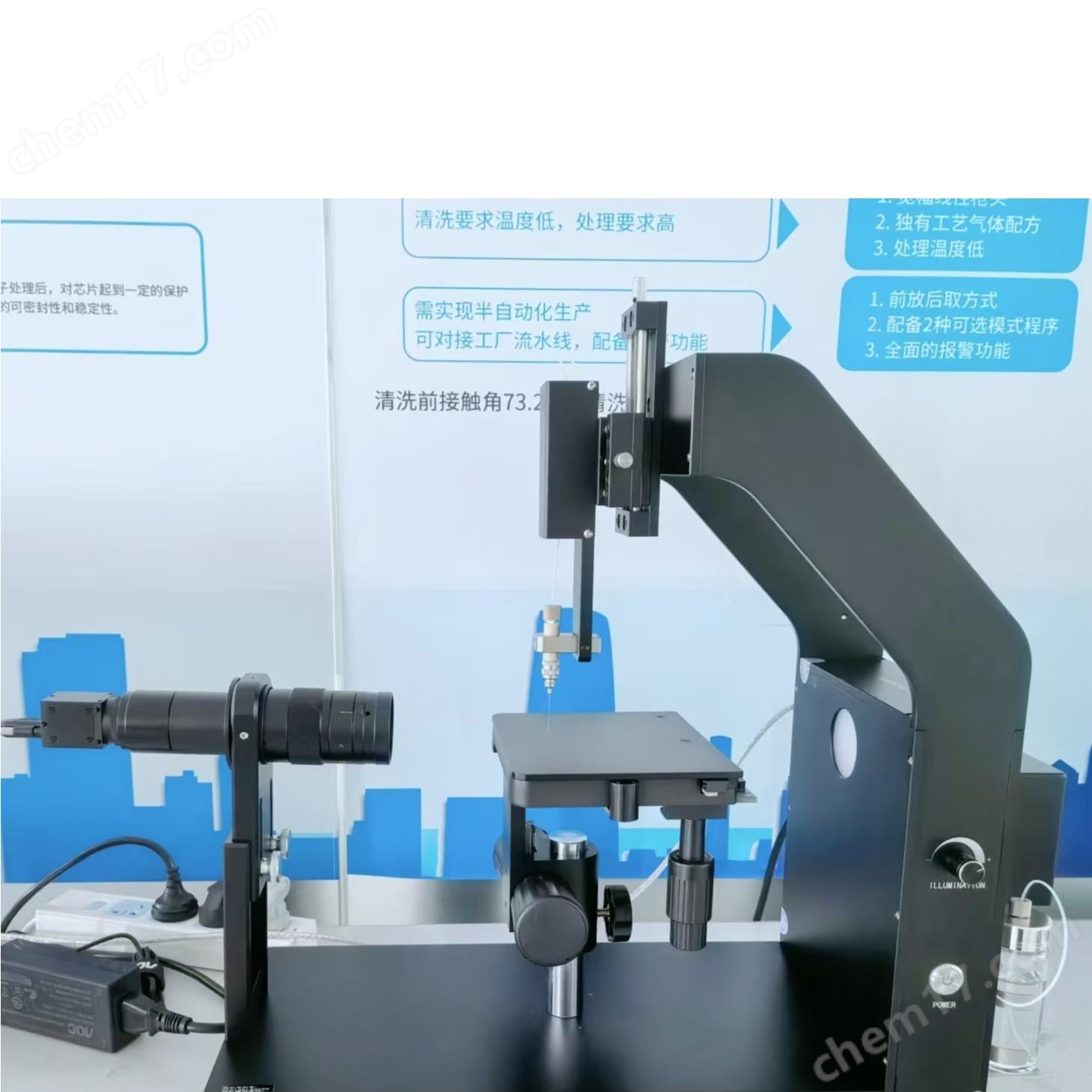

Water resistance test of domestic contact angle measuring instrument
NegotiableUpdate on 01/11
- Model
- Nature of the Manufacturer
- Producers
- Product Category
- Place of Origin
Overview
The water contact angle measuring instrument is mainly used to measure the contact angle of liquid to solid, that is, the wettability of liquid to solid. The instrument can measure the contact angle of various liquids to various materials. This instrument plays a very important role in scientific research and production in industries such as petroleum, printing and dyeing, spraying, and mineral processing.
Product Details
The characterization significance of water contact angle
In material characterization, water contact angle experiment is an important surface analysis technique that evaluates the wettability of material surfaces by measuring the contact angle of water droplets on the material surface. Its representational significance is mainly reflected in the following aspects:
1. Evaluate surface hydrophilicity and hydrophobicity
The water contact angle is a key indicator for measuring the hydrophilicity or hydrophobicity of a material surface. The smaller the contact angle, the more hydrophilic the material surface is; The larger the contact angle, the more hydrophobic the material surface is. For example:
-Hydrophilic surface: Contact angle less than 90 °, making it easy for liquids to spread on the surface.
-Hydrophobic surface: Contact angle greater than 90 ° makes it difficult for liquids to spread on the surface, resulting in the formation of larger water droplets.
-Superhydrophobic surface: Contact angle greater than 150 °, liquid hardly spreads on the surface, forming very round water droplets.
2. Characterize the surface modification effect
Evaluate the effectiveness of surface modification technology. By comparing the changes in contact angle before and after modification, the success and effectiveness of surface modification can be determined.
3. Study surface chemical properties
The contact angle experiment can provide information on the surface chemical properties of materials. The changes in surface chemical properties can affect the spreading behavior of liquids on the surface.
-Surface energy: The contact angle is closely related to surface energy, and the surface energy of a material can be indirectly inferred through contact angle experiments.
-Surface functional groups: The type and distribution of surface functional groups can affect the contact angle. For example, surfaces containing hydroxyl groups (- OH) typically have higher hydrophilicity, while surfaces containing fluoride (- F) typically have higher hydrophobicity.
4. Evaluate biocompatibility
In the biomedical field, the surface wettability of materials has a significant impact on cell adhesion, growth, and tissue integration. Hydrophilic surfaces are usually more conducive to cell adhesion and growth, while hydrophobic surfaces may inhibit cell adhesion.
5. Guide material design and optimization
For example:
-Waterproof material: A material designed with high hydrophobicity, used for waterproof coatings or waterproof fabrics.
-Anti fouling material: Design hydrophobic surfaces with low surface energy to reduce the adhesion of pollutants.
6. Quality control and standardization
In industrial production, contact angle experiments can be used for quality control and standardization. By regularly measuring the contact angle, the consistency and stability of surface treatment and coating technology during the production process can be ensured.
7. Study the surface microstructure
The contact angle experiment can also provide information on the surface microstructure. The microstructure of the surface, such as roughness and porosity, can affect the spreading behavior of liquids on the surface.
8. Evaluate surface contamination and cleanliness
The contact angle experiment can be used to evaluate the contamination and cleanliness of material surfaces. Surface contamination usually leads to changes in contact angle, and measuring the contact angle can determine whether the surface is contaminated.
9. Study surface stability
The contact angle experiment can be used to study the stability of material surfaces under different environmental conditions.
10. Guide the development of coating technology
In the development of coating technology, contact angle experiments can be used to guide the optimization of coating formulations and processes. By measuring the contact angle under different formulations and process conditions, the optimal coating scheme can be found.
Similar Product Recommend