-
E-mail
chinarel@163.com
-
Phone
18015536306
-
Address
No. 7 Changsheng Industrial Park, Jiancheng Road, Rennan Village, Zhitang Town, Changshu City, Jiangsu Province
Product Categories
Heatwave Electric Heating Technology (Suzhou) Co., Ltd

Various temperature measuring element control systems
NegotiableUpdate on 08/07
- Model
- Nature of the Manufacturer
- Producers
- Product Category
- Place of Origin
Overview
Common temperature detection components include thermocouples and thermistors. The temperature measurement principle of thermal resistance is based on the characteristic that the resistance value of a conductor or semiconductor changes with temperature to measure temperature and temperature related parameters; The basic principle of thermocouple temperature measurement is that two conductors with different compositions form a closed circuit. When there is a temperature gradient at both ends, current will flow through the circuit, and there will be an electromotive force - thermoelectric force - between the two ends, which is called the Seebeck effect.
Product Details
Temperature measuring element control system
|



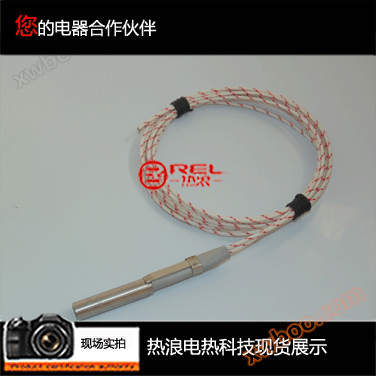
☆ Internal lead single head heating tube, external lead single head heating rod, bent angle heating rod, etc
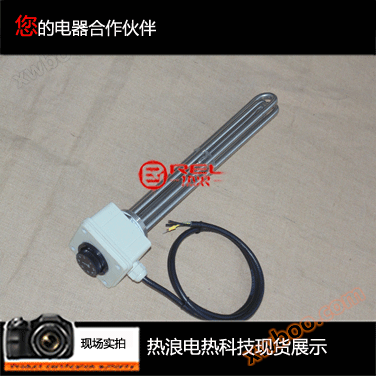
☆ Flange heater, threaded heating tube, high-power heating tube, hot runner heater, finned heating tube, PTFE heater, etc
☆ Stainless steel heating coils, mica heating coils, cast aluminum heating coils, ceramic heating coils, etc
☆ Stainless steel heating plate, mica heating element, cast aluminum electric heating plate, etc
☆ Temperature control box (digital display, mechanical), hot runner temperature control box, etc
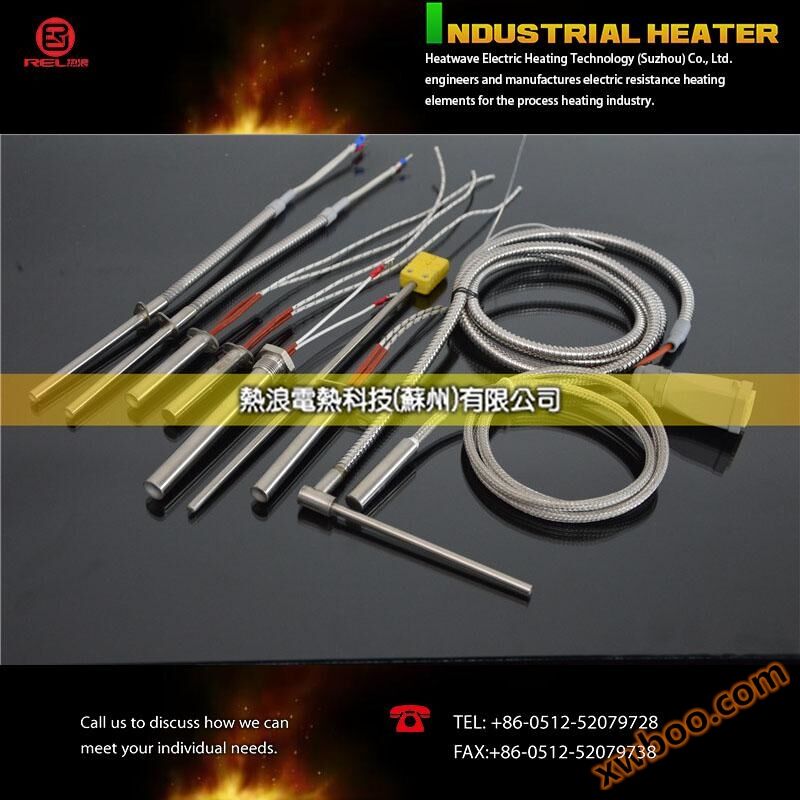
Various temperature measuring components such as thermocouples and PT100
heat waveSpecializing in the production of various electric heating equipment, welcome to consult!
The similarities between thermocouples and thermal resistors are that they both belong to contact temperature measuring instruments. Although their functions are the same, they measure the temperature of objects, but their principles and characteristics are not entirely the same.
Differences:
1、 Different characteristics
Thermocouple features: It is a widely used temperature device in temperature measurement. Its main characteristics are wide measurement range, stable performance, simple structure, good dynamic response, and the ability to transmit 4-20mA electrical signals remotely, making it easy for automatic and centralized control.
Characteristics of Thermistor: It can transmit electrical signals remotely, has high sensitivity, strong stability, good interchangeability and accuracy, but requires power excitation and cannot measure temperature changes instantaneously.
2、 The principle is different:
The temperature measurement principle of thermocouples is based on the thermoelectric effect. Connecting two different conductors or semiconductors into a closed circuit, when the temperatures at the two junctions are different, a thermoelectric potential will be generated in the circuit. This phenomenon is called thermoelectric effect, also known as Seebeck effect. The thermoelectric potential generated in a closed circuit consists of two types of potentials: thermoelectric potential and contact potential.
The temperature measurement principle of thermal resistance is based on the characteristic that the resistance value of a conductor or semiconductor changes with temperature.
The division marks of thermocouples mainly include S, R, B, N, K, E, J, T, etc.
Thermocouple shapes: needle type thermocouple, threaded tube connector type, movable flange type, sealed terminal type, etc., can be customized according to customer requirements!
There are three ways to lead out thermal resistors: 2-wire system, 3-wire system, and 4-wire system.
How to choose thermocouples and thermistors?
According to the temperature measurement range, thermocouples are generally selected for temperatures above 500 ℃, while thermistors are generally selected for temperatures below 500 ℃;
Select based on measurement accuracy: choose a thermistor for high accuracy requirements and a thermocouple for low accuracy requirements;
According to the measurement range selection: thermocouples generally measure the "point" temperature, while thermal resistors generally measure the spatial average temperature.
sheath thermocouple
In the IEC1515 standard, it is called "mineral insulated thermocouple cable", which means inorganic mineral insulated thermocouple cable. The thermocouple is formed by integral drawing of the thermoelectric electrode, insulation material, and sheath, and its outer surface appears to be covered with a layer of "armor", hence it is called an armored thermocouple. Compared with general assembled thermocouples, it has advantages such as high voltage resistance, good bendability, good oxidation resistance, and long service life
Similar Product Recommend