-
E-mail
sale05@hamag.cn
-
Phone
18106608087
-
Address
No. 667 Chaoyang Road, Jiangshan Town, Yinzhou District, Ningbo City, Zhejiang Province
Product Categories
Zhejiang Hamai Technology Co., Ltd
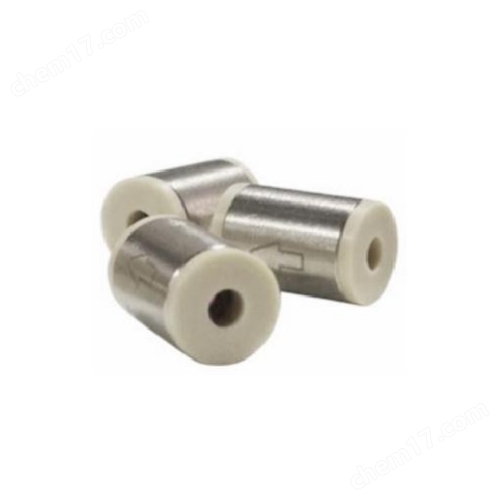
Valve core/one-way valve
NegotiableUpdate on 12/30
- Model
- Nature of the Manufacturer
- Producers
- Product Category
- Place of Origin
Overview
Valve core/one-way valve (injection valve) is a key component used in chromatographic analysis to accurately introduce samples into the chromatographic system. Its functions include controlling sample volume, switching mobile phase paths, and reducing cross contamination.
Product Details
Valve core/one-way valveThe injection valve is a key component used in chromatographic analysis to accurately introduce samples into the chromatographic system. Its functions include controlling sample volume, switching mobile phase paths, and reducing cross contamination;
Valve core/one-way valveClassified by operation method:
Manual injection valve: By manually rotating the valve core to switch the flow path, it is suitable for laboratory small batch analysis, such as Agilent's 7725i (stainless steel) and 9725i (PEEK material) valves;
Automatic injection valve: integrated into the automatic injector, achieving high-throughput analysis and improving repeatability through program control;
Classified by application scenario:
Gas chromatography (GC) injection valve: such as a six way valve, used for gas or liquid sample injection, paired with a microinjector (10 μ L for packed columns and 1 μ L for capillary columns);
Liquid chromatography (HPLC) injection valve: such as high-pressure manual injection valve (pressure resistance up to 1200 bar), suitable for preparative chromatography of high flow rate and large volume samples.
Operation mode and precautions:
1. Typical operating mode 1. Split injection:
Suitable for high concentration samples, most of the sample gas is released through the diversion outlet, and only 1% -5% enters the chromatographic column, reducing column load;
Choose a liner with reduced diameter or glass wool to ensure uniform gasification and prevent solid residue;
2. Non split injection:
Suitable for trace analysis, by delaying the opening time of the diversion valve to allow all samples to enter the chromatographic column;
Maintenance and common problems
1. Pollution treatment: Regularly backwash or replace the sieve plate to avoid peak splitting caused by column head pollution;
2. Sealing inspection: Use a soap film flowmeter to detect leaks in the diversion gas path and ensure stable flow;