- Phone
-
Address
Era Wealth World
Product Categories
Beijing Century Jiantong Technology Co., Ltd


Ultra thin heat flow sensor
NegotiableUpdate on 05/15
- Model
- Nature of the Manufacturer
- Producers
- Product Category
- Place of Origin
Overview
CHFS ultra-thin heat flux sensor: measuring object: total heat flux (radiation+convection) or conducted heat flux. Size: Minimum 5 3mm, Maximum 200; 200mm heat flow range 1-500kW/m; Optional $r $n Temperature resistance range: Conductive type: Long term 200 ° C; C, Short term 300 C Non water-cooled radiation: Long term 200 ° C; C, Short term 300 C water-cooled radiation: long-term 1000 C
Product Details
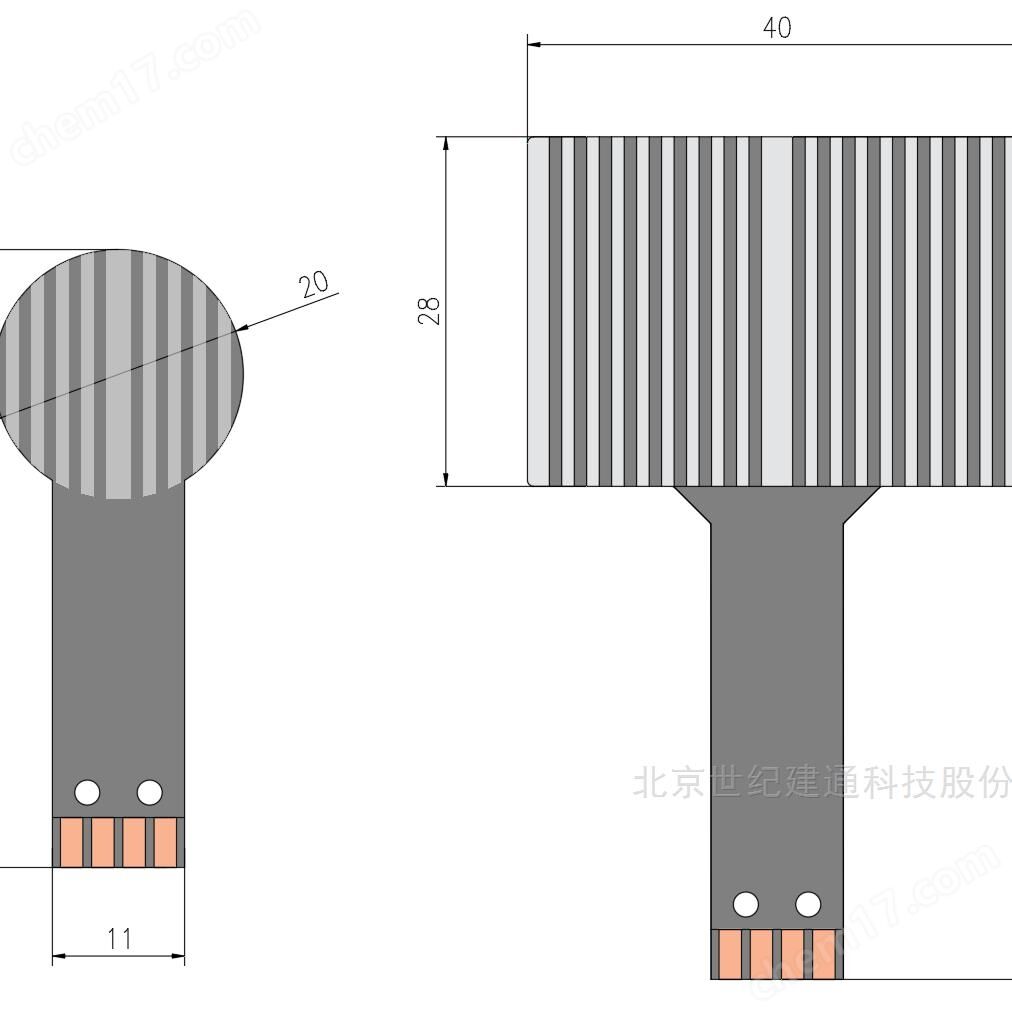
CHFS ultra-thin heat flow sensor
Measurement object: total heat flux (radiation+convection) or conducted heat flux
Size options: 5 × 3mm~200 × 200mm Heat flow range 1~500kW/m ² optional
Temperature resistance range: Conductive type: Long term 200 ° C, short-term 300 ° C Non water-cooled radiation: Long term 200 ° C, short-term 300 ° C
Water cooled radiation: long-term 1000 ° C
Built in T-type thermocouple: default not built-in, customizable
Response time: 300ms Accuracy typically ± 5%, customizable ± 3%
Features: Highly customizable, customizable conductive, radiative, convective, radiative+convective types
Ordering instructions:
Default packaging list: 1 CHFS series sensor, 1 factory calibration certificate, 1 packaging box
Delivery time: In stock - shipped within 7 days; Futures or customized products -4 weeks
CHFSUltra thin heat flow sensor
The measurement accuracy of ultra-thin heat flow sensors may shift over prolonged use or in specific environments. Calibration is a crucial process in restoring its accuracy. By comparing with a standard heat source, the deviation between the actual measured value and the theoretical value of the sensor can be determined, and corresponding adjustments can be made accordingly. For example, in material thermal conductivity testing, if the sensor is not calibrated, incorrect thermal conductivity data may be obtained, which in turn affects the evaluation of the material's thermal properties.
Precautions for use:
1. Installation specifications: When installing sensors, ensure that they are tightly attached to the surface of the object being measured to avoid air gaps affecting heat transfer. Suitable thermal conductive adhesive or fixing devices can be used. At the same time, attention should be paid to the installation direction to ensure that the heat flow direction is consistent with the sensitive direction of the sensor.
2. Environmental adaptability: Understand the working temperature range and environmental requirements of the sensor. Additional protective measures may be necessary in high temperature, low temperature, or high humidity environments. For example, in high-temperature environments, it is necessary to prevent sensor overheating and damage; In humid environments, moisture-proof treatment should be done to avoid affecting the performance of sensors.
3. Measurement range matching: Different ultra-thin heat flow sensors have different measurement ranges. When using, choose the appropriate sensor based on the size of the measured heat flux. If the measurement range does not match, it may result in inaccurate measurements or sensor damage. For example, for measuring small heat flows, sensors with high sensitivity should be selected.
4. Data collection and processing: When connecting data collection devices, ensure the stability and accuracy of signal transmission. Set an appropriate sampling frequency to avoid data loss or aliasing. At the same time, in the process of data processing, abnormal data should be screened and removed to ensure the reliability of the final results.

Similar Product Recommend