- Phone
-
Address
301-305 Tuode Business Building, Unit 1, Building 1, Taibai Lake Modern Electronic Science and Education Base, Zhaohua Wenhui Street, Xuzhuang Street, Rencheng District, Jining City, Shandong Province
Product Categories
Shandong Jining Tuode Electronic Technology Co., Ltd


Tuode Children's Motor Development Scale Evaluation Tool Software System
NegotiableUpdate on 05/09
- Model
- Nature of the Manufacturer
- Producers
- Product Category
- Place of Origin
Overview
Tuode Children's Motor Development Scale Assessment Tool Software System $r $n1, Peabody Motor Development Scale (PDMS-2) $r $n2, Gross Motor Function Assessment Scale (GMFM) $r $n3, Fine Motor Function Assessment Scale (FMFM) $r $n4, Alberta Infant Motor Scale (AIMS) $r $n5, Denver Development Screening Test (DDST) $r $n6, Child Intelligence Development Screening Test (DST) $r $n7, Child Developmental Behavior Assessment Scale (Child Heart Scale II) $r $n8, Gesell Development Scale (Gesell)
Product Details
Tuode Children's Motor Development Scale Evaluation Tool Software System
1ThePeabodySports Development Scale(PDMS-2)
PDMS-2The Sports Development Scale6Composed of individual sub tests, including reflex, posture, movement, physical manipulation, grasping, and vision-Sports integration, etc249A project. Scope of use:0-5year12A child of one month. The test results are expressed as gross motor, fine motor, and total motor development quotient, which are good indicators for evaluating the overall level of motor development. This scale is used to assess gross and fine motor related skills in infants and young children in the early stages after birth, evaluate motor developmental delay, evaluate motor function in cerebral palsy, and can be used for evaluating children's motor rehabilitation.
2Gross motor function assessment scale(GMFM)
GMFMGross motor assessment score5Individual functional areas, including lying and turning over, sitting, crawling and kneeling, standing, walking and running/jumping88A project. Scope of use:5month-16A child of one year old. This scale is used to track and observe the development of gross motor function in children with cerebral palsy, analyze and predict the trajectory and outcome of gross motor development in children with different types and degrees of cerebral palsy, and effectively promote research on motor development and control in children with cerebral palsy.
3Fine motor function assessment scale(FMFM)
FMFMThe fine motor scale is divided into five aspects, including visual tracking, upper limb joint mobility, grasping ability, operational ability, and hand eye coordination ability61A project. Scope of use:0-3A child of one year old. This scale is mainly used for fine motor function in children with cerebral palsy, and children with normal motor function are3Being able to complete all projects within the age of one can reasonably assess the fine motor function level of children with cerebral palsy.
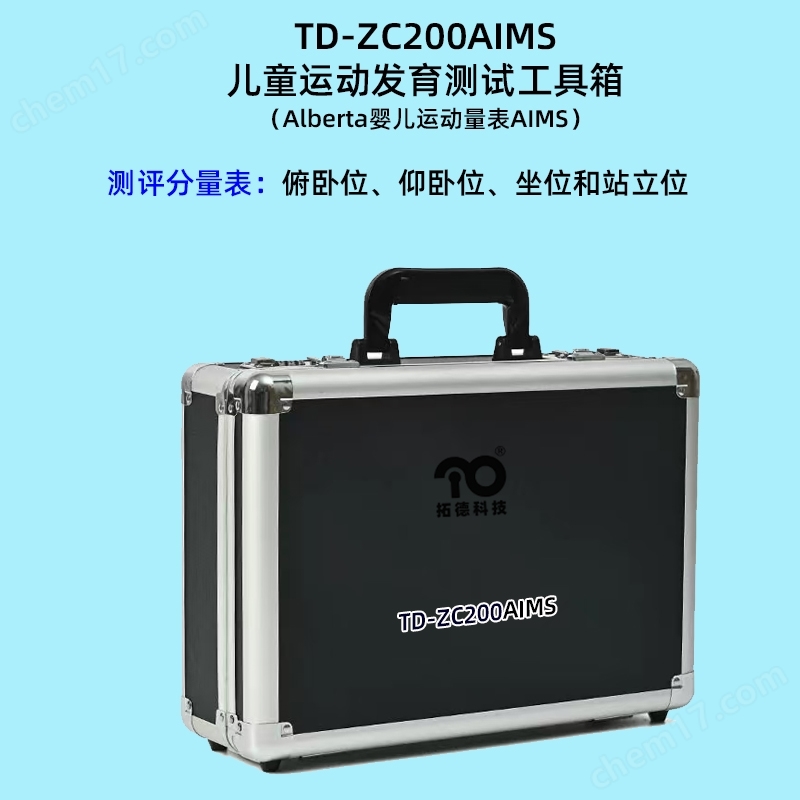
4TheAlbertaInfant Exercise Scale(AIMS)
AIMSThe Infant Movement Scale4Composed of multiple scales, including prone position, supine position, sitting position, and standing position, totaling58A project. Scope of use:0-18A child of one month. Compare the total score with the score of normal peers in a chart to determine the percentile of the infant's physical activity level. It can evaluate individuals who are normal, basically normal, slightly lagging behind, or suspected of having motor retardation. This scale is mainly used to evaluate the gross motor development of infants, especially for early screening and tracking of intervention effects in high-risk infant populations.
5Denver Developmental Screening Test(DDST)
Applicable to6Intelligent development screening for children under the age of. Testing is divided into individual tests-Social and fine motor skills-The four energy zones of adaptability, language, and gross motor skills, totaling104A test item. The test results are classified as normal, suspicious, and abnormal.
6Children's Intelligent Development Screening Test(DST)
Applicable to6Intelligent development screening for children under the age of. The test is divided into exercise, social adaptation, and intelligence3Each energy zone, in total120A project. The test results are based on intelligence index(MI)Development Business(DQ)Expressed.
7Child Developmental Behavior Assessment Scale (Child Heart Scale)-II)
Applicable to6Assessment of developmental behavior in children under the age of. The tests are divided into gross motor skills, fine motor skills, language proficiency, adaptability, and social behavior5Individual energy zones, total261A testing project. Test results based on developmental quotient(DQ)Expressed.
8Gesell Development Scale(Gesell)
Applicable to6Assessment of developmental behavior in children under the age of. The tests are divided into adaptive behavior, gross motor skills, fine motor skills, language, and individual skills-social5One energy zone. Test results based on developmental age(DA)And developmental merchants(DQ)Expressed.
9Baby-Social Life Ability Scale for Junior High School Students(S-M)
Applicable to6From one month to14or15Year old children. Full scale total132Items, including6Behavioral domains: independent living ability, athletic ability, homework, social interaction, participation in group activities, and self-management. Test results based on social quotient(SQ)Expressed.
10Newborns20Behavioral Neurological Assessment(NBNA)
The testing items include behavioral ability, passive muscle tone, active muscle tone, primitive reflexes, and general assessment. The test results are divided into qualified and unqualified.
11、0-1Yearly Neuromotor20Item inspection(INMA)
The testing items include visual and auditory perception, motor development, muscle tone, reflexes, and posture. The test results are divided into normal and abnormal.
12Bailey Infant and Child Development Scale(BSID-CR)
Test scope: Used for evaluation2~30Month old infants and young children. Assessment field: Common244One item, including an intelligence scale163Item, Exercise Scale81Item. Test evaluation: The results are measured using an intelligence scaleMDIAnd exercise scalePDIApplied to the assessment of infant and toddler development.
13Intelligent Development Scale for Infants and Young Children(CDCC)
Applicable to0-3The intellectual development of infants and young children. Full scale total182Items, including intelligence scales121A project and exercise scale61A project. The test results are based on the Intelligence Development IndexMDIPsychological and motor development indexPDIRepresented by Zhiling.
14Preschool children50Intelligent Screening Scale
suitable for3year10month-7year3Monthly screening for children's intellectual development. Measurement areas: self-awareness ability, motor skills (gross and fine motor), memory ability, observation ability, thinking ability, and common sense. Test results: Early detection of children with intellectual disabilities can promote the improvement of educational quality.
15Shuangxi Individualized Education Scale for Children with Mental Disorders
Applicable to3year-16Year old children. The Shuangxi Mental Scale is divided into seven major areas: sensory perception, gross motor skills, fine motor skills, self-care, communication, cognition, and social skills.
The above children's motor development scale requires auxiliary tools to complete the evaluation, which can be equipped with a motor development scale software system to automatically generate a motor development evaluation report.
Tuode Children's Motor Development Scale Evaluation Tool Software System


Similar Product Recommend