-
E-mail
info@tow-int.net
-
Phone
15221725700
-
Address
Building 2, No. 351 Sizhuan Road, Sijing Town, Songjiang District, Shanghai
Product Categories
Shanghai Tawang Intelligent Technology Co., Ltd
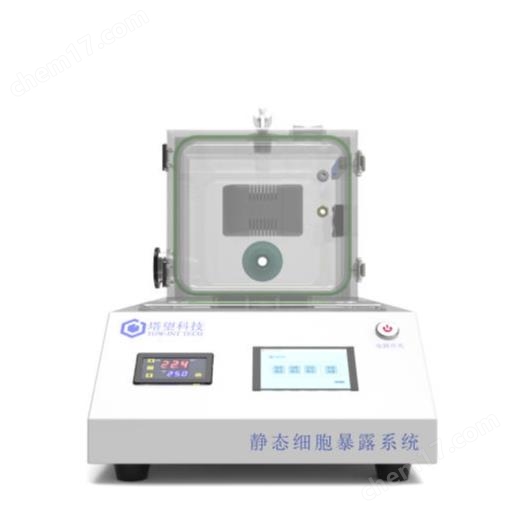

Tawang Technology Static Cell Exposure System with High Precision
NegotiableUpdate on 01/09
- Model
- Nature of the Manufacturer
- Producers
- Product Category
- Place of Origin
Overview
The static cell exposure system is developed based on cell gas-liquid interface technology. The Air Liquid Interface (ALI) exposure system is an in vitro experimental technique that simulates the real physiological environment of cells in the body, providing a more reliable and realistic experimental platform for scientific research in various fields. The key advantage of the gas-liquid interface exposure system in $r $n $r $n cells lies in its physiological relevance.
Product Details
Product description
The static cell exposure system is developed based on cell gas-liquid interface technology. The Air Liquid Interface (ALI) exposure system is an in vitro experimental technique that simulates the real physiological environment of cells in the body, providing a more reliable and realistic experimental platform for scientific research in various fields.
The key advantage of the cell gas-liquid interface exposure system lies in its "physiological relevance". It abandons the limitations of traditional immersion culture, allowing cells to be directly exposed to the gas phase environment, with nutrient provided by the culture medium below, simulating the real interface state of human tissues such as alveoli, respiratory tract, and skin. Therefore, whether evaluating environmental hazards, studying disease mechanisms, or developing new inhalation therapies, ALI exposure systems can provide more accurate and predictive experimental results than traditional methods. The Tawang Technology system further enhances the accuracy, repeatability, and efficiency of experiments by integrating high-precision aerosol generators, real-time environmental monitoring, and high-throughput options.
The system comes standard with a 24 hole exposure board, and can also choose 6-hole or 96 hole boards to achieve high-throughput exposure, making it possible to perform experimental series quickly and efficiently.
ALI air/liquid interface exposure

In order to meet the needs of conducting scientific experiments under physiological conditions, this exposure device is specifically designed for use at the gas/liquid interfaceDirectly exposing mammalian cells or tissues. Here, the cell culture is not covered by the culture medium as it is under immersion conditions, thus avoiding unwanted interactions between substances in the air and the culture medium.

High precision aerosol generator

Aerogen Solo

Aerogen Pro

model
standard form |
Small particle size type |
||
Flow Rate |
>0.3 ml/min |
Flow Rate |
>0.1 ml/min |
Particle Size |
VMD between 4.0 µm – 6.0 µm |
Particle Size |
VMD between 2.5 µm – 4.0 µm |
Residual Volume |
<0.2 ml |
Residual Volume |
<0.2 ml |
Particle size distribution of atomized particles

meritcan
Suitable for atomization of solutions and suspensions, optional dry powder aerosol generator
CO in cellular exposure environment2The concentration can be precisely controlled with a control accuracy of 0.1%
Provide dedicated cell gas-liquid interface exposure culture plates
Uniform distribution and exposure of cells in 24 well and 96 well HTS plates
Equipped with constant temperature and humidification functions, ensuring a conducive cell culture environment
Real time monitoring parameters: temperature, humidity, oxygen concentration CO2Concentration, pressure, optional aerosol concentration monitoring.
application
1. Inhalation toxicology and environmental health research
Air pollutant assessment: Accurately simulate the human lung environment by directly exposing pollutants in the air (such as PM2.5, PM10, diesel exhaust particulate matter, industrial dust, ozone, etc.) in aerosol form to lung epithelial cells (such as human bronchial epithelial cells) cultured on porous membranes. This avoids the non physiological process of pollutants first dissolving in the culture medium and then acting on cells in traditional immersion culture, and can more accurately reflect the direct damage mechanism, oxidative stress response, and inflammatory response of pollutants to the respiratory tract.
Safety evaluation of chemicals and nanomaterials: Conduct inhalation toxicity testing on new chemicals and engineering nanoparticles (such as carbon nanotubes and metal oxide nanoparticles). The system can accurately control the concentration, particle size distribution, and exposure time of particulate matter, evaluate its effects on cell viability, barrier function, gene expression, etc., and provide key data for risk assessment and safety standard formulation.
Tobacco and DianzismokeResearch: Used to evaluate traditional cigarette smokedianzismokeStudy the toxic effects of aerosols on lung cells and investigate their potential risks such as inflammation and carcinogenesis.
2. Research on respiratory pathogens
The ALI system provides an ideal physiological model for studying the interaction between pathogens such as viruses and bacteria and host cells.
Mechanism of viral infection: Cultivate well differentiated human respiratory epithelial cells (capable of forming cilia and mucus layers) at the gas-liquid interface, simulating the real respiratory environment. Influenza virus, respiratory syncytial virus (RSV), SARS-CoV-2 and other virus aerosols can be directly exposed to cells to study the infection efficiency, replication cycle, host immune response, and transmission mechanism of viruses in the respiratory tract.
Bacterial colonization and infection: Study the colonization, biofilm formation, and interaction with host cells of respiratory pathogens such as Pseudomonas aeruginosa and Streptococcus pneumoniae in gas-liquid interface environments.
3. Inhalation based drug development and screening
This system is a powerful tool for evaluating the efficacy and safety of inhaled formulations, such as nebulized inhalants and dry powder inhalers.
Drug delivery efficiency evaluation: Using a high-precision aerosol generator to atomize drug formulations and directly expose them to ALI cultured cells can accurately quantify the amount of drug deposition on cells and study their absorption, distribution, and pharmacological effects.
New drug screening: Combined with high-throughput (HTS) plates (such as 24 well or 96 well plates), a large number of candidate drug molecules can be quickly screened for efficacy in specific cell models (such as asthma and COPD models).
Personalized medicine: can be used to evaluate the impact of different formulations or delivery devices on drug deposition and efficacy.
4. Cell pretreatment and functional research
Cell pretreatment: Prior to conducting other experiments such as transfection and co culture, cells are pretreated with specific test substances (gases, aerosols) to simulate specific physiological or pathological states.
Barrier function research: ALI cultured cells can form tight intercellular connections and functional barriers. The exposure system can be used to study the effects of various stimuli (pollutants, inflammatory factors) on the integrity of the epithelial/endothelial barrier.
Transfection and gene manipulation: can be used to deliver transfection reagents or gene editing tools to cell populations in high-throughput screening.
5. Materials Science and Coating Technology
Biomaterial coating: Specific bioactive molecules, drugs, or nanomaterials can be uniformly deposited in aerosol form on the cell layer of implants or medical devices to study their biocompatibility or achieve functional coating.
*Our company can provide 3Q verification, customize functions according to customers' special applications and needs, and also provide related experimental services. Please contact us for details.
*This introduction and parameters are basic product information and may lag behind product updates. Please contact our company for specific parameters.
Similar Product Recommend


