- Phone
-
Address
Yizhuang Economic and Technological Development Zone, Beijing
Product Categories
- Electric constant temperature incubator
- Printing machine vacuum pump soundproof cover
- Design and construction of pneumatic engineering
- soundproof booth
- Medical Silencing Room
- Aerodynamic multifunctional experimental platform
- Laboratory furniture
- soundproof room
- Vacuum pump soundproof cover
- Laboratory moving service
- fume hood
Beijing Ruiyuan Lixin Technology Co., Ltd
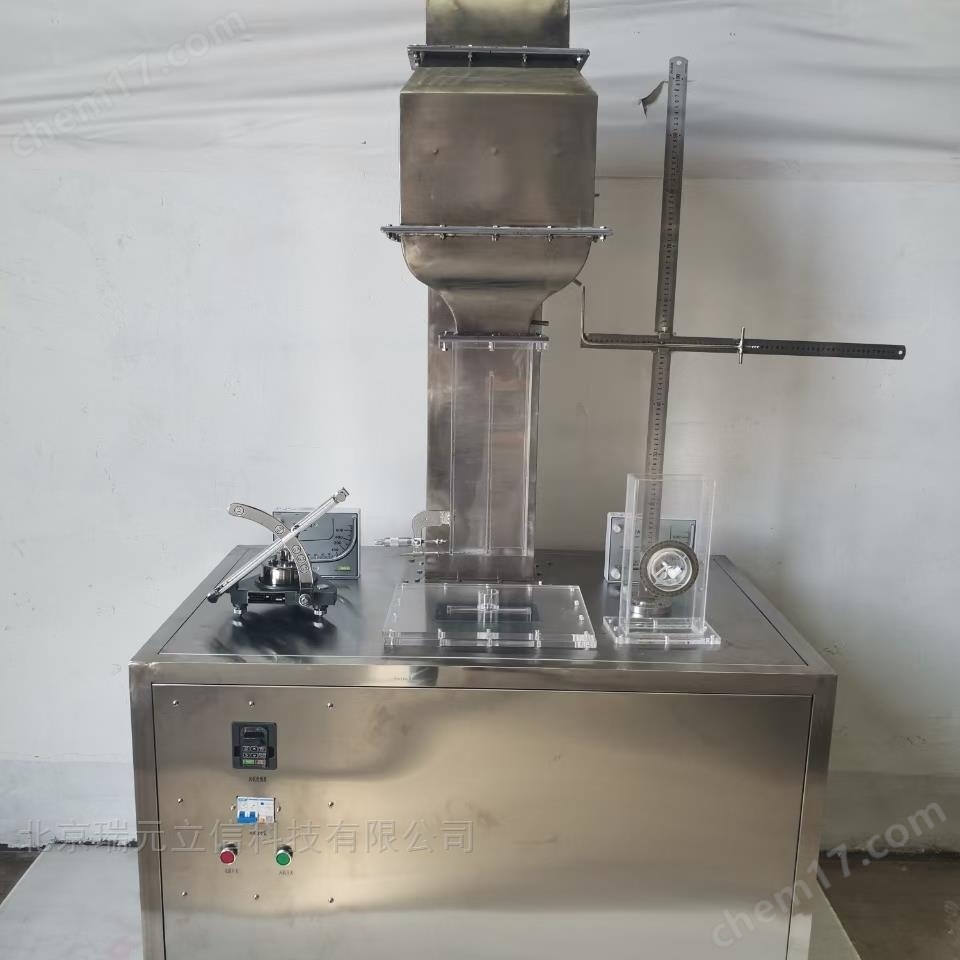

TRL Aerodynamic Multi functional Platform
NegotiableUpdate on 05/06
- Model
- Nature of the Manufacturer
- Producers
- Product Category
- Place of Origin
Overview
Turbulent Jet Experiment $r $n 1. Experimental Objective $r $n ⑴: To observe the jet structure and velocity distribution; By measuring the cross-sectional velocity distribution of gas turbulent jet, the characteristics of turbulent jet can be understood. $r $n ⑵ Learn the principles and methods of using pitot tubes and micro pressure gauges to measure airflow velocity, and measure the turbulence coefficient α. $r $n 2. Experimental principle $r $n Jet refers to a fluid that is ejected outward from an orifice or nozzle and enters another body. The motion pattern of jets can be divided into laminar flow and turbulent flow. When the turbulent jet of $r $n is injected into a stationary environment at a uniform velocity from the nozzle outlet, it forms a velocity discontinuous discontinuity with the surrounding stationary fluid. The discontinuity is lost due to interference
Product Details
TRLAerodynamic multifunctional experimental platform (wind tunnel)
When a turbulent jet is injected into a stationary environment at a uniform velocity from the nozzle outlet, it forms a velocity discontinuous discontinuity with the surrounding stationary fluid. The discontinuity becomes unstable due to interference and generates vortices, which suck up the surrounding fluid and enter the jet. At the same time, it continuously moves, deforms, and splits to produce turbulence, and its influence gradually develops towards the inner and outer sides; Forming two freely turbulent mixing layers inside and outside, there is no external force along the flow direction because the static pressure of the entire jet field is equal.
Due to the lateral transfer of momentum, the fluid sucked in gains momentum and flows forward along with the originally ejected fluid. The original fluid loses momentum and its velocity decreases, while the momentum of the free jet remains unchanged. A certain velocity gradient is formed in the mixed layer, also known as the shear layer. The result of entrainment and mixing causes the jet cross-section to continuously expand, while the flow velocity decreases and the flow rate increases along the way.
Due to the intermittent phenomenon of turbulence, the jet boundary is actually an irregular surface composed of turbulent eddies and surrounding potential flows. However, in practical analysis, the jet boundary is regarded as a linearly extended interface from a statistical average perspective. Extend the boundary line of the main section and intersect it withOPoint,OThe point is the jet pole.
After forming a stable flow pattern, the turbulent jet is divided into several sections. The turbulent mixing part that extends from the nozzle boundary to the inside and outside is called the boundary layer. The central part maintains the original outlet velocity without being affected by mixing, which is called the jet core. The flow from the outlet to the section where the core disappears is called the starting section. The part where turbulence is fully developed is called the main section.
The longitudinal velocity distribution of each section of the jet body is similar and can be expressed using a dimensionless radius verification formula.
 (21)
Where:UMeasurement point flow velocity,m/s;
UmMeasure the flow velocity at the center point of the cross-section,m/s;
yThe distance from the measuring point to the axis,m;
y0Jet half width can be estimated using the following formula
Where:RNozzle radius,m;
XThe distance from the nozzle outlet to the experimental section,m
θ jet diffusion angle.
The estimated value is for reference only, and the measurement point should be used during the experimentU=0To determine the conditions.
1experimental setup
The damping network voltage stabilizing box is equipped with this device2Different jet nozzles can be used, and one to two of them can be chosen during the experiment.In diameter30mmBoth cylindrical and convergent nozzle test sections can be used for circular jet experiments; In addition, it is equipped with a flat nozzle (wide)15mm, Long150mm)Can conduct flat jet experiments. The nozzle is placed at the bottom of the pressure regulator box on the test bench, and a pitot tube and measuring device are installed on the right side of the nozzleX ruler y rulerConnect the pitot tube and micro pressure gauge to measure the velocity distribution of each section.
Cylindrical nozzle radius γ0 =15mm
Flat (slit shaped) nozzle
Half width of nozzle b0 =15mm
Spray nozzle length i=150mm
IIBasic principle of the experiment:
㈠Determination of turbulence coefficient
⑴According to the motion characteristics of the jet,The non dimensional (dimensionless) velocity on each section of the jet starting section and basic section (range) has similarity with the distribution of non dimensional coordinates. Represented by the formula of jet motion characteristics, it is:
(1)
Where:yDistance between the measuring point and the axis(m);y0The half width of the jet can be calculated using the following formula:
Boundary layer thickness on the same cross-section (m);
υMeasurement point flow velocity(m/s);
υm cross-sectionaxisFlow rate(m/s)。
This can verify the similarity of dimensionless velocity distributions.
⑵Formula for axial velocity of jet basic section
①Circular jet
(2)
②Flat jet
(3)
Where:γ0Circular jet outlet radius (m)
b0Half width of flat jet outlet (m)
Range of S-jet (m)
υ0Flow velocity at the nozzle (m/s)
Select within the basic rangeThree cross-sections, measure the υ of each cross-section obtained0 ,S and nozzle's υ0andγ0(orb0)Substitute equation(2) Or equation (3), three alpha values are obtained, and the average value is taken to obtain the turbulence coefficient alpha.
㈡Measure flow velocity
(4)
Where:y0Jet radius
r0Nozzle radius
XDistance from nozzle outlet to experimental section
θdiffusion angle
5)
Where:uMeasurement point flow velocity
cBi custody correction factor0.98~1
Bi custody pressure difference
ρ air density
(6)
Where: umMeasure the flow velocity at the center of the cross-section
yThe distance between the measuring point and the center
1. Use a pitot tube to determine the center coordinate Y on the nozzle outlet sectioncenterAnd record the value.