- Phone
-
Address
Yizhuang Economic and Technological Development Zone, Beijing
Product Categories
- Electric constant temperature incubator
- Printing machine vacuum pump soundproof cover
- Design and construction of pneumatic engineering
- soundproof booth
- Medical Silencing Room
- Aerodynamic multifunctional experimental platform
- Laboratory furniture
- soundproof room
- Vacuum pump soundproof cover
- Laboratory moving service
- fume hood
Beijing Ruiyuan Lixin Technology Co., Ltd


Construction of pneumatic engineering
NegotiableUpdate on 05/06
- Model
- Nature of the Manufacturer
- Producers
- Product Category
- Place of Origin
Overview
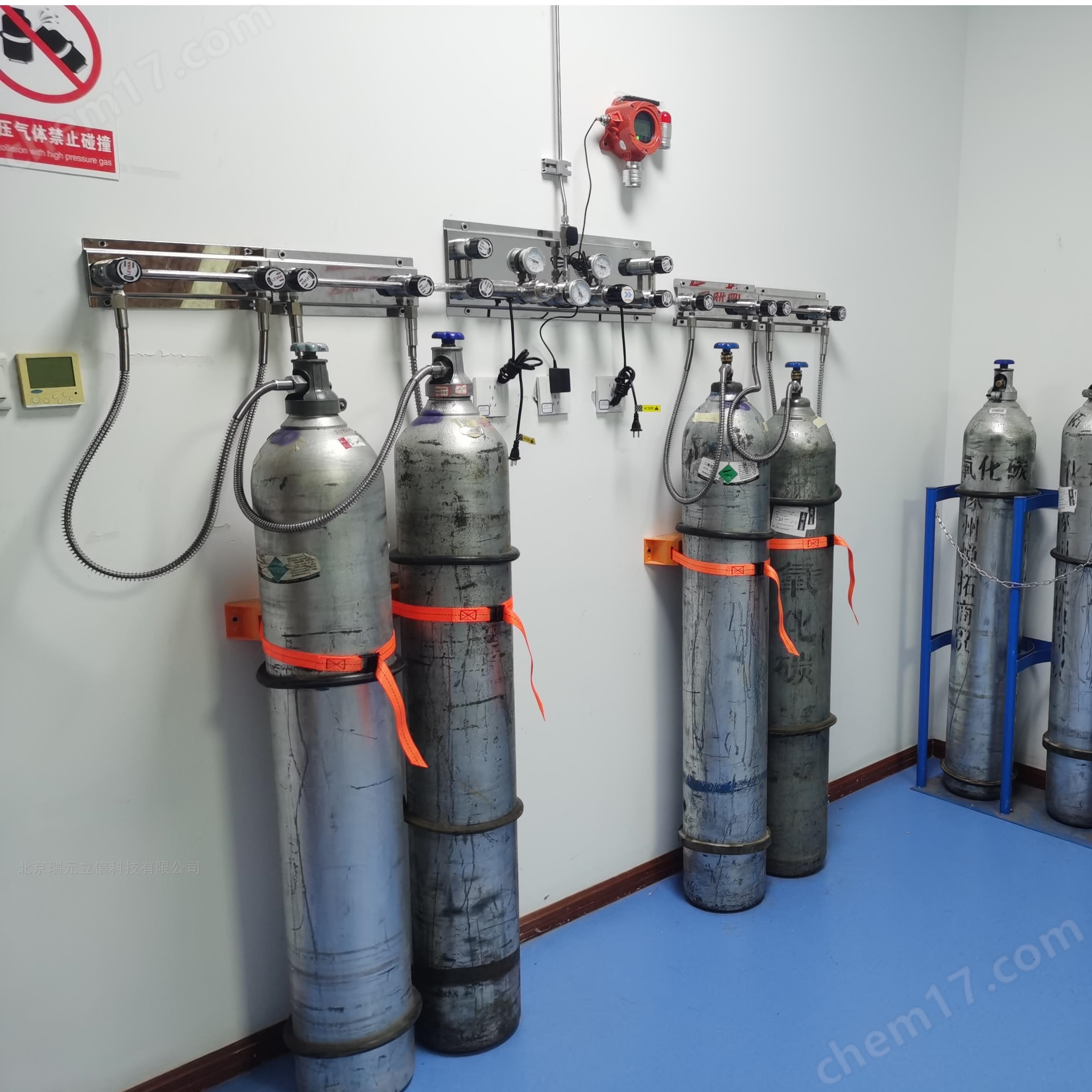
Our company undertakes the construction of various laboratory gas engineering projects. Our company has a professional gas construction team that provides one-stop services for laboratory centralized gas supply and laboratory gas engineering. The laboratory centralized gas supply system generally consists of high-pressure steel cylinders, gas switching devices, pressure reducing devices, valves, pipelines, filters, alarms, terminal boxes, regulating valves, and other parts. In our laboratory construction, Tianrunlong's centralized gas supply system has the characteristics of economy and safety. $r $n $r $n Economy refers to the limited savings that can be achieved by building a centralized gas cylinder room
Product Details
Laboratory centralized gas supply/one-stop service for laboratory gas pipeline engineering
The centralized gas supply system in the laboratory generally consists of high-pressure steel cylinders, gas switching devices, pressure reducing devices, valves, pipelines, filters, alarms, terminal boxes, regulating valves, and other components. In our laboratory construction, Tianrunlong's centralized gas supply system has the characteristics of economy and safety.
Economy refers to the construction of a centralized gas cylinder room that can save limited laboratory space, without the need to cut off gas when replacing cylinders, ensuring a continuous supply of gas. Because all points using the same gas come from the same source, users only need to manage fewer cylinders and pay less cylinder rent. This gas supply method can reduce transportation costs, decrease the amount of residual gas returned to the gas company in empty bottles, and achieve the goal of economic feasibility. Safety refers to the centralized storage and supply of gas sources, ensuring that analysis and testing personnel are protected from toxic and harmful gases during experiments.
Centralized gas supply has become a major trend in laboratory development and construction due to its safety, convenience, aesthetics, and ease of management. Compared to traditional decentralized gas supply, centralized gas supply can achieve safe cylinder management, precise gas monitoring, long-lasting gas supply, and intelligent system control.
Construction preparation
1. Construction personnel should carefully check the construction design drawings before construction, organize construction according to the technical requirements of the drawings, strictly follow the relevant regulations, specifications, and quality inspection and evaluation standards, and promptly handle design change negotiations with the design personnel for any changes or modifications. They should not arbitrarily change the design drawings, and detailed construction technology disclosure should be carried out for key construction areas.
2. After entering the construction site, the construction team shall follow the unified arrangement of the contracting party, protect various finished products on site, arrange temporary electricity, and carefully inspect electrical equipment, distribution boxes, and wires.
3. Materials and equipment should have factory certificates of conformity, material certification documents, and inspection reports. After entering the site, quality, specifications, quantity, and other verification work should be carried out in conjunction with the contracting party, and a written inspection record should be formed.
Key points for planning the laying of gas pipelines:
(1) The outlet of the gas cylinder valve adopts the GB standard external thread form (G5/8 "). In order to facilitate the connection between the pipeline system and the gas cylinder, a conversion joint (gas cylinder joint) should be provided from the outlet of the gas cylinder valve to the pipeline system.
(2) In order to facilitate the replacement of gas cylinders during use, a high-pressure spiral tube with high pressure resistance should be installed between the cylinder joint and the regulating valve.
(3) Due to the gas pressure inside the gas cylinder being around 20-25MP, the pressure at the point of use is relatively low, resulting in changes in gas pressure and significant differences in target values. Therefore, a primary pressure reducing valve should be installed at the outlet of the gas cylinder, and a secondary pressure reducing valve should be installed in front of the gas usage point.
(4) Each gas system should be equipped with a device that can quickly cut off the gas supply in emergency situations. In order to ensure the convenience and speed of the switch system, the on/off valve of this project adopts a ball valve.
(5) In order to prevent external air from entering the pipeline system during bottle replacement, a ball valve should be installed. The ball valve should be connected to the exhaust pipe, which should be reliably connected to the atmosphere. The exhaust pipes for flammable and combustible gases should be set independently, and explosion-proof check valves should be installed at the outlet of the exhaust pipe to prevent backfire.
(6) In hydrogen and acetylene systems, in order to prevent backfire, explosion-proof check valves should be installed at the low-pressure end of the system (after the primary pressure reducing valve).
(7) At the outlet of the gas pipeline system, a ball valve should be installed for easy switching of the system.
(8) In order to ensure the purity of the gas and the airtightness of the pipeline system, all pipelines are made of 316L stainless steel and the inner surface is treated with BA.
(9) In order to facilitate maintenance and replacement of valve components, while ensuring the airtightness of the system, the connection between the pipeline and valve components should be made using high-pressure double sleeve joints.
(10) Pipe fittings (clamps) should be made of high temperature resistant materials, which are required to be sturdy, lightweight, and durable.
(11) Gas identification with gas composition should be affixed to the control panel of the regulating valve, outlet point control panel, and all pipelines used.
(12) The bottle holder should be made of ABS engineering plastic.
Key points of construction technology:
(1) All stainless steel pipes are sealed at both ends with plastic covers, which can only be removed after entering the construction site and before installation.
(2) All pipe fittings should be purged with high-purity nitrogen at least three times before installation into the system.
(3) When laying pipelines, attention should be paid to straightness. A pipe bender should be used at the bend, and manual bending is not allowed. When cutting the pipeline, a specialized pipe cutter should be used, and sawing the pipeline with a saw is strictly prohibited. After the pipeline is cut, special tools should be used to treat the fracture, and it is strictly prohibited to use ordinary iron knives for treatment.
(4) A set of pipe clamps should be installed every 1.5 meters along the route of the pipeline.
(5) Pipelines passing through walls and floors should be fitted with sleeves, and the gap between the sleeve and the pipeline should be filled and sealed with other materials.
(6) Gas labels indicating the composition and concentration of the corresponding gas should be affixed to all control valve fixing panels, all outlet point fixing brackets, and all pipelines.
7) After all system components are installed, high-purity ammonia gas should be used for three or more high flow blowdowns.
(8) After blowing, use high-purity nitrogen gas for leak detection and pressure maintenance testing, and the test pressure should be 1.5 times the working pressure.
(9) During the entire construction process, attention should be paid to construction safety, especially when working at heights (on ladders or scaffolding), which should be supervised by a dedicated person.
construction acceptance
After the construction is completed, we should conduct a centralized gas supply system inspection in conjunction with the contracting party. The inspection contents are as follows:
(1) Whether the material of the components meets the material requirements in the contract.
(2) Are all connection points secure and reliable.
(3) Is the pipeline layout reasonable and aesthetically pleasing.
(4) Is the gas label pasted correctly and aesthetically pleasing.
(5) Is the pipeline connection correct.
(6) Pressure test: Fill high-purity nitrogen gas into the system pipeline, with a pressure equal to the working pressure, to ensure that all components are visually inspected for breakage and deformation within 21 hours, and whether the pipeline fixing bracket and clamp are loose or detached.
(7) Pressure drop test: Fill high-purity nitrogen into the system pipeline at a pressure of 1.5 times the working pressure, and maintain the pressure for 24 hours. Check if the change in pressure gauge reading is less than 0.25%.
(8) Leakage test: Fill high-purity nitrogen gas into the system pipeline at a pressure of 1.5 times the working pressure, apply specialized leak detection liquid to all component connections of the system, and check for bubble formation every 5 minutes. This testing process lasts for 30 minutes.
Generally, centralized gas supply in laboratories involves placing gas cylinders in different compartments according to their non combustible and combustible properties, and then transporting the gas through a pipeline system to the laboratory (instrument end). At the same time, it is necessary to directly adjust the pressure and flow rate of the gas through a pressure regulator installed on the experimental bench according to the needs of the experiment itself, in order to achieve better experimental results. The characteristics of the centralized gas supply system in the laboratory are mainly reflected in three aspects: safety, economy, and purity.
1. Safety: Steel cylinders (cylinders) are placed in a safe area outside the work zone, and workers can cut off gas supply in emergency situations through the equipped remote cut-off system. The reasonable layout of the steel cylinder storage area can maintain a safe distance between combustible and flammable containers, eliminate high-pressure equipment in the workplace, and provide ventilation in the gas cylinder room, thus avoiding the potential danger of flammable or toxic gas leakage. The operation of steel cylinders must still be carried out by trained and qualified personnel to reduce the probability of major accidents.
2. Economy: Building a gas cylinder room can save limited laboratory space. When replacing the gas cylinder, there is no need to cut off the gas, which not only saves time but also ensures the continuous supply of gas. Staff only need to manage fewer steel cylinders and pay less cylinder rent, as all usage points using the same gas come from the same gas source. This supply method will ultimately reduce transportation costs, decrease the amount of residual gas in empty bottles returned to gas companies, and make steel cylinder management more unified and standardized.
3. Purity: The reduction in the frequency of cylinder replacement reduces the probability of impurities entering the system, improving the accuracy of the experiment.