- Phone
-
Address
Liubao Industrial Park, Yangzhou City, Jiangsu Province
Product Categories
Jiangsu Ruyan Busbar Manufacturing Co., Ltd


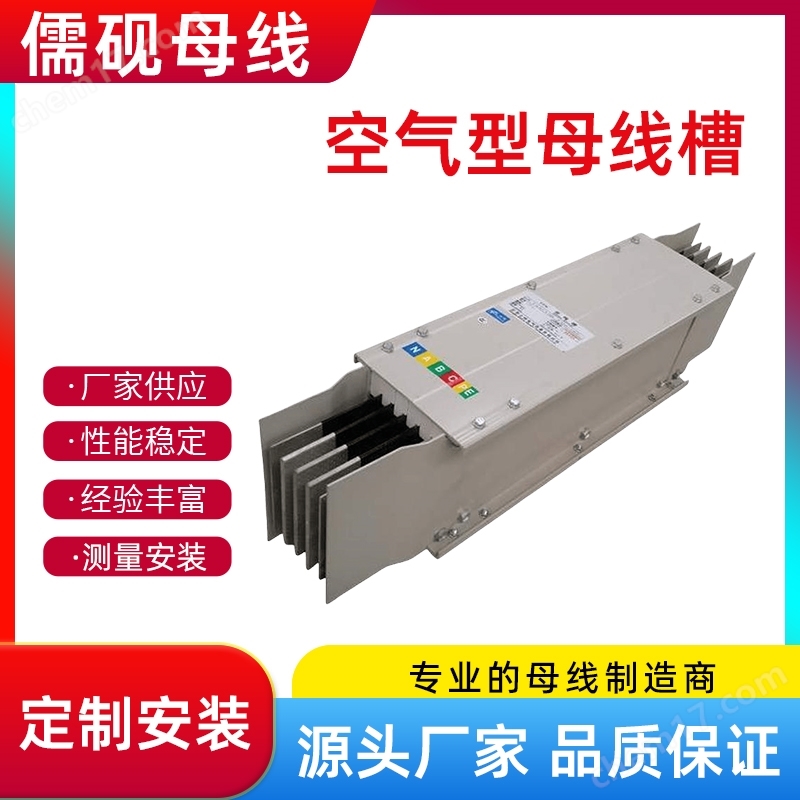
Supply air type bus duct 100A-6300A
NegotiableUpdate on 05/06
- Model
- Nature of the Manufacturer
- Producers
- Product Category
- Place of Origin
Overview
The supply air type bus duct 100A-6300A has various performance characteristics. In terms of electrical performance, copper or aluminum bars are usually used as conductors, which have good conductivity and can effectively reduce the loss of electrical energy during transmission, ensuring efficient and stable power transmission. Moreover, as an insulating medium, air has good insulation properties, which can prevent current leakage and ensure electrical safety. In terms of heat dissipation performance, the air type bus duct has a better heat dissipation effect.
Product Details
Supply air type bus duct 100A-6300AHas multiple performance characteristics. In terms of electrical performance, copper or aluminum bars are usually used as conductors, which have good conductivity and can effectively reduce the loss of electrical energy during transmission, ensuring efficient and stable power transmission. Moreover, as an insulating medium, air has good insulation properties, which can prevent current leakage and ensure electrical safety. In terms of heat dissipation performance, the air type bus duct has a better heat dissipation effect. Due to the air insulation between conductors, air can freely flow inside the bus duct, taking away the heat generated by the conductors. At the same time, the outer shell of the bus duct is generally equipped with heat dissipation holes, which further enhances the heat dissipation capacity, reduces the operating temperature of the bus duct, and extends its service life. From the perspective of mechanical performance, its shell is made of metal material, which has high strength and can withstand certain external impacts and vibrations. It is not easily damaged during installation, transportation, and use. Moreover, the design of its connection parts is reasonable, the connection is firm, and it can ensure the continuity and stability of power transmission. In addition, the air type bus duct also has certain protective performance, and the shell can prevent dust, moisture, etc. from entering the interior, providing protection for the conductor and insulation structure. Meanwhile, the metal casing can also serve as electromagnetic shielding, reducing the impact of electromagnetic interference on surrounding devices.
Supply air type bus duct 100A-6300ACharacteristics:
1. High current transmission efficiency and low line loss;
2. Wide adaptability, suitable for different voltage levels and current capacities;
3. High safety, with good insulation performance and protective function;
4. High flexibility, adaptable to layout and installation in various occasions;
5. Strong reliability, using high-quality materials and manufacturing processes to ensure its reliable operation.
Matching installation environment with structural design:
The selection of air type bus ducts must be closely combined with the installation environment and mechanical requirements in which they are located. For large-span installation scenarios (such as large industrial plants), the shell reinforced bus duct should be given priority. Its large-span installation capacity can support a 6-meter span and a core load of 70KG, which can effectively reduce the number of brackets, lower costs, and simplify installation. If there are vibration sources in the installation environment (such as near transformers, generators, or large power equipment), shock absorption measures should be considered, such as using soft connections or copper braided tapes at the connection points, adding rubber pads between the shells, and even installing shock absorbers.
The choice of shell material directly affects corrosion resistance and overall lifespan. Aluminum magnesium alloy shell has excellent corrosion resistance, with a corrosion depth of only about one twentieth of galvanized steel plate, making it very suitable for humid or corrosive atmosphere environments. For steel shells, attention should be paid to their surface treatment process and coating quality.
For situations where wiring is complex, frequent tapping is required, or there may be future changes, priority should be given to air type bus duct systems with rich plug-in interfaces and modular design. This type of product reserves a large number of sockets to ensure that the load can be connected in the shortest path, and the variable capacity interface is convenient, greatly improving the flexibility and scalability of the system.
Balancing safety, reliability, heat dissipation, and energy efficiency:
Safety and reliability are the core of busbar trunking selection. In terms of insulation method, the air type bus duct adopts a separated air insulation structure, with a safe clearance between phases (such as 18mm spacing), good ventilation between lines, and obvious moisture-proof and heat dissipation functions. The internal insulation components are mostly made of high-strength engineering plastics or epoxy resins, which improve the frost resistance and thermal stability.
Fire safety is an essential part of selection that cannot be ignored. If the project has fire safety requirements, it is necessary to distinguish whether it requires flame retardancy (to prevent the spread of flames) or fire resistance (to maintain power supply within a specified time). The metal shell of ordinary air type busbar trunking itself does not burn, and the insulation material is usually flame-retardant and heat-resistant. However, in the power supply circuit of fire-fighting equipment with specific fire resistance requirements, air type bus ducts should not be used, and fire-resistant bus ducts specially designed for fire-fighting power supply should be selected.
The heat dissipation performance is directly related to energy consumption. The air type bus duct relies on air convection and shell heat dissipation, and its heat dissipation effect is better than that of the dense type. The tile groove shell design increases the heat dissipation area, which is conducive to heat dissipation. A lower operating temperature means lower resistance and less energy loss, which is crucial for long-term energy-saving and reducing operating costs. The skin effect of bus ducts is small, there is no need to reduce capacity, the voltage drop is small, and the energy consumption performance is better than that of cables.

Special applications and comprehensive economic analysis:
In emerging scenarios such as data centers and smart cities, air type bus ducts are gradually becoming popular due to their high current transmission capacity and flexible wiring characteristics. For outdoor installation or corrosive environments, products with corresponding high protection levels (IP65/IP68) and corrosion-resistant material enclosures must be selected.
The full lifecycle cost is an important consideration for selection. Although the initial investment of air type bus ducts may be higher than that of cables or certain dense bus ducts, their advantages of long service life, low maintenance workload (simple daily maintenance), and low expansion and change costs (adding or changing a few sections can complete system expansion, high reuse rate) may make them more economical throughout the entire service life. When selecting, attention should also be paid to the brand's reputation, product certification status, whether complete type test reports are provided, and the quality of after-sales service. These are important guarantees for ensuring product reliability and long-term stable operation.
Similar Product Recommend