- Phone
-
Address
Liubao Industrial Park, Yangzhou City, Jiangsu Province
Product Categories
Jiangsu Ruyan Busbar Manufacturing Co., Ltd


High power air type bus duct emphasizes quality
NegotiableUpdate on 05/06
- Model
- Nature of the Manufacturer
- Producers
- Product Category
- Place of Origin
Overview
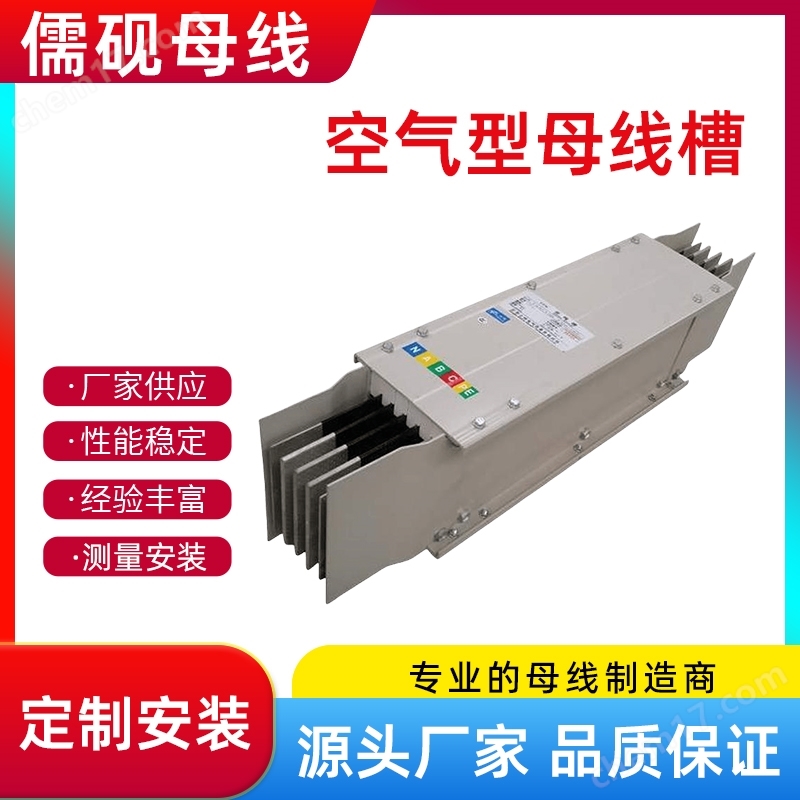
From a technical perspective, high-power air type bus ducts emphasize quality and have advantages such as simple structure, convenient installation, and easy maintenance. Due to the use of air insulation, its heat dissipation performance is good, which can effectively reduce the operating temperature of conductors and improve system safety. At the same time, the bus duct adopts a modular design, which can flexibly increase or decrease the circuit or adjust the length according to actual needs, adapting to different engineering layouts. In addition, its shell is usually made of galvanized steel plate or aluminum alloy material, which has good mechanical strength and corrosion resistance, ensuring long-term stable operation.
Product Details
From the perspective of technical characteristics,High power air type bus duct emphasizes qualityIt has the advantages of simple structure, convenient installation, and easy maintenance. Due to the use of empty spaceGas insulation has good heat dissipation performance, which can effectively reduce the operating temperature of conductors and improve system safety. At the same time, the bus duct adopts a modular design, which can flexibly increase or decrease the circuit or adjust the length according to actual needs, adapting to different engineering layouts. In addition, its shell is usually made of galvanized steel plate or aluminum alloy material, which has good mechanical strength and corrosion resistance, ensuring long-term stable operation.
High power air type bus duct emphasizes qualityConductor material and process:
The material and manufacturing process of conductors directly affect the conductivity, mechanical strength, and long-term reliability of bus ducts. Common conductor materials include copper and aluminum, each with its own characteristics. Copper conductors have high conductivity and good corrosion resistance, but the cost is relatively high; Aluminum conductors are lightweight and cost-effective, but special attention should be paid to the processing technology at the connection points. Regardless of which material is chosen, attention should be paid to the purity, cross-sectional shape, and surface treatment quality of the conductor. The cross-sectional area of the conductor should meet the current carrying requirements, and the shape design should be conducive to heat dissipation and mechanical support. In terms of process, special attention needs to be paid to the connection parts of conductors, which are often prone to faults. A good connection design should ensure sufficient contact area, uniform contact pressure, and effectively prevent electrochemical corrosion. The coating treatment on the surface of the conductor is also important, as it can improve corrosion resistance and maintain stable contact resistance.
Structural design and installation adaptability:
The structural design of bus duct not only affects its mechanical strength and heat dissipation performance, but also relates to the convenience of installation and the difficulty of later maintenance. When selecting, attention should be paid to the material and structural form of the bus duct casing. The shell should have sufficient mechanical strength to protect the internal conductors from external damage and facilitate heat dissipation. In terms of structural design, modular bus ducts can be easily cut and expanded according to on-site needs, adapting to different wiring paths. Installation adaptability is another aspect that needs to be carefully considered. A good bus duct design should provide flexible support schemes and connection methods that can adapt to various installation environments, such as overhead, wall mounted, or floor mounted installations. The interface design should ensure easy installation and reliable connection, reducing the difficulty of on-site construction. For systems that require frequent adjustments or expansions, consideration should also be given to whether it is convenient to add plug-in boxes or change branch lines in the later stage.
The installation process must follow strict specifications: first, ensure that the spacing between the brackets meets the design requirements and avoid excessive bending; When connecting tasks, torque tools should be used to ensure even contact pressure, and specialized conductive grease should be applied to prevent oxidation; The insulation resistance test needs to be conducted separately before and after installation. Daily maintenance includes regular removal of dust, inspection of fastener status, measurement of joint temperature rise, etc. In areas with monsoon humid climate, it is recommended to increase environmental humidity monitoring to ensure that insulation performance is always in good condition.
Future Development Trends and Industry Applications:
With the advancement of industrial automation and intelligence, the design of air type bus ducts is constantly being optimized. For example, the use of highly conductive materials, improved heat dissipation systems, and integrated monitoring devices are all improving their safety and reliability. The concept of green energy conservation has also prompted the industry to pay attention to energy efficiency and environmental protection, promoting the development of air type bus ducts in a more energy-efficient and environmentally friendly direction.
In the future, air type bus ducts will continue to play an important role in industrial automation, data centers, transportation infrastructure, and other fields. Its flexible structure and excellent performance meet the safety, reliability, and efficiency requirements of modern distribution systems.
Similar Product Recommend