- Phone
-
Address
Room 505, Building 18, Yuguang Industrial Park, No.1 Qiantouxinqiao Street, Dongcheng Street, Dongguan City
Product Categories
Dongguan Tianji Automation Equipment Co., Ltd

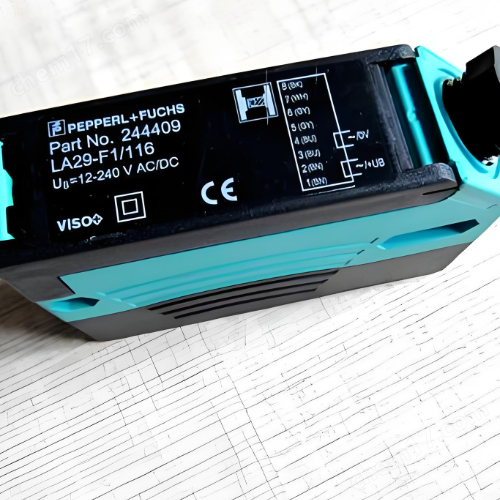
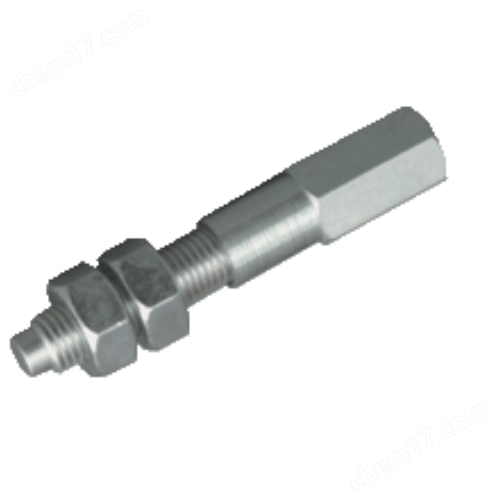
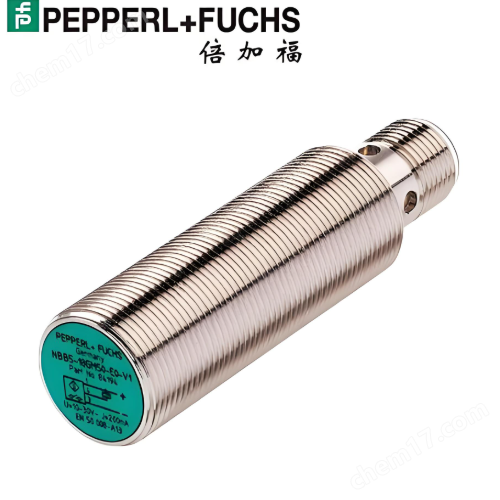
Spot Beijiafu P+F explosion-proof proximity switch
NegotiableUpdate on 05/06
- Model
- Nature of the Manufacturer
- Producers
- Product Category
- Place of Origin
Overview
The spot Beijiafu P+F explosion-proof proximity switch, made of photoelectric effect, is called a photoelectric switch. Install the light-emitting device and the optoelectronic device in the same detection head in a certain direction. When a reflective surface (object being detected) approaches, the photoelectric device receives the reflected light and outputs a signal, thereby "sensing" that an object is approaching
Product Details
Spot Beijiafu P+F explosion-proof proximity switch
Beijiafu proximity switch is a position switch that can be operated without direct mechanical contact with moving parts. When an object approaches the sensing surface of the switch to the action distance, no mechanical contact or pressure is required to activate the switch, thereby driving DC electrical appliances or providing control instructions to computer (PLC) devices. A proximity switch is a switch type sensor (i.e. a contactless switch) that combines the characteristics of a travel switch and a micro switch, as well as sensing performance. It has reliable action, stable performance, fast frequency response, long application life, strong anti-interference ability, and is waterproof, shockproof, and corrosion-resistant. The products include inductive, capacitive, Hall, AC, and DC types.
A proximity switch, also known as a contactless proximity switch, is an ideal electronic switch sensor. When the metal detector approaches the sensing area of the switch, the switch can quickly issue electrical commands without contact, pressure, or sparks, accurately reflecting the position and stroke of the moving mechanism. Even for general stroke control, its positioning accuracy, operating frequency, service life, ease of installation and adjustment, and adaptability to harsh environments cannot be compared to general mechanical stroke switches. It is widely used in industries such as machine tools, metallurgy, chemical engineering, textiles, and printing. In automatic control systems, it can be used as a limiting, counting, positioning control, and automatic protection link.
Spot Beijiafu P+F explosion-proof proximity switch
In various switches, there is a component displacement sensor that has the ability to "perceive" objects approaching it. The use of displacement sensors to control the on or off of proximity switches based on their sensitivity to approaching objects is called proximity switches.
When an object moves towards the proximity switch and approaches a certain distance, the displacement sensor will "sense" and the switch will act. This distance is usually referred to as the 'detection distance'. But the detection distance of different proximity switches is also different.
Sometimes the object being tested is moved towards the proximity switch one by one at a certain time interval, and then left one by one, repeating this process continuously. Different proximity switches have different response capabilities to the detected object. This response characteristic is called "response frequency".
Passive proximity switch
This type of switch does not require a power supply, and its closed state is controlled by magnetic induction. When the magnetic or iron trigger approaches the switch magnetic field, it controls the closure by interacting with the internal magnetic force of the switch. Features: No need for power supply, non-contact, maintenance free, environmentally friendly.
Eddy current proximity switch
This type of switch is sometimes called an inductive proximity switch. It uses conductive objects to generate eddy currents inside the object when approaching the proximity switch that can generate an electromagnetic field. This eddy current reacts with the proximity switch, causing changes in the internal circuit parameters of the switch, thereby identifying the presence or absence of conductive objects moving closer and controlling the on or off of the switch. The object that this proximity switch can detect must be a conductive material.
1. Principle: The oscillator is composed of an inductor, a capacitor, and a transistor, and generates an alternating magnetic field. When a metal object approaches this magnetic field, eddy currents are generated inside the metal object, causing the oscillation to stop. This change is amplified by the back pole and converted into a transistor switch signal output.
2. Features: A. Good anti-interference performance, high switching frequency, greater than 200 Hz B. Can only sense metals.
3. Applied to various mechanical equipment for position detection, counting signal picking, etc.
Similar Product Recommend