- Phone
-
Address
Room 505, Building 18, Yuguang Industrial Park, No.1 Qiantouxinqiao Street, Dongcheng Street, Dongguan City
Product Categories
Dongguan Tianji Automation Equipment Co., Ltd
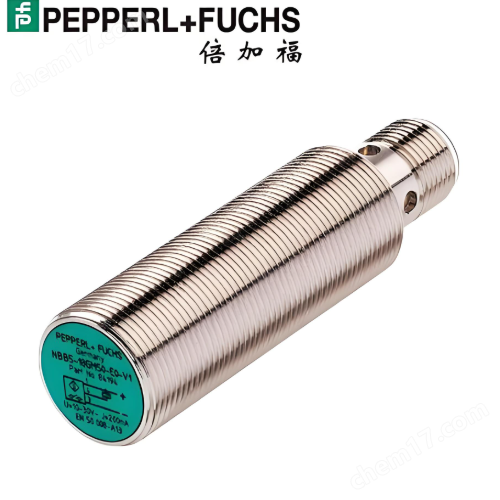
*Shipment of Beckhoff P+F sensors from Germany
NegotiableUpdate on 05/06
- Model
- Nature of the Manufacturer
- Producers
- Product Category
- Place of Origin
Overview
*In the photoelectric proximity sensor of the P+F sensor shipped from Germany, the beam axis of the light emitting diode (or semiconductor laser tube) and the axis of the phototransistor are on the same plane and form a certain angle, and the two axes intersect at a point in front of the sensor. When the surface of the object being detected approaches the intersection point, the reflected light from the light-emitting diode is received by the phototransistor, generating an electrical signal. When the object is far away from the intersection point, the reflection area is not within the viewing angle of the phototransistor, and the detection circuit has no output. In general, the driving current sent to the light-emitting diode is not a direct current, but an alternating current of a certain frequency. In this way, the receiving circuit obtains
Product Details
*Shipment of Beckhoff P+F sensors from Germany
A proximity sensor is a device that has the ability to sense the proximity of an object. It uses the sensitive characteristics of displacement sensors to recognize the proximity of an object and outputs corresponding switch signals. Therefore, proximity sensors are commonly referred to as proximity switches. [1] It is a general term for sensors that replace contact based detection methods such as switches and aim to detect the movement and presence of objects without the need for contact. It can detect the movement and presence of objects and convert them into electrical signals. [2]
In JIS specifications, based on the non-contact position detection switch of IEC60947-5-2, JIS specifications (JIS C 8201-5-2 Low Voltage Switchgear and Control Devices, Section 5 Control Circuit Machines and Switching Components, Section 2 Proximity Switches) have been developed. In the definition of JIS, products that can also detect the proximity of objects and the presence or absence of nearby detection objects in a non-contact manner in sensors are collectively referred to as "proximity switches", which are composed of induction type, electrostatic capacitance type, ultrasonic type, photoelectric type, magnetic type, etc. In this technical guide, induction type proximity sensors that detect the presence of metals, electrostatic capacitance type proximity sensors that detect the presence of metal and non-metal objects, and switches that use a direct current magnetic field generated by magnetic force are defined as "proximity sensors".
*Shipment of Beckhoff P+F sensors from Germany
Capacitive proximity sensor
A capacitive proximity sensor is a capacitive proximity switch with electrodes as the detection end. It consists of a high-frequency oscillation circuit, a detection circuit, an amplification circuit, a shaping circuit, and an output circuit.
There is a certain capacitance between the detection electrode and the ground, which becomes a component of the oscillation circuit. When the detected object approaches the detection electrode, due to the voltage applied to the detection electrode, the detection electrode will be subjected to electrostatic induction and polarization phenomenon. The closer the detected object is to the detection electrode, the more induced charges on the detection electrode. Due to the electrostatic capacitance on the detection electrode, as the amount of charge increases, the capacitance C of the detection electrode also increases. Due to the inverse proportionality between the oscillation frequency of the oscillation circuit and the capacitance, the oscillation of the oscillation circuit weakens or even stops when the capacitance C increases. The oscillation and stopping states of the oscillation circuit are converted into switch signals by the detection circuit and output externally.
Inductive proximity sensor
Inductive proximity sensors consist of high-frequency oscillation circuits, detection circuits, amplification circuits, shaping circuits, and output circuits. The sensitive element used for detection is the detection coil, which is a component of the oscillation circuit. The oscillation frequency of the oscillation circuit is. When AC power is applied to the detection coil, an alternating magnetic field is generated around the detection coil. When a metal object approaches the detection coil, it will generate eddy currents and absorb the energy of the magnetic field, causing the inductance L of the detection coil to change, thereby reducing the oscillation frequency of the oscillation circuit and even stopping. The two states of oscillation and stop oscillation are converted into switch signal output by the monitoring circuit.

Similar Product Recommend