- Phone
-
Address
Qinglei Technology
Product Categories
Shandong Qinglei Environmental Technology Co., Ltd


Spiral tube heat exchanger/structure
NegotiableUpdate on 05/06
- Model
- Nature of the Manufacturer
- Producers
- Product Category
- Place of Origin
Overview
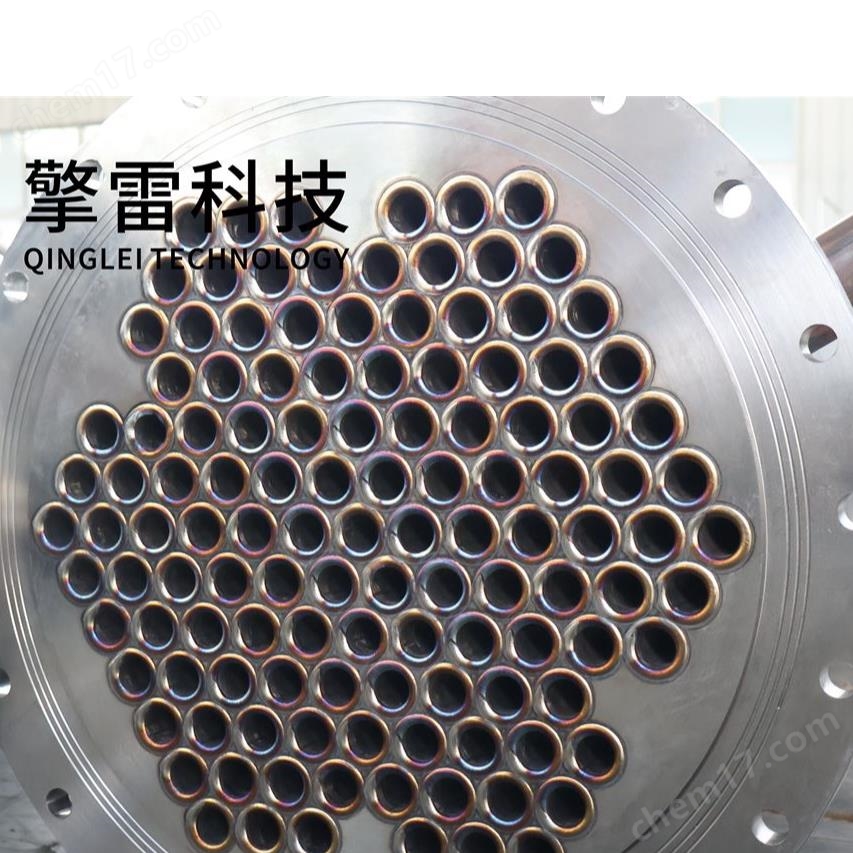
Spiral wound tube heat exchanger/structural spiral wound tube heat exchanger is designed with a spiral wound tube bundle. The crystallization section requires rapid removal of reaction heat to control grain size. Its high heat transfer coefficient (up to 500-14000 W/(m # 178; # 183; ℃) can shorten cooling time by more than 30%, reduce the risk of abnormal grain growth, and improve product purity.
Product Details
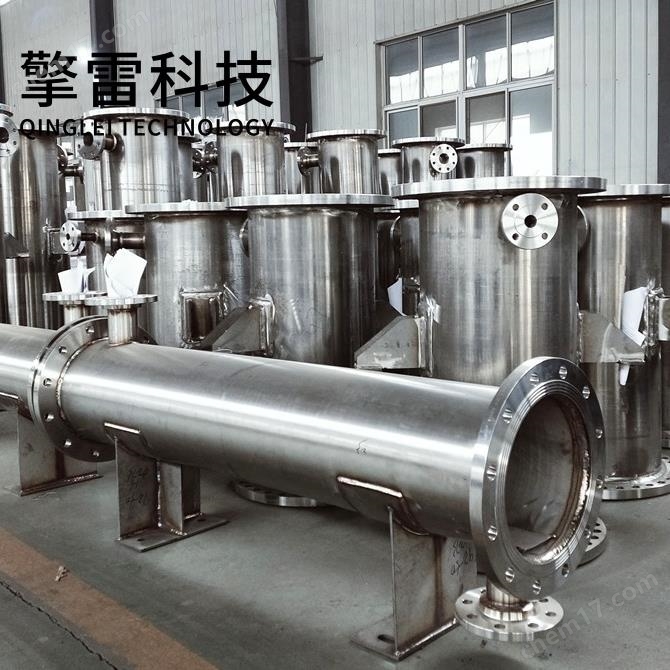
Spiral tube heat exchanger/structureThe spiral wound tube heat exchange equipment precisely wraps multiple heat exchange tubes at a spiral angle of 3 ° -20 ° around the central cylinder, forming multiple layers of reverse spiral channels. When the fluid flows inside the tube, it is subjected to centrifugal force to form symmetrical vortices (such as Dean vortices), which superimpose with the main flow to generate strong turbulence, destroy the thermal boundary layer, and significantly improve the heat transfer coefficient.

Spiral tube heat exchanger/structureIts core advantages include turbulence enhancement: the spiral structure increases fluid turbulence intensity by 3-7 times compared to traditional equipment, the Reynolds number exceeds 10 ⁴, the boundary layer thickness is reduced by 50%, and the heat transfer coefficient can reach up to 14000 W/(m ² ·℃), which is 2-4 times that of traditional tube and tube heat exchangers. Optimization of counterflow heat transfer: The cold and hot fluid paths are reversed, increasing the utilization rate of temperature difference by 30% and supporting large temperature difference conditions (Δ T>150 ℃). For example, in LNG liquefaction plants, the temperature difference at the end face can be controlled within 2 ℃, and the efficiency of waste heat recovery can be increased by 28%. Self compensating thermal stress design: Free sections are reserved at both ends of the tube bundle, allowing for free expansion and contraction with temperature changes, eliminating the risk of equipment damage caused by thermal stress, and extending the lifespan to 30-40 years.

2、 Structural innovation: The combination of compact, efficient, and high-pressure resistant spiral wound tube heat exchange equipment is reflected in the following aspects: Spiral tube bundle: Multiple metal tubes (such as 316L stainless steel, titanium alloy) are wound in a spiral layered manner on the central cylinder, forming a concentric circular structure similar to a spring, with a unit volume heat transfer area of 100-170 m ²/m ³, which is only 1/10 of the volume of traditional equipment. Shell and head: The external cylindrical pressure vessel is subjected to high pressure, and the head and distributor guide the cold and hot fluids into the tube side and shell side respectively, achieving counter current or co current heat exchange. Supporting structure: shock-absorbing bars and distance columns prevent tube bundle vibration, ensuring long-term stable operation. Performance comparison: Dimensional spiral wound tube heat exchange equipment. Traditional tubular heat exchangers have a high heat transfer efficiency of 14000 W/(m ² ·℃), about 3000-7000 W/(m ² ·℃). The volume and weight are reduced by more than 40%, and the weight is reduced by 40%. The volume is large, the weight is heavy, and the anti fouling ability is reduced by 70%. The cleaning cycle is extended to 12-18 months, which is prone to scaling and requires frequent cleaning. The pressure resistance and temperature resistance are 20MPa, and the pressure resistance is less than 10MPa from -196 ℃ to 1900 ℃, The initial investment for temperature resistance<400 ℃ is similar to the operating cost, reducing the annual operating cost by 30% -50%. The initial investment is low, but the operating cost is high. Application scenarios: The core carrier of efficient thermal management in multiple industries. Spiral wound tube heat exchange equipment has become a heat exchange solution for multiple industries due to its high efficiency, compactness, and durability. Petrochemical: Catalytic cracking unit: recovers heat from high-temperature media, improves heat exchange efficiency by more than 30%, and achieves an annual energy-saving cost of 2.4 million yuan. Hydrocracking unit: replaces traditional U-shaped tube heat exchangers, reduces the number of flanges, and lowers the risk of leakage. Energy and electricity: nuclear/thermal power waste heat recovery: system heat consumption reduced by 12%, annual carbon dioxide emissions reduced by over 10000 tons. IGCC gasifier system: successfully handling parameters of 12MPa/650 ℃, saving 100000 tons of standard coal annually. LNG and hydrogen energy: LNG liquefaction: achieves wide temperature range operation from -196 ℃ to 400 ℃, and increases BOG recondensation processing capacity by 30%. Hydrogen energy storage: Condensing 1200 ℃ high-temperature hydrogen gas, increasing system energy efficiency by 25%, and assisting in green hydrogen production. Pharmaceutical and Food: Drug Production: Double tube sterile design to avoid cross contamination, temperature fluctuation ≤ ± 0.5 ℃, in compliance with FDA certification requirements. Dairy sterilization: The self-cleaning channel design extends the cleaning cycle by 50% and reduces annual maintenance costs by 40%. 4、 Future trend: Integration of material innovation and intelligent technology. With the advancement of industrial technology, spiral wound tube heat exchange equipment is evolving from a single device to an intelligent thermal management system. Material upgrade: Research and development of new materials such as corrosion-resistant alloys and ceramic coatings to improve the service life of equipment under working conditions. For example, silicon carbide composite materials have been expanded to the high-temperature field of 1200 ℃, and graphene coating technology has increased anti scaling performance by 5 times.
Similar Product Recommend
