- Phone
-
Address
Qinglei Technology
Product Categories
Shandong Qinglei Environmental Technology Co., Ltd

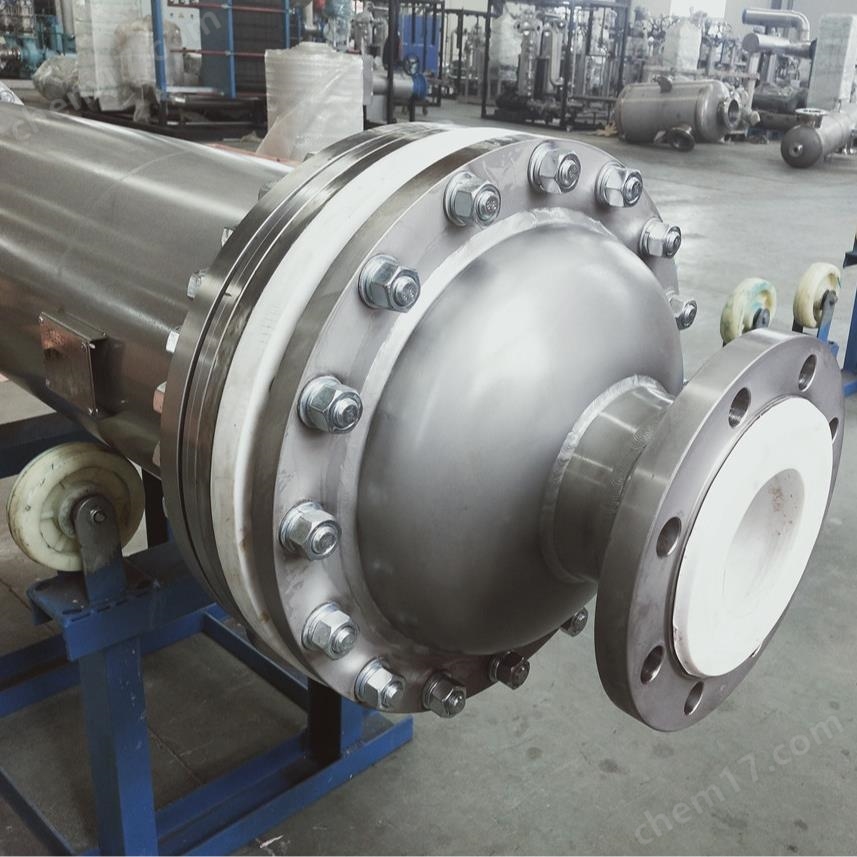

Metallurgical Silicon Carbide Heat Exchanger \ Efficient
NegotiableUpdate on 05/06
- Model
- Nature of the Manufacturer
- Producers
- Product Category
- Place of Origin
Overview
Metallurgical Silicon Carbide Heat Exchanger \\ \\ Efficient As a third-generation semiconductor material, its physical and chemical properties lay the foundation for heat exchanger performance: high temperature resistance limit: melting point up to 2700 ℃, can operate stably in an environment of 1600 ℃ for a long time, and can withstand temperatures exceeding 2000 ℃ for a short time.
Product Details
Metallurgical Silicon Carbide Heat Exchanger \ \ High EfficiencyAs a third-generation semiconductor material, its physical and chemical properties lay the foundation for heat exchanger performance: high temperature resistance limit: melting point up to 2700 ℃, can operate stably for a long time in an environment of 1600 ℃, and can withstand temperatures exceeding 2000 ℃ in a short time. For example, in the waste heat recovery of coal chemical gasification furnaces, the equipment successfully responded to the 1350 ℃ synthesis gas rapid cooling shock, avoiding the risk of thermal shock cracking and leakage. Corrosion resistance advantage: It is chemically inert to concentrated sulfuric acid, aqua regia, molten salt and other media, with an annual corrosion rate of less than 0.2mg/cm ², and its corrosion resistance is 100 times higher than 316L stainless steel. In the chlor alkali industry, the equipment lifespan has exceeded 10 years, far exceeding the 5-year cycle of traditional titanium materials. High thermal conductivity: The thermal conductivity reaches 120200W/(m · K), which is 1.5 times that of copper and 5 times that of stainless steel. The measured condensation efficiency is 30% to 50% higher than that of metal equipment, and in MDI production, the condensation efficiency is increased by 40%, while steam consumption is reduced by 25%. Thermal shock resistance: The coefficient of thermal expansion (4.7 × 10 ⁻⁶/℃) is only one-third of that of metals, and can withstand temperature fluctuations of 300 ℃/min. In the ethylene cracking unit, the optimized flow channel design reduces pressure drop by 20% and equipment deformation is less than 0.1mm
IIIMetallurgical Silicon Carbide Heat Exchanger \ \ High EfficiencyStructural Innovation: Synergistic Effect of Double Tube Plate and Composite Design. Silicon Carbide Double Tube Plate Heat Exchanger Achieves Performance Breakthrough through Structural Innovation: Double Tube Plate Sealing System: Adopting a double tube plate+double O-ring sealing structure to form an independent chamber. Even if the inner O-ring fails, the process fluid and working fluid are still physically isolated, with a leakage rate of<0.01%/year, which is better than industry standards. For example, in a certain chemical industrial park, equipment monitors leaks in real time through an intermediate exhaust chamber to avoid cross contamination of the medium. Composite tube plate technology: Silicon carbide metal gradient structure solves the problem of thermal expansion difference, ensuring stable operation of equipment under repeated thermal shocks from 1000 ℃ to room temperature. Modular design supports a maximum expansion of heat transfer area to 300 square meters, reducing maintenance time by 70%. Turbulence enhancement design: equilateral triangular tube arrangement+built-in multi blade twisted band, which increases the heat transfer coefficient by 30% and controls the pressure drop at 58kPa. The spiral wound tube bundle increases the heat transfer area by 40% to 60% by extending the tube path by 23 times.
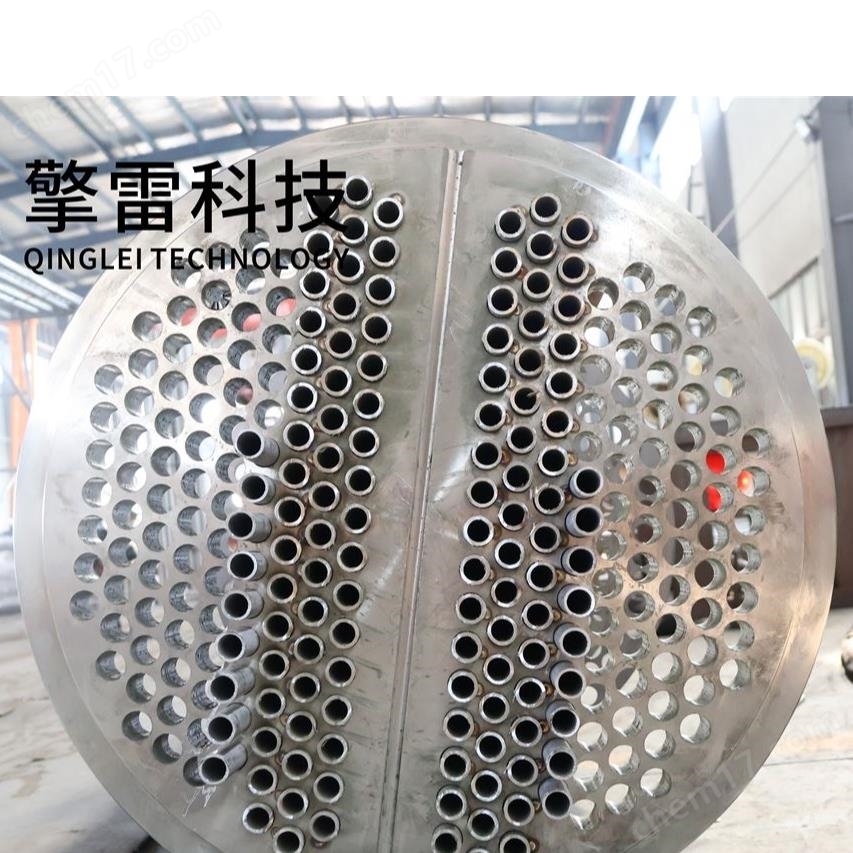
4、 Application scenario: Efficiency verification under working conditions. Silicon carbide double tube plate heat exchanger achieves key breakthroughs in multiple fields: Coal chemical industry: In the recovery of coal gasification waste heat, the design of double tube plate+spiral baffle increases thermal efficiency by 18% and saves about 25000 tons of standard coal per year. The equipment operates stably under the condition of 1350 ℃ synthesis gas rapid cooling, avoiding the thermal shock failure problem of traditional metal heat exchangers. In the field of petrochemicals, in the high-temperature heat exchange scenario of catalytic cracking, silicon carbide metal composite tube sheets increase production capacity by 22%, and their corrosion resistance performance is significantly better than that of Hastelloy alloy. In strong corrosion scenarios such as cooling and hydrogen bromide gas heat exchange, equipment life is extended by 6 times and annual maintenance costs are reduced by 40%. In the field of environmental engineering: In the treatment of waste incineration exhaust gas, the microporous silicon carbide+double sealing structure extends the equipment life by 6 times and achieves a 100% emission compliance rate. By recovering waste heat from flue gas at 120 ℃, the desulfurization slurry is heated to 90 ℃, saving over 10000 tons of steam annually. Metallurgical field: In high-temperature furnace gas cooling scenarios, graphene coating+modular design can save 40% energy and withstand 1400 ℃ flue gas. In the smelting process of metals such as aluminum and copper, the equipment is resistant to high-temperature melt erosion and has a service life of over 10 years. In the field of new energy: In hydrogen production process, multi process design+3D printing tube plate can save 30% and 40% energy by cooling high-temperature hydrogen gas. In the production of photovoltaic polycrystalline silicon, the equipment operates continuously for 5000 hours at a high temperature of 1200 ℃ without corrosion, with a recovery efficiency of 85%.
5、 Technology Trend: Deep Integration of Materials and Intelligence In the future, silicon carbide double tube plate heat exchangers will evolve towards higher efficiency and intelligence. Material Innovation: The development of silicon carbide graphene composite materials has the potential to exceed a thermal conductivity of 300W/(m · K) and enhance anti scaling performance by 50%. Nano coating technology achieves self-healing function, extending equipment lifespan to over 30 years. Lightweight structure: 3D printed honeycomb structure reduces device weight by 40% and customization costs by 30%. The three-dimensional spiral flow channel design improves heat transfer efficiency by 30%.

Similar Product Recommend
