-
E-mail
15900517856@163.com
-
Phone
15900517856
-
Address
No. 168 Dongshe Road, Songjiang District, Shanghai
Product Categories
Shanghai Pinkui Electromechanical Technology Co., Ltd

Six position sliding bearing friction testing machine
NegotiableUpdate on 01/08
- Model
- Nature of the Manufacturer
- Producers
- Product Category
- Place of Origin
Overview
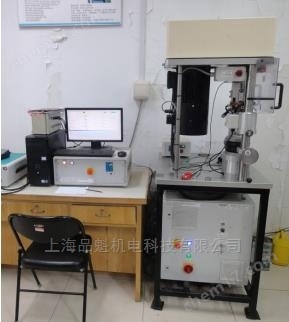
The six station sliding bearing friction testing machine is a professional testing equipment designed for the friction and wear performance of sliding bearings, widely used in fields such as automobiles, machinery manufacturing, ships, and engineering machinery. Its core function is to simulate the working conditions of sliding bearings in actual operation, and through six station parallel testing, accurately detect key indicators such as friction coefficient, wear amount, and temperature rise of bearings, providing data support for the research and development, production quality verification, and life evaluation of sliding bearings. It is a key equipment to ensure the stable operation of transmission systems.
Product Details
The six station sliding bearing friction testing machine is a professional testing equipment designed for the friction and wear performance of sliding bearings, widely used in fields such as automobiles, machinery manufacturing, ships, and engineering machinery. Its core function is to simulate the working conditions of sliding bearings in actual operation, and through six station parallel testing, accurately detect key indicators such as friction coefficient, wear amount, and temperature rise of bearings, providing data support for the research and development, production quality verification, and life evaluation of sliding bearings. It is a key equipment to ensure the stable operation of transmission systems.
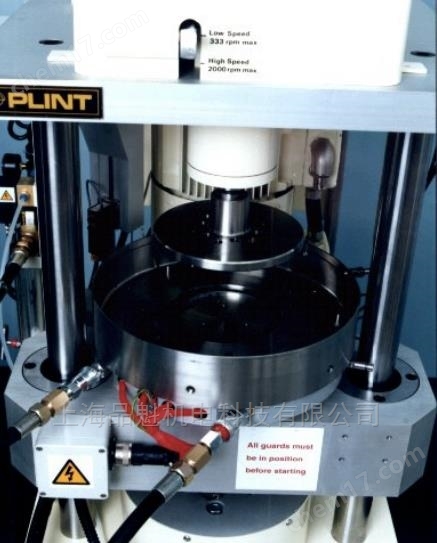
From the perspective of device construction, the core consists ofSix independent sliding bearing testing units、Synchronous transmission system、Accurate loading module、Temperature monitoring componentandCentralized data collection and analysis systemComposition. Each testing unit is designed according to the actual assembly structure of the sliding bearing, and can be adapted to sliding bearing samples with different inner diameters and lengths. It is compatible with bearings made of various materials such as metal, plastic, and composite materials; The synchronous transmission system adopts servo motor drive, which can accurately adjust the spindle speed (50-5000r/min), achieve multi station synchronous or independent speed control, and simulate the working conditions of bearings at different operating speeds; The precise loading module applies radial loads (100-5000N) through hydraulic or servo motors, with a loading accuracy of ± 5N, restoring the actual stress state of the bearing during operation; The temperature monitoring component adopts an embedded temperature sensor to real-time collect the temperature of the bearing friction surface (accuracy ± 0.5 ℃), avoiding bearing damage caused by high temperature; The centralized data acquisition system can synchronously record the friction coefficient, wear amount, speed, load, temperature and other parameters of six workstations, with a data error of less than 3%, and can automatically generate comparative analysis reports to quickly determine the performance differences of different samples.
The core advantages of this device lie in "efficiency" and "high degree of restoration of working conditions". The six station parallel design improves testing efficiency by 5-6 times compared to single station equipment. For example, for the testing of sliding bearings in the same batch of automotive engines, 120-180 sets of sample tests can be completed in a single day, greatly shortening the R&D and quality inspection cycle; The testing unit accurately reproduces the actual working conditions such as radial force and speed changes of sliding bearings, and the detection data is more in line with real usage scenarios, providing reliable basis for optimizing bearing performance. In addition, the device supports lubrication circuit simulation function, which can simulate the bearing friction state under different lubrication conditions by adjusting the viscosity and supply pressure of the lubricating oil, further expanding the testing range.
In practical applications, equipment functions cover key detection scenarios: in the automotive industry, detecting the friction and wear performance of engine crankshaft sliding bearings and gearbox sliding bearings to ensure reliable operation of the power system; In the field of mechanical manufacturing, testing the friction coefficient and temperature rise of machine tool spindle sliding bearings to improve equipment machining accuracy; In the field of ships, evaluate the wear resistance life of sliding bearings in ship propulsion systems under high load and long-term operation; In bearing production enterprises, it is used for factory quality screening to ensure that products meet industry standards (such as GB/T 18327); In the field of scientific research, the study of friction performance of new sliding bearing materials accelerates material iteration and upgrading.
As an efficient tool for performance testing of sliding bearings, the six station sliding bearing friction testing machine provides scientific guarantees for various industries to improve the quality of sliding bearings and reduce the risk of transmission system failures, promoting the development of sliding bearing technology towards a more wear-resistant and efficient direction.
Similar Product Recommend