- Phone
-
Address
No. 116, Qinxing New Village, Qinnan, Yancheng City, Jiangsu Province
Product Categories
Jiangsu Huahang Underwater Engineering Co., Ltd

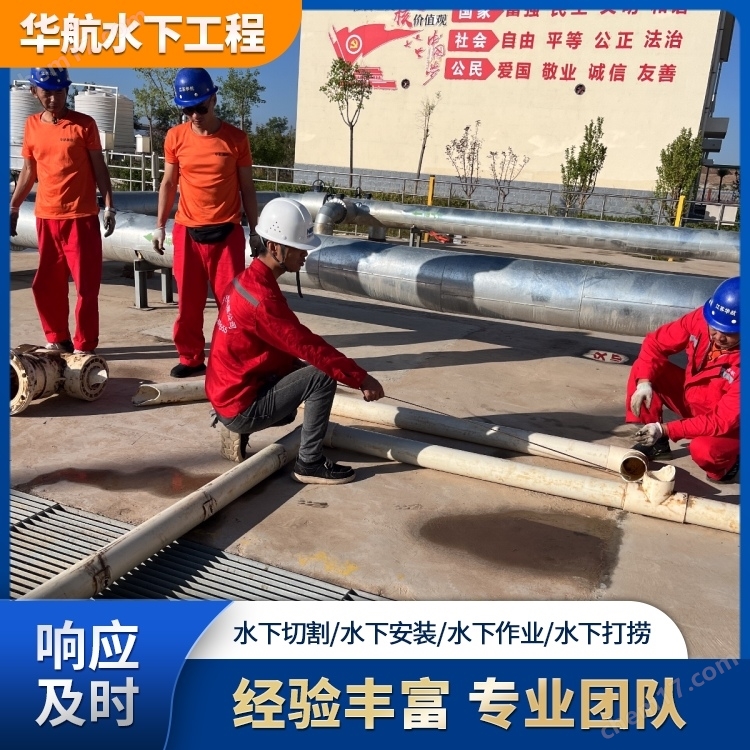
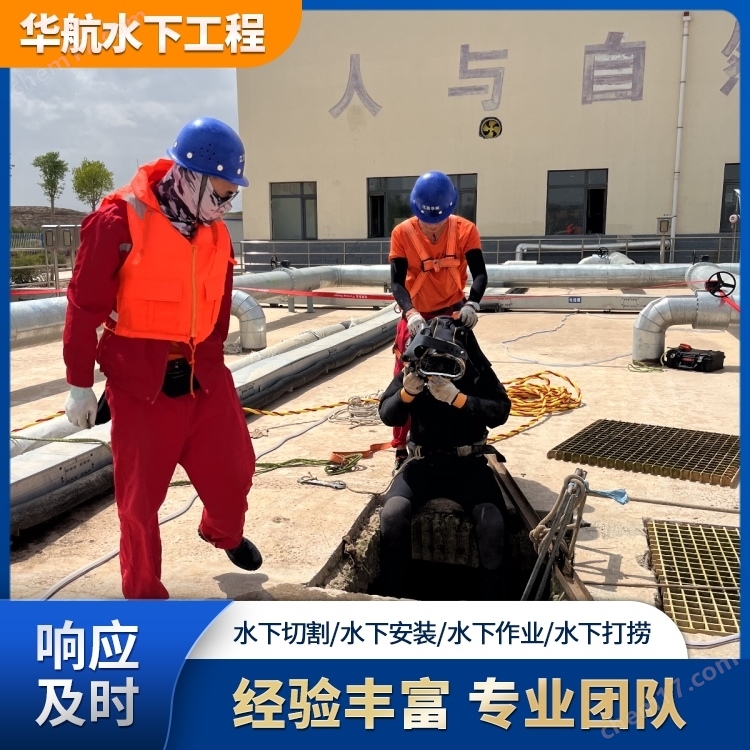


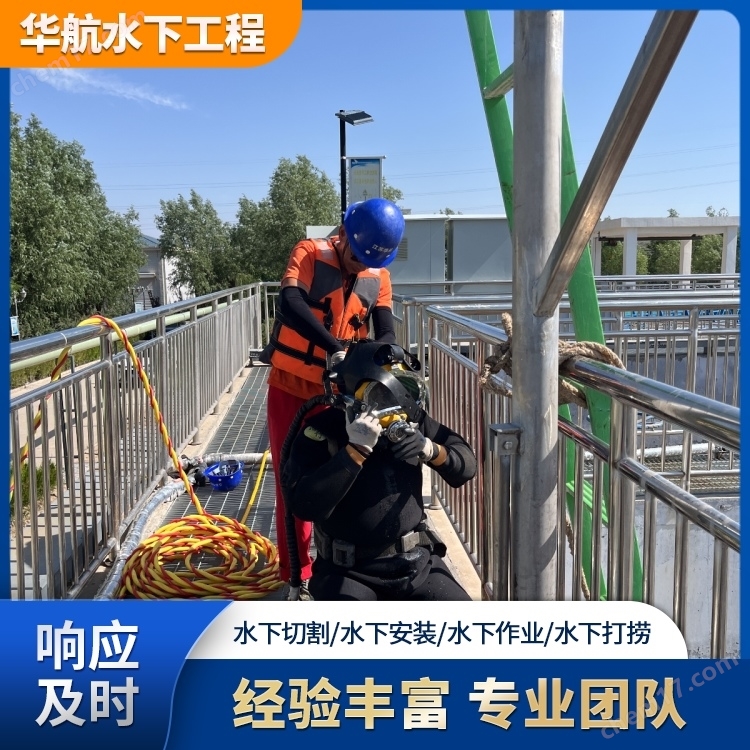
Sewage plant pump mixer salvage quotation - underwater salvage telephone for pusher pump - how much does it cost to repair the exposed pipe underwater
NegotiableUpdate on 06/11
- Model
- Nature of the Manufacturer
- Producers
- Product Category
- Place of Origin
Overview
Quotation for salvaging sewage plant water pump mixer - underwater salvaging telephone for thruster pump - how much does it cost to repair the exposed pipe underwater? Before salvaging the underwater coupler, it is usually necessary to conduct underwater exploration to understand the underwater environment, water flow velocity, water temperature, etc., and determine the specific position, status, and tonnage of the coupler in order to develop a reasonable salvaging plan. In addition, it is necessary to ensure the safety of salvage personnel, check whether the relevant equipment is functioning properly, and strictly comply with safety operating procedures.
Product Details
Sewage plant pump mixer salvage quotation - underwater salvage telephone for pusher pump - how much does it cost to repair the exposed pipe underwater
Sewage plant pump mixer salvage quotation - underwater salvage telephone for pusher pump - how much does it cost to repair the exposed pipe underwater
The salvage of underwater couplers requires the selection of appropriate methods based on specific underwater environments, coupler characteristics, and other factors. The following are some common salvage methods and related steps:
Visual salvage equipment for salvage

Equipment principle and structure: For example, the visual salvage equipment independently designed by the Summer Palace consists of core components such as high-definition underwater probes, dual claw fixtures, LED fill light systems, and waterproof display screens. Staff can view underwater conditions in real-time through waterproof display screens, use high-definition underwater probes to clearly capture the location of objects, use LED lighting systems to provide illumination in low light environments, and finally accurately grasp falling objects through dual claw fixtures.
Operation steps: Place the probe and fixture of the device into the water, observe the underwater situation through the display screen, and find the position of the coupler. After discovering the coupler, adjust the fixture to align and grasp the coupler, and then scoop it out of the water.
1. Construction content and purpose; Due to long-term underwater corrosion, the variable diameter flange of pump 5 # is severely worn and needs to be replaced, and the coupling base is severely worn and needs to be replaced as a whole.
2. Due to limited site construction, a three-layer platform needs to be built here to drill holes and plant reinforcement on the walls and concrete above. The production of the platform must comply with safety requirements. The platform requires a working face width of ≥ 1 meter, a thickness of ≥ 6mm, steel material, a guardrail height of 1.2 meters, and steel material with a diameter of ≥ 30mm (materials selected from the national standard and constructed in accordance with industry standards). Steel structure ladders with protective cages are required for personnel to climb up and down each level of the platform

3. Find the vertical center point of the pipeline and drill a hole above to install the suspension point (drilling holes on the floor is strictly prohibited), to ensure that the 1200cm diameter pipeline can be suspended vertically for installation.
4. Divers carry out underwater dredging, clean the garbage bags on the flange, and then perform underwater cutting to separate the flange screws of the coupling base and the flange of the variable diameter pipeline.
5. After underwater cutting is completed, the upper part of the water is cut and salvaged in sections. The elbow part is cut in sections again to ensure minimal deviation during installation, and then salvaged after cutting is completed. When cutting pipelines on water surfaces, it is necessary to ensure good ventilation, strictly implement the work permit system, and follow the process of ventilation before testing before operation. Ensure at least two ventilation fans and one combustible gas detector to prevent explosions in confined spaces; On site personnel are required to wear toxic and harmful gas detectors throughout the entire process to prevent accidents caused by inhalation of toxic and harmful gases.
6. Remove the guide rod, couple the base for underwater cutting of anchor bolts, and dismantle the concrete base by 5cm (repair during installation). The coupler must not be damaged and must be salvaged intact
7. The pipeline is salvaged ashore for surface debris removal, and then the variable diameter flange is cut and replaced. Cutting edges are processed by breaking, elbows are processed by breaking for welding and installation, and the interior and exterior of the pipeline are protected against corrosion.

8. After all replacements are completed, installation and construction can begin. First, clear the sediment on the underwater working surface to ensure that there is no sediment on the working surface (sediment is removed and discharged to the sand box of the sedimentation tank). Then, connect and install the coupler base underwater, drill holes and plant reinforcement bars underwater, with no less than 8 pieces, and use limit fixing at no less than 6 places. All underwater installation materials must be made of SS304 material (screws, brackets, etc.).
9. Then, the first section of the pipeline will be installed with underwater docking, and the variable diameter flange and coupling base will be installed and docked. All docking will be completed, and the elbow part will be suspended and docked from the fixed lifting point. After docking, electric welding will be carried out.
10. During the installation of pipeline support points, drill holes and plant reinforcement underwater to ensure the support effect between the pipeline and the wall.
11. Install the guide rod, and the diver will dock the guide rod and coupling base underwater, with holes drilled on top for installation and docking. All of the above have been completed for pump discharge acceptance results.
Diver manual salvage
Applicable scenarios: Suitable for situations where the water depth is shallow, the underwater environment is relatively simple, the coupler volume is small, and it is not convenient to use large equipment for salvage.
Operation steps: The diver should wear professional diving equipment, carry necessary salvage tools such as underwater grasping tools, and dive into the water. Search for the coupler underwater by visual inspection or with the help of underwater lighting equipment. Once found, use a grasping tool to fix or grasp it, and then carry the coupler back to the surface.
Mechanical salvage
Applicable scenarios: Suitable for situations where the coupler is large, heavy, or located deep, making manual salvage difficult.
Operation steps: Equipment such as salvage boats or cranes can be used. First, determine the accurate position of the coupler through underwater exploration, then move the lifting device of the salvage vessel or crane to a suitable position, lower the steel cable or other grasping device, fix or grasp the coupler, and then lift it out of the water through lifting equipment.
Similar Product Recommend