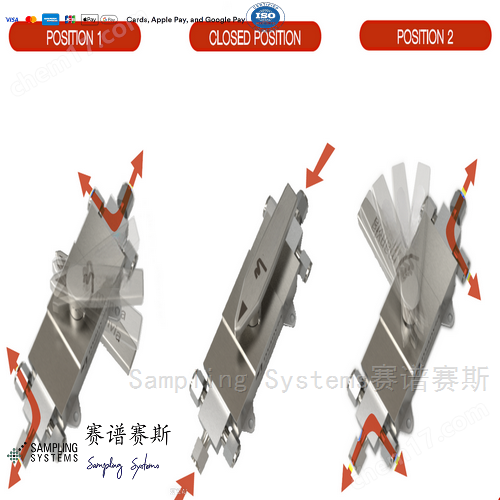
The Sampling Thermal Shutoff Valve $r $n $r $n triggers automatic action through temperature self sensing, without the need for external power or manual intervention. It can also use optional remote alarm function to reduce manual dependence and system complexity, thereby improving the automation control level of related systems.
Sampling Thermal Shutt Off Valve
By triggering automatic actions through temperature self sensing, there is no need for external power supply or manual intervention. The optional remote alarm function can also be used to reduce manual dependence and system complexity, thereby improving the automation control level of related systems.
application
Steam and water sampling system
Automatic constant temperature bypass
Constant temperature flow control
High temperature or low temperature release
High temperature safety shutdown
Constant temperature drain valve
Constant temperature cooling water control
Constant temperature condensate discharge
heat exchanger
benefit
Automatic reset, no need for operator involvement
No external power supply required
Sturdy, compact design, easy to install, fast response
maintenance-free
Compared to more expensive electric valves, it provides higher value
feature
The working temperature is not affected by pressure.
Corrosion resistance: All stainless steel 316L structure.
Dry contacts for remote alarm indication (optional)
The following provides a detailed explanation from three aspects: "core application scenarios," "automation control improvement path," and "key advantage support
Clearly list its adaptation scenarios, covering steam, water systems, and industrial temperature control requirements. All scenarios are designed around "temperature triggered automatic action", including:
Steam&Water Sampling SystemsAs a temperature safety component in the sampling process, when the temperature of the sampling medium exceeds 49 ℃ (default threshold for webpage models), the valve automatically closes to avoid damage to the sampling equipment or affecting detection accuracy caused by high-temperature media. There is no need to manually monitor the temperature and close the valve.
Automatic Thermostatic BypassUsed for temperature regulation of fluid circuits, when the main circuit temperature is too high, the valve automatically opens a bypass channel to divert some fluid (such as cooling fluid), achieving dynamic balance of circuit temperature and replacing the traditional mode of "manually adjusting the bypass valve opening".
High/Low Temperature Relief/Safety Shut Off
High temperature scenario: When the temperature of the medium in the heat exchanger or pipeline exceeds the standard, the valve will automatically release pressure or cut off the fluid to prevent equipment damage caused by overheating;
Low temperature scenario: When the medium temperature is too low (matching the corresponding low temperature threshold model), the fluid will be automatically cut off to avoid freezing and cracking the pipeline or affecting process stability.
Thermostatic Drain/Cooling Water Control
Condensed water drainage: In the thermal system, automatically discharge the condensed water that reaches the set temperature to avoid the accumulation of condensed water that affects heat transfer efficiency;
Cooling water regulation: Based on the temperature of the controlled equipment, the flow rate of cooling water is automatically adjusted (such as opening the valve when the temperature increases and closing it when the temperature decreases), accurately matching the cooling demand.
Heat Exchanger MatchingAs a temperature protection component of the heat exchanger, when the inlet and outlet temperatures of the heat exchange medium exceed the safe range, it automatically cuts off the medium flow or opens the protection circuit to prevent leakage, scaling and other problems caused by abnormal temperature in the heat exchanger.
Its automation improvement logic revolves around“Reduce manual intervention, decrease external dependence, and improve response accuracy”Expand, the specific path is as follows:
Replace "manual monitoring+manual operation" with "temperature self triggering"
Traditional pain points: It is necessary to arrange personnel to monitor the system temperature in real time, and manually operate the valve if it exceeds the standard, which poses risks of "response delay" and "human misjudgment";
Automation improvement: The valve is equipped with a built-in temperature control component (such as a temperature sensing bulb), which can directly sense the temperature of the medium. After reaching the thresholdMillisecond level automatic action(Referring to "fast response"), it does not require manual intervention and is particularly suitable for unmanned industrial scenarios such as remote sampling stations and continuous production pipelines.
Get rid of dependence on external power sources and reduce the complexity of automation systemsThe webpage clearly states its“No outside power source required”(No external power supply required), the valve action is driven by the temperature change of the medium itself (such as the thermal expansion and contraction of the temperature sensing element pushing the valve core), without the need for supporting power components such as motors and cylinders, and without the need to build complex electrical control systems (such as PLC signal wiring and power wiring), reducing the number of fault points in the automation system and lowering energy consumption and maintenance costs.
Realize refined and traceable control through "customized threshold+optional remote alarm"
Temperature threshold customization: The default trigger temperature for models (TVS-A-49/TVS-B-49) is 49 ℃, and the threshold can be adjusted according to actual process requirements (such as 30 ℃, 60 ℃) to accurately match temperature control standards for different scenarios;
Remote monitoring extension: The TVS-B-49 model with switch has the "dry contact" function (mentioned in the "Features" section of the webpage), which can be connected to the factory DCS/PLC system. When the valve is activated, an alarm signal is sent (such as "temperature exceeding standard - valve has been closed"), achieving dual automation of "automatic action+remote monitoring", making it easy for management personnel to grasp the system status in real time without the need to visit the site to check the valve condition.
Ensure long-term stable operation of automation with "maintenance free design"The webpage emphasizes its“Maintenance free”Corrosion resistant (316L stainless steel material) characteristics:
Frequent replacement of vulnerable parts (such as motors and seals) is required to reduce automation interruptions caused by maintenance downtime;
Corrosion resistance is suitable for complex media such as steam, acid alkali water, etc., to avoid "automatic action failure" caused by component corrosion and ensure the reliability of automation control.
Product design provides technical support directly for automation control:
| Product Features |
Supporting role of automation control |
| Operating temperatures unaffected by pressure |
Even if the system pressure fluctuates (such as steam pressure changes), the valve still operates according to the preset temperature threshold to avoid temperature control misalignment caused by pressure interference and ensure automation accuracy |
| 316L all stainless steel structure |
Resistant to high and low temperatures, corrosion-resistant, suitable for harsh industrial environments, extending the lifespan of automation components, and reducing downtime due to malfunctions |
| Rugged, compact design |
Easy to integrate into existing automation systems (such as sampling pipelines, heat exchanger circuits) without the need for significant equipment layout modifications |
| Multiple models available (with/without switch) |
Flexible matching of "basic automatic control" (only valve action) or "intelligent monitoring+automatic control" (action+remote alarm) requirements, adapting to different levels of automation |
Hot shut-off valve passes through“Temperature self sensing, no power drive, automatic action+optional remote alarm”In the design of steam, water systems, heat exchangers and other scenarios, the traditional "manual temperature control" is upgraded to "fully automatic temperature control protection", which not only reduces labor costs and operational risks, but also improves the response speed and accuracy of system temperature control. It is a "low-cost, high reliability" temperature safety solution in industrial automation control.
Sampling Thermal Shutt Off Valve


Part Number
model
Component Name
operation
5TVS
TVS-A-49
Hot shut-off valve @ 49C without switch
5TVS
TVS-B-49
Hot shut-off valve @ 49C with switch