- Phone
-
Address
Liugezhuang, Dacheng County
Product Categories
Hebei Shenzhou Thermal Insulation Technology Co., Ltd


Saint Gobain Esserville non-woven fabric veneer glass wool board
NegotiableUpdate on 05/06
- Model
- Nature of the Manufacturer
- Producers
- Product Category
- Place of Origin
Overview
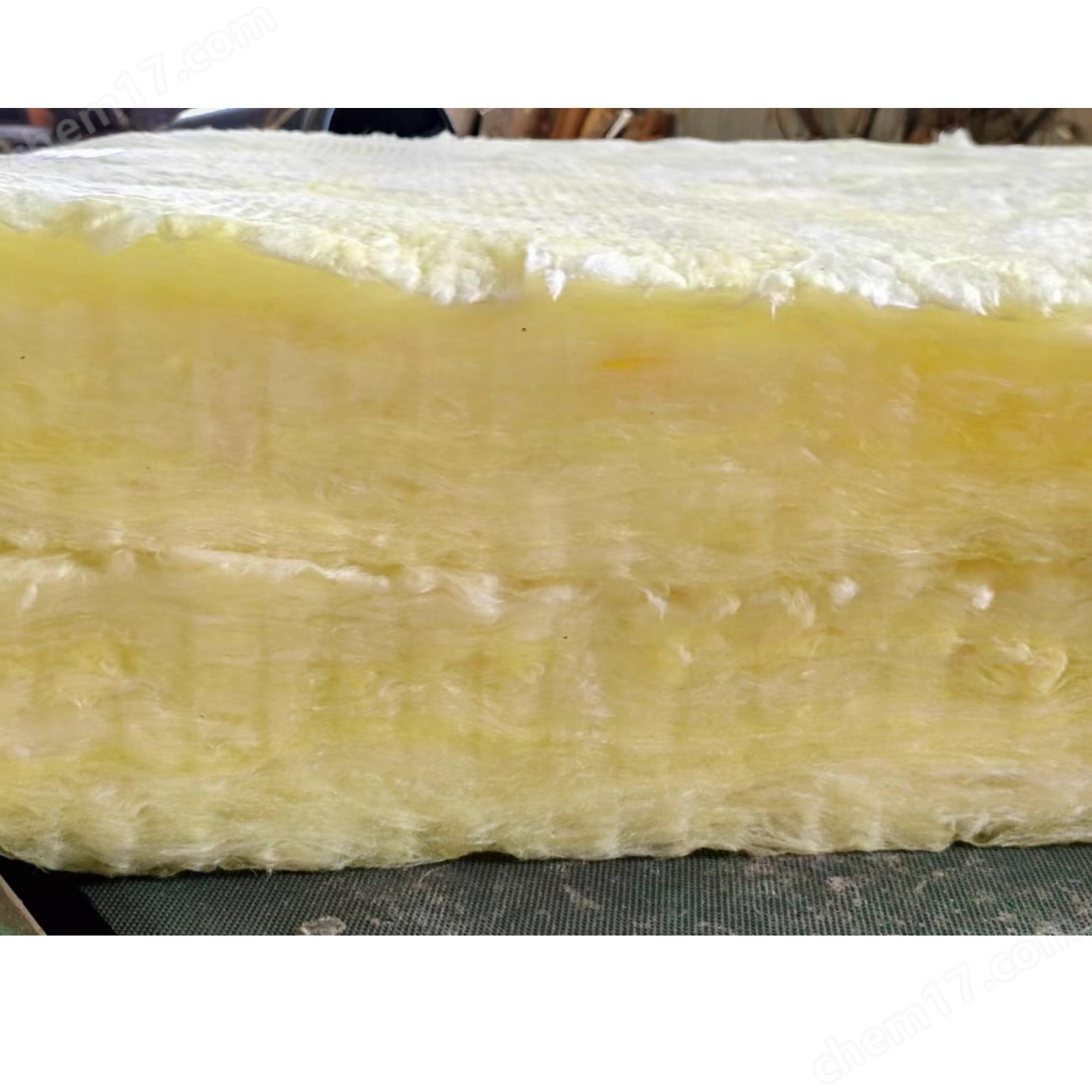
Saint Gobain Isolville non-woven fabric faced glass wool board for smoke control and exhaust. Performance characteristics: n1. Environmentally friendly glass wool is wrapped around the metal smoke control pipeline to isolate the heat of fire smoke, prevent it from being transmitted through the pipe wall, and help the smoke control pipeline achieve the required fire resistance and insulation effect. $r$n2、 Smoke proof glass wool is non corrosive to pipelines and will not cause metal corrosion to ventilation ducts. $r$n3、 The smoke proof glass wool board also has hydrophobicity. $r$n4、 Glass wool fibers do not contain asbestos. $r$n5、 Smoke proof glass wool board belongs to fiber structure, which can reduce the noise of smoke exhaust pipes.
Product Details
Saint Gobain Esserville non-woven fabric veneer glass wool board
The difference between smoke exhaust glass wool board and ordinary glass wool board:
1Fire resistance performance
Smoke proof glass wool board has better fire and fire resistance performance. Smoke control glass wool board is a specialized glass wool board for smoke control systems. Composite fire protection requirements. The general requirement for fire resistance duration is30Minutes60Minutes90Minutes120minute Ordinary glass wool board does not have fire resistance requirements. But glass wool originally belonged tofire preventionThermal insulation material, non flammable to open flames, with good fire resistance.
2Different densities
The density of smoke proof glass wool board is generally in the range of48KThe64KThe96KCorresponding to different fire resistance durations. The density of ordinary glass wool board is generally around20K-80K.
3Different composite materials
The surface of ordinary glass wool board generally does not have composite materials, or single-sided composite materials. Ordinary glass wool board composite materials mainly include aluminum foil and non-woven fabric, etc. Smoke proof glass wool board is generally made of single-sided composite aluminum foil or six sided wrapped aluminum foil.
The finished product is made by processing environmentally friendly formula adhesives mainly composed of melted glass fibers and thermosetting resins. It is an elastic felt like body constructed from glass fibers with a diameter of only a few microns, and can be directly compounded with moisture-proof veneers selected according to requirements. It has a large number of small atmospheric pores, which enable it to provide insulation, sound absorption, noise reduction, and peaceful protection. It is a good product for steel layout insulation, sound absorption, and noise reduction.
Centrifugal glass wool has good sound absorption function for high frequencies in sound. The important factors affecting the sound absorption function of centrifugal glass wool are thickness, density, and atmospheric flow resistance. Density is the weight per cubic meter of material. The atmospheric flow resistance is the ratio of the atmospheric pressure and flow velocity on both sides of the material when the thickness of the unit is measured. The atmospheric flow resistance is a factor that affects the sound absorption performance of centrifugal glass wool. The flow resistance is too small, indicating that the ambient vibration can easily pass through and has sound absorption function; The flow resistance is too high, indicating compactness, making it difficult for ambient vibrations to be transmitted, and the sound absorption function also decreases. For centrifugal glass wool, there is flow resistance in the sound absorption function.
In the process of engineering, the atmospheric flow resistance is being measured for comparison, but the thickness and bulk density can be roughly and controlled.
1. As the thickness increases, the absorption coefficient of medium and low frequencies becomes significant, but there is little change in high frequencies (those with larger absorption).
2. Stable thickness, increased bulk density, and increased mid to low frequency sound absorption coefficient; But when the bulk density increases to a certain level, the material becomes denser, the flow resistance is greater than the general flow resistance, and the sound absorption coefficient actually decreases. Regarding centrifugal glass wool with a bulk density of 16Kg/m3 and a thickness exceeding 5cm, the low frequency of 125Hz is about 0.2, and the sound absorption coefficient of mid to high frequency (>500Hz) has been around 1.
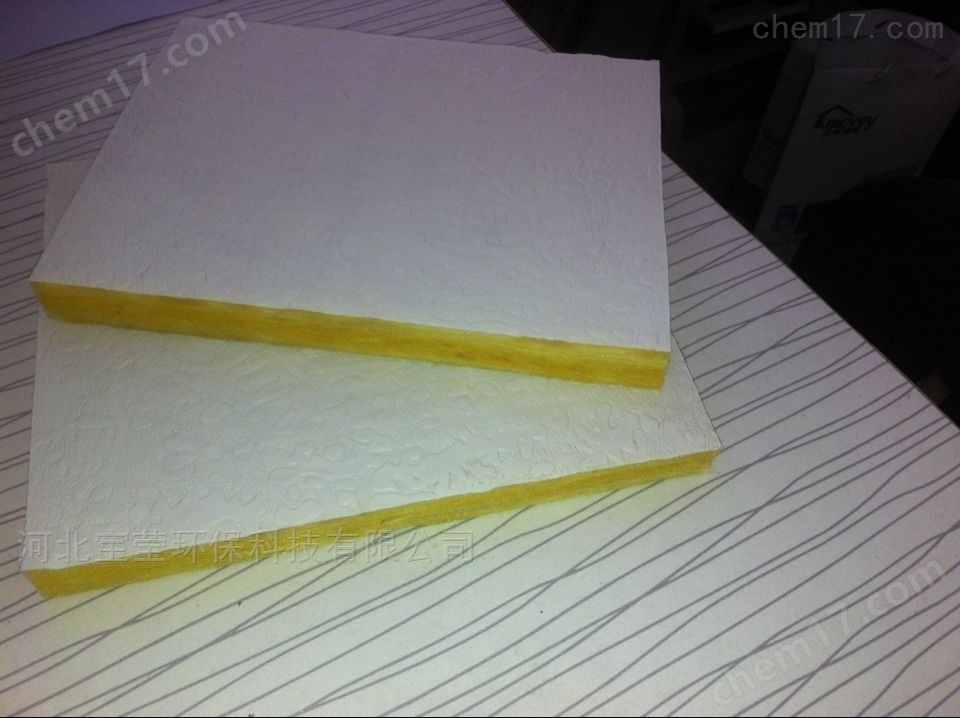


Saint Gobain Esserville non-woven fabric veneer glass wool board
Similar Product Recommend