- Phone
-
Address
Building 20, No. 1-42, Lane 83, Hongxiang North Road, Pudong New Area, Shanghai
Product Categories
Shanghai Jingge Industrial Control Equipment Co., Ltd


SCHMALZ vacuum product SGN 6.3 NBR-55 M5-AG
NegotiableUpdate on 05/19
- Model
- Nature of the Manufacturer
- Producers
- Product Category
- Place of Origin
Overview
Schmitz has always adhered to the development philosophy of customer-oriented, constantly breaking through innovation, pursuing quality, and cultivating comprehensive consulting capabilities. It has now become a market enterprise in the fields of vacuum automation and ergonomic handling solutions. With innovative products, working conditions, and sustainable use of resources, $r $n can provide extraordinary solutions. This family owned enterprise is a supplier in the field of vacuum technology. SCHMALZ vacuum product SGN 6.3 NBR-55 M5-AG
Product Details
A high-quality service provider for imported industrial products and maintenance spare parts from Germany.
SCHMALZ vacuum product SGN 6.3 NBR-55 M5-AG SCHMALZ vacuum product SGN 6.3 NBR-55 M5-AG
Shanghai Jingge Industrial Control Equipment Co., Ltd. Decades of industry experience, quick quotation response. A phone call can quickly get a quote from a German manufacturer. Foreign first-hand sources of goods. New customers have professional sales consultants to answer your questions. Come and inquire about the price quickly.
We can solve your urgent delivery issue and assist you with the technical problem of production stoppage and replacement. Leave professional matters to Jingge.
| 10.01.01.00606 PFG 60 VU1-72 N011 |
| 10.01.01.00792 SGPN 35 NK-40 G1/4-IG |
| 10.01.01.00793 SGPN 35 NK-40 G1/4-AG |
| 10.01.01.00794 SGPN 40 NK-40 G1/4-IG |
| 10.01.01.00795 SGPN 40 NK-40 G1/4-AG |
| 10.01.01.00811 SGAN 16 PU-60 G1/8-IG |
| 10.01.01.00812 SGAN 16 PU-60 G1/8-AG |
| 10.01.01.00813 Nipping n 028 M 5 -ig DN 200 |
| 10.01.01.00815 Nipping n 029 G 1 / 8 -ig DN 350 |
| 10.01.01.00816 SA-NIP N029 G1/8-AG DN350 |
| 10.01.01.01089 DR-SPU 210 NBR-55 |
| 10.01.01.01090 DR-SPU 210 SI-55 |
| 10.01.01.01092 SPU 210 NBR-55 G1/2-IG |
| 10.01.01.01093 SPU 210 SI-60 G1/2-IG |
| 10.01.01.01094 DR-SPU 250 NBR-55 |
| 10.01.01.01095 DR-SPU 250 SI-55 |
| 10.01.01.01097 SPU 250 NBR-55 G1/2-IG |
| 10.01.01.01098 SPU 250 SI-60 G1/2-IG |
| 10.01.01.01099 DR-SPU 125 NBR-55 |
| 10.01.01.01100 DR-SPU 125 SI-55 |
| 10.01.01.01101 In-sche 80 x 14 g 1 / 4 -ig SPU |
| 10.01.01.01102 SPU 125 NBR-55 G1/4-IG |
| 10.01.01.01103 SPU 125 SI-60 G1/4-IG |
| 10.01.01.01104 DR-SPU 100 NBR-55 |
| 10.01.01.01105 DR-SPU 100 SI-55 |
| 10.01.01.01107 SPU 100 NBR-55 G1/4-IG |
| 10.01.01.01108 SPU 100 SI-60 G1/4-IG |
| 10.01.01.01109 REIB-SCHE 132x5 NBR-70 FLSA |
| 10.01.01.01144 SPK 250 2K-MOS CR-20/60 G1/2-IG |
| 10.01.01.01149 SPU 210 NBR-55 G1/2-IG TV |
| 10.01.01.01150 SPU 210 SI-60 G1/2-IG TV |
| 10.01.01.01151 SPU 210 NBR-55 G1/2-IG AE |
| 10.01.01.01152 SPU 210 SI-60 G1/2-IG AE |
| 10.01.01.01153 SPU 160 NBR-55 G1/2-IG TV |
| 10.01.05.00437 SGO 24x8 HT1-60 N022 |
| 10.01.05.00438 SGO 30x10 HT1-60 N022 |
| 10.01.05.00439 SGO 45x15 HT1-60 N023 |
| 10.01.05.00440 SGO 60x20 HT1-60 N023 |
| 10.01.05.00441 SGO 75x25 HT1-60 N023 |
| 10.01.05.00486 SAOF 120x60 NBR-60 G1/4-AG |
| 10.01.05.00487 SPLO 200x55 NBR-55 G1/2-IG |
| 10.01.05.00511 SAOF 50x16 NBR-60 G1/4-IG |
| 10.01.05.00515 SAOF 50x16 NBR-60 RA |
| 10.01.05.00518 SAOF 50x16 NBR-60 G3/8-IG |
| 10.01.05.00521 SAOF 50x16 NBR-60 G1/4-AG |
| 10.01.05.00524 SAOF 50x16 NBR-60 G3/8-AG |
| 10.01.05.00527 SAOF 50x16 NBR-60 M10-AG |
| 10.01.05.00530 SAOF 50x16 NBR-60 M14x1.5-AG |
| 10.01.05.00539 SAOF 60x23 NBR-45 G1/8-IG |
| 10.01.06.00990 FSG 42 HT1-60 G1/4-IG |
| 10.01.06.00994 SAB 40 NBR-60 M10-AG |
| 10.01.06.00996 SAB 50 NBR-60 M10-AG |
| 10.01.06.00998 SAB 60 NBR-60 M10-AG |
| 10.01.06.01000 SAB 80 NBR-60 M10-AG |
| 10.01.06.01002 SAB 100 NBR-60 M10-AG |
| 10.01.06.01004 SAB 125 NBR-60 M10-AG |
| 10.01.06.01006 SAB 40 NBR-60 M14x1.5-AG |
| 10.01.06.01008 SAB 50 NBR-60 M14x1.5-AG |
| 10.01.06.01010 SAB 60 NBR-60 M14x1.5-AG |
| 10.01.06.01012 SAB 80 NBR-60 M14x1.5-AG |
| 10.01.06.01014 SAB 100 NBR-60 M14x1.5-AG |
| 10.01.06.01016 SAB 125 NBR-60 M14x1.5-AG |
| 10.01.06.01024 SAOB 60x30 NBR-60 M10-AG |
| 10.01.06.01026 SAOB 80x40 NBR-60 M10-AG |
| 10.01.06.01028 SAOB 110x55 NBR-60 M10-AG |
| 10.01.06.01030 SAOB 140x70 NBR-60 M10-AG |
| 10.01.06.01032 SAOB 60x30 NBR-60 M14x1.5-AG |
| 10.01.06.01034 SAOB 80x40 NBR-60 M14x1.5-AG |
| 10.01.06.01036 SAOB 110x55 NBR-60 M14x1.5-AG |
| 10.01.06.01038 SAOB 140x70 NBR-60 M14x1.5-AG |
| 10.01.06.01054 SAB 40 NBR-60 RA |
| 10.01.06.01055 SAB 50 NBR-60 RA |
| 10.01.06.01056 SAB 60 NBR-60 RA |
| 10.01.06.01057 SAB 80 NBR-60 RA |
| 10.01.06.01058 SAB 100 NBR-60 RA |
| 10.01.06.01059 SAB 125 NBR-60 RA |
| 10.01.06.01061 SAOB 80x40 NBR-60 G1/4-AG SO |
| 10.01.06.01062 SAOB 110x55 NBR-60 G1/4-AG |
| 10.01.06.01952 SAOB 80x40 NBR-60 G1/8-IG SO |
| 10.01.06.01959 SA-NIP N019 G1/4-AG DN820 |
| 10.01.06.01960 Nipping n 019 G 1 / 4 -ig DN 820 |
| 10.01.06.01961 SAB 100 NBR-60 G3/8-AG |
| 10.01.06.01962 SAB 80 NBR-60 G3/8-AG |
| 10.01.06.01963 SAB 60 NBR-60 G3/8-AG |
| 10.01.06.01964 SAB 50 NBR-60 G3/8-AG |
| 10.01.06.01965 SAB 40 NBR-60 G3/8-AG |
| 10.01.06.01966 SAOB 60x30 NBR-60 G3/8-AG |
| 10.01.06.01967 SAOB 80x40 NBR-60 G3/8-AG |
| 10.01.06.01968 SAOB 110x55 NBR-60 G3/8-AG |
| 10.01.06.01975 FGA 19 PVC-50 N056 |
| 10.01.06.01982 SAB 30 NBR-60 G3/8-AG |
| 10.01.06.02249 SA-NIP N058 G1/8-AG DN500 |
| 10.01.06.02262 DR 51/35x5 S05 KE |
| 10.01.06.02419 SAB 22 HT2-65 G1/4-IG |
| 10.01.06.02420 SAB 22 HT2-65 G1/4-AG |
| 10.01.06.02421 SAB 22 HT2-65 G3/8-IG |
| 10.01.06.02423 SAB 30 HT2-65 G1/4-IG |
| 10.01.06.02424 SAB 30 HT2-65 G1/4-AG |
| 10.01.06.02425 SAB 30 HT2-65 G3/8-IG |
| 10.01.06.02427 SAB 40 HT2-65 G1/4-IG |
| 10.01.06.02428 SAB 40 HT2-65 G1/4-AG |
| 10.01.06.02429 SAB 40 HT2-65 G3/8-IG |
| 10.01.06.02431 SAB 50 HT2-65 G1/4-IG |
| 10.01.06.02432 SAB 50 HT2-65 G1/4-AG |
| 10.01.06.02433 SAB 50 HT2-65 G3/8-IG |
| 10.01.06.02435 SAB 60 HT2-65 G1/4-IG |
| 10.01.06.02436 SAB 60 HT2-65 G1/4-AG |
| 10.01.06.02437 SAB 60 HT2-65 G3/8-IG |
| 10.01.06.02441 SAOB 60x30 HT2-65 G3/8-IG |
| 10.01.06.02442 SAOB 60x30 HT2-65 G1/4-IG |
| 10.01.06.02443 SAOB 60x30 HT2-65 G1/4-AG |
| 10.01.06.02445 SAOB 80x40 HT2-65 G3/8-IG In 2017, ABB's revenue is expected to be 3.6 billion euros, an increase of approximately 7% compared to the same period last year. The revenue of the robot sector is about 820 million euros, and the sales of robots in the Chinese market are about 210 million euros, accounting for about 25% of ABB's robot sales. Since the second half of 2017, ABB's senior management has repeatedly expressed in public that they attach great importance to the Chinese robot market, especially the development of the robot market in Shanghai and Guangdong regions; Meanwhile, ABB executives have also stated that they will focus more on the field of new energy vehicles. From the exhibition at the November 2017 Industrial Fair, it can be seen that ABB's robot business will focus more on small robots suitable for the 3C industry, while relying on motion control technology and ABB ABBILITY digital solutions to better integrate robot products with overall automation solutions, improving productivity, energy efficiency, and safety for industrial enterprises. By establishing strategic partnerships with Kawasaki and IBM in collaborative robotics and artificial intelligence respectively, ABB can be seen as intending to accelerate the process of robot intelligence. ABB summarized in its Q3 2017 financial report that 2017 was a transitional year for ABB, and it is expected that 2018 will continue to maintain a relatively stable scale in the robotics business. GGII believes that based on ABB's recent actions, ABB is still laying out its digital solution ABB Abbility, attempting to drive sales of industrial robots in industrial automation with a holistic solution. At the same time, we will pay attention to the Chinese 3C and new energy vehicle markets and launch new products. Taking into account the above factors, GGII predicts that ABB's robot business will maintain a stable and upward trend in 2018, with an expected scale of 900 million euros, of which the Chinese robot business will reach 260 million euros, accounting for about 10% of the Chinese robot market size. Yaskawa: New Opportunities in the 3C and New Energy Vehicle Fields In 2017, Yaskawa's revenue was approximately 45 billion yen, an increase from the same period last yearAbout 20%. The revenue of the robotics sector is about 15.8 billion yen, accounting for 35% of the overall sales, with overseas markets accounting for about 80% and China * accounting for over 25%, with sales of about 4 billion yen. Due to better than expected performance in the first half of the 2017 fiscal year, Yaskawa has raised its original revenue plan for the 2017 fiscal year from 44.5 billion yen to 46.6 billion yen, while the revenue target for the 2018 fiscal year remains at the original level (45 billion yen). According to Yaskawa's financial report, the demand for automation in Chinese 3C factories has surged, driving the sales growth of robots in China; In the automotive industry, Yaskawa stated that due to the growth in sales of welding and spraying robots in overseas markets, there was a significant increase in robot sales in the automotive sector in the third quarter of fiscal year 2017. Yaskawa stated that they have plans to focus on the market for new Chinese automotive products, mainly electric vehicles, and have found that this market has begun to have an impact on sales growth. In addition, Yaskawa will establish a factory in Jiangsu Province in the second half of 2018, and the robot production capacity will increase from the current 1200 units to 1500 units. The dividends of automation and intelligence demand in Chinese factories will continue in 2018, and Yaskawa Robotics is expected to find opportunities in the fields of 3C and new energy vehicles. In addition, Yaskawa's expansion of production in Jiangsu is expected to be completed in September, which will also help increase Yaskawa's sales in the Chinese robotics market. Taking into account the above factors, GGII predicts that the revenue share of Yaskawa Robotics in the China region will increase to around 27% in 2018, with robot sales in the Chinese market reaching approximately 4.5 billion yen. KUKA: The Chinese market presents a fairly optimistic market demand KUKA's expected revenue for 2017 is 3.5 billion euros, an increase of approximately 27% compared to the same period last year. The revenue of the robotics sector is about 1.2 billion euros, accounting for 38% of the overall sales, with China * accounting for about 20% and sales of about 600 million euros. In the field of robot applications, the proportion of applications in the automotive sector decreased from 46.4% in 2016 to 35.4%, while the proportion of applications in other industrial sectors increased from 36.6% to 45.3%, and the proportion in the service sector increased from 17.0% to 19.3%. Compared with the development of KUKA's robot business in various regions, the Chinese market presents a fairly optimistic market demand. Tim Reuter, Chairman of KUKA, stated that the company plans to achieve an annual revenue of 1 billion euros in the Chinese market by 2020; On the contrary, the revenue scale of the European market remains relatively stable. In 2018, KUKA established a new production base in Shanghai and is expected to start production in the first quarter of 2018, doubling its output. In addition, KUKA plans to build a robot engineering center in Shunde to support its business in the southern region of China. Midea's acquisition of KUKA, coupled with KUKA's upcoming expansion in Shanghai in the first quarter and official entry into the Shunde Engineering Center, is expected to accelerate its expansion speed in the Chinese market, especially in southern China. Taking into account the above factors, GGII predicts that the scale of KUKA's robot business will reach 1.65 billion euros in 2018, of which the scale of China's robot business will reach 330 million euros, accounting for about 14% of the Chinese robot market size. FANUC: Gradually getting rid of dependence on Apple FANUC recently announced that its consolidated net profit for the 2017 fiscal year (ending March 2018) is expected to increase by 41% year-on-year, reaching 180.2 billion yen. The previous expectation was 164.9 billion yen. This is the third time this fiscal year that expectations have been raised. In addition, FANUC disclosed its individual sales revenue in China, which was 54.9 billion yen from October to December 2017, an increase of 2.4 times year-on-year, significantly exceeding the overall growth rate. The net profit after the adjustment is lower than the 207.6 billion yen in the 2014 fiscal year (as of March 2015), ranking second in history. Due to the demand brought by the large-scale production of Apple phones in 2014, small cutting machines for cutting metal casings of smartphones have grown rapidly. Including these businesses, FANUC's Robotics and Machinery division accounted for 40% of the overall sales in the 2014 fiscal year, but currently it has dropped to around 20%. Due to the favorable factors brought by "Made in China 2025", FANUC has seized the demand for automation in China's manufacturing industry, with significant growth in its robot and control equipment businesses, and is gradually getting rid of its dependence on Apple in the United States. FANUC increased its efforts to explore downstream markets in the 3C field in 2017, gradually breaking away from its dependence on demand from Apple and its corresponding component/device manufacturers. At the same time, it stopped the decline in revenue scale in recent years against the backdrop of a significant increase in demand in the Chinese market. However, the insufficient supply of components and the long supply period caused by the absence of production bases in China will to some extent limit its performance in 2018. GGII predicts that FANUC's robot business scale is expected to reach 150 billion yen in 2018, of which the business scale in the Chinese robot market will reach 45 billion yen, accounting for about 13% of China's robot market. Bus Suspension System: From the Past to the Present For most people, the air spring, which is responsible for providing a smooth and safe riding experience for bus passengers, is just a hidden hero behind the scenes. For decades, commercial vehicle manufacturers have replaced traditional steel plate springs with air springs made of rubber and curtain fabric in the chassis, cab, and driver's seat. The reason is simple: in addition to maintaining reliability under temperature or high humidity, air springs can also maintain a constant natural frequency while adapting to constantly changing loads. As for urban buses, this means that whether operating at peak hours or carrying only a few passengers at night, the vehicle can always maintain a good level of comfort and safety. Therefore, nowadays all buses in Europe and most buses in cities around the world (including internal combustion engine driven and electric driven) are equipped with adaptive air spring systems. However, this does not mean that engineers will not face additional challenges when designing air springs for electric vehicles. Although the basic physical principles remain unchanged, engineers need to consider not only the basic requirements, but also the corresponding needs of the host factory and other factors. Firstly, electric buses are usually heavier than diesel powered buses in the past. Each battery pack can weigh up to 450 kilograms, resulting in a weight gain of 3 tons or even more for the entire vehicle - depending on factors such as the size, design range, and model of the electric bus. The second factor is the location of the battery pack. The battery pack in electric passenger cars is usually installed under the passenger compartment, whereas for practical reasons, the battery pack in buses is installed on the roof of the car. Firstly, the fewer powertrain components (including battery packs) located below the passenger compartment, the closer the floor is to the ground, thereby improving the convenience of getting on and off the vehicle. Secondly, the increased space allows manufacturers to design car interiors more flexibly, such as adding larger windows. Thirdly, temperature management at the top of the bus makes it easier to dissipate the heat generated by the battery pack - rapid heat dissipation is crucial as the battery operates efficiently between 20 and 40 degrees Celsius.
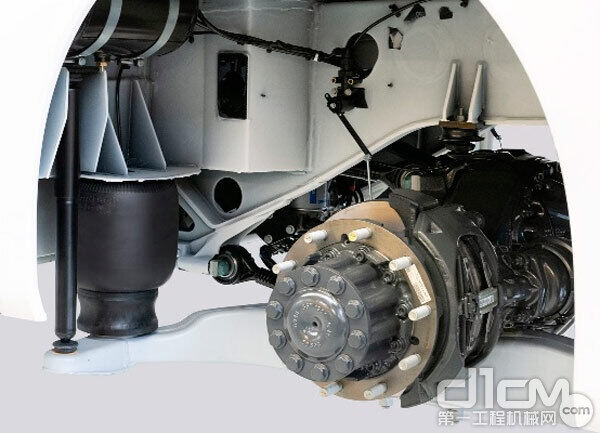
Continental Group's expertise in design, materials, and production helps develop innovative components to meet the needs of electric transportation development The challenges faced by engineers The top position of the bus poses additional challenges to its stability and statics, and will also affect overall safety and passenger comfort. The additional weight at the top raises the center of gravity of the bus to a higher height, resulting in increased forces during roll and pitch movements. The chassis suspension air spring must counteract greater force to ensure stability of the bus during turns or braking. In order to provide heavier loads, electric buses and other commercial vehicles must be equipped with larger air springs: for every millimeter increase in the diameter of the air spring, the spring stiffness will correspondingly increase to withstand the force generated by electric buses during the adjustment of weight distribution. However, the increase in size also means that air springs require more space - another challenge faced by engineers. Especially if manufacturers decide to equip electric vehicles with wheel hub motors, the space around the wheels will be even more limited. Here, air springs must compete with brakes, steering systems, and other components for narrow spaces. Professional engineers have rich experience and profound professional knowledge in technology and material development, and can provide customized solutions for each manufacturer to fully meet the specific needs of the host factory. Material expertise in rubber and other fields Material expertise plays an important role in the development process of air springs. The skin of the rubber airbag is made of a high-performance rubber material based on natural rubber or synthetic rubber and a double-layer curtain fabric. This structure makes the skin both flexible and wear-resistant, while not being afraid of harsh environments such as high concentrations of ozone and temperature.
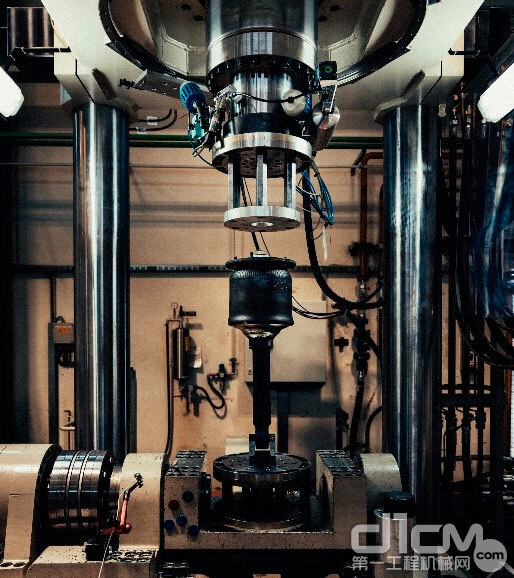
Comfort, safety, durability: The air springs of electric vehicles must meet the same high standards as similar products in internal combustion engine vehicles In addition, material knowledge largely determines the actual effectiveness of lightweight structures and design layouts, and is crucial for improving energy efficiency and reducing carbon dioxide emissions. Therefore, Continental Group has developed a lightweight air spring equipped with a full additional chamber, and the piston of this product is made of glass fiber reinforced polyamide, replacing traditional steel and aluminum materials. Thermoplastic engineering plastics provide * design freedom, allowing researchers to design customized comfortable air springs. Especially in the field of electric transportation, lightweight is a key advantage because lightweight air springs can offset the additional load generated by the battery pack, thereby extending the vehicle's range. The result is pleasing: In city buses and coaches equipped with this lightweight air spring, each air spring module can reduce weight by up to 3 kilograms, and the actual weight reduction depends on the type of axle on the bus. The various components developed by Continental Group help urban transportation move towards a more sustainable future, and lightweight air springs are one example. At present, over 500000 electric buses have been put into use, and this number is still increasing year by year. In the future, products from Continental Group will play an increasingly important role. |
Similar Product Recommend
