- Phone
-
Address
Building 6, Optics Valley Electromechanical Industrial Park, No. 84 Gaoxin 5th Road, Donghu New Technology Development Zone, Wuhan City, Hubei Province
Product Categories
Wuhan Ultra High Voltage Power Technology Co., Ltd


Power frequency series resonant boost device
NegotiableUpdate on 05/06
- Model
- Nature of the Manufacturer
- Producers
- Product Category
- Place of Origin
Overview
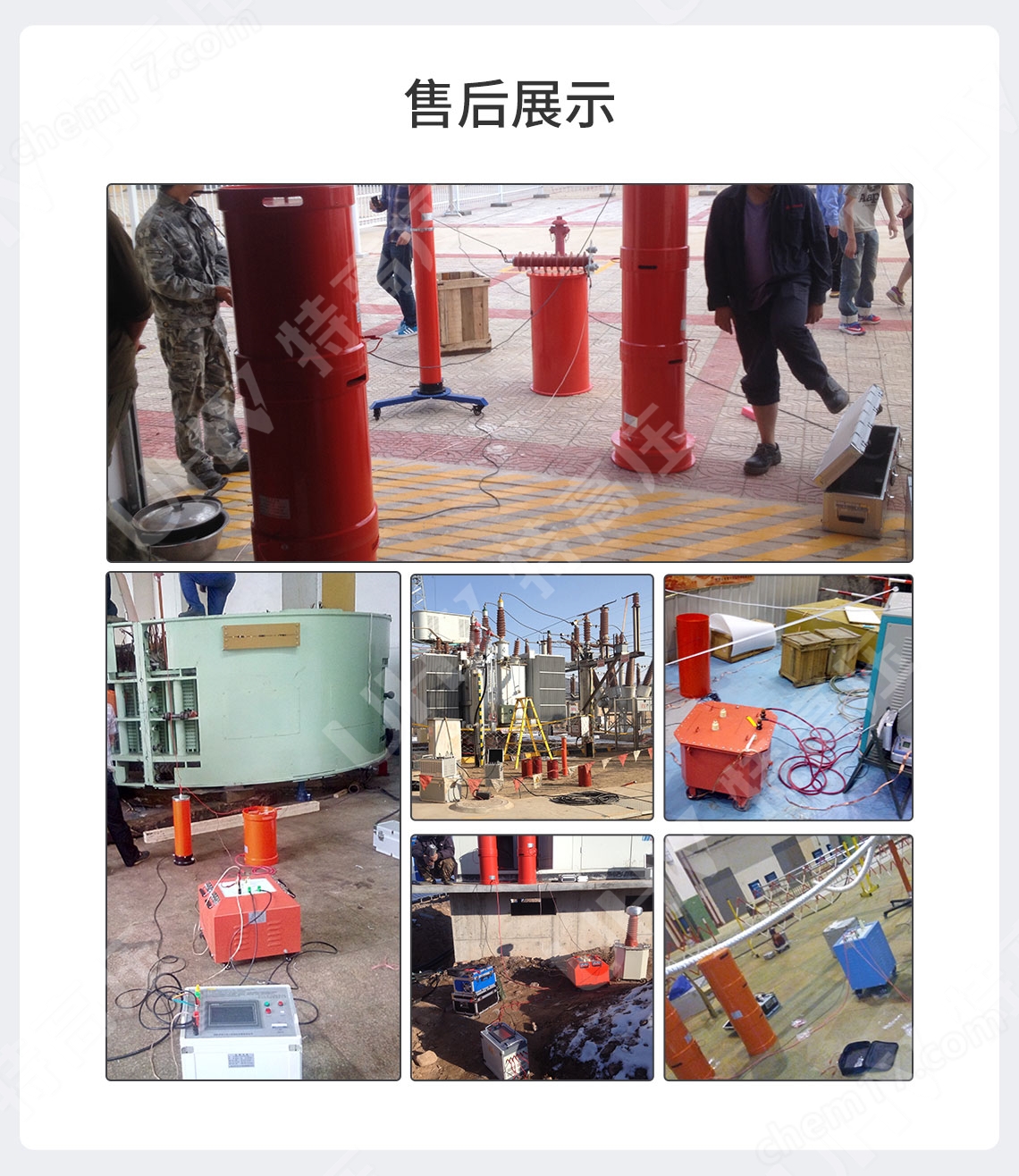
The core of the power frequency series resonant boosting device consists of four parts: variable frequency power supply, excitation transformer, high-voltage reactor, and capacitive voltage divider. Its working principle is based on LC series resonance: when the inductance (XL) of the reactor is equal to the capacitance (XC) of the test object, the circuit resonates, and the circuit impedance is small. Only a small excitation current is needed to generate several times or even tens of times higher voltage on the test object. Due to the cyclic exchange of energy between inductors and capacitors, the power supply only needs to provide circuit loss power. Therefore, the entire device has significant advantages such as small size, light weight, low power consumption, and good output waveform.
Product Details
In the construction and operation of power systems, high-voltage electrical equipment such as cross-linked polyethylene (XLPE) cables, GIS composite appliances, transformers, and generator stator windings are subjected toPower frequency withstand voltage testIt is a key link in verifying its insulation performance and operational reliability. Traditional testing methods often use conventional test transformers, but when facing long-distance cables or large capacity equipment, the required power capacity is large, the equipment is bulky, energy consumption is high, and on-site deployment is difficult. To solve this problem,Power frequency series resonant boost deviceemerge as the times require. It utilizes the principle of resonance to achieve efficient boosting at power frequency (50Hz or 60Hz) and has become the mainstream technical equipment in the field of modern high-voltage testing.
The core of the power frequency series resonant boost device consists ofVariable frequency power supply, excitation transformer, high-voltage reactor, and capacitive voltage dividerComposed of four parts. Its working principle is based on LC series resonance: when the inductance (XL) of the reactor is equal to the capacitance (XC) of the test object, the circuit resonates, and the circuit impedance is small. Only a small excitation current is needed to generate several times or even tens of times higher voltage on the test object. Due to the cyclic exchange of energy between inductors and capacitors, the power supply only needs to provide circuit loss power, so the entire device hasSmall size, light weight, low power consumption, good output waveformSignificant advantages.
The device mainly has the following technical characteristics and application value:
- Strictly comply with the power frequency test standardsThe output frequency is adjustable within the range, meeting the requirements of "near power frequency" AC withstand voltage for cables and other equipment according to standards, and avoiding potential damage to XLPE cable insulation caused by DC withstand voltage;
- Adapt to large capacitive loadsSpecially suitable for long-distance high-voltage cables, large generators, GIS and other high capacitance test samples, a single device can be flexibly configured through series and parallel connection of reactors, covering a capacitance range of tens to thousands of nanofarads;
- High efficiency and low input powerCompared to traditional test transformers, the input power capacity can be reduced to 1/10 or even lower. A regular 380V industrial power supply can drive hundreds of kilovolts of output, greatly reducing the requirements for on-site power supply conditions;
- Multiple protection mechanismsEquipped with automatic protection functions such as overvoltage, overcurrent, detuning, flashover, and overheating, once insulation breakdown occurs and resonance conditions are destroyed, the current rapidly decreases, effectively limiting the fault energy and ensuring the safety of equipment and personnel;
- Intelligent operationEquipped with a touch screen human-machine interface, it supports automatic tuning, boosting, timing, and full process control of voltage reduction, real-time display of parameters such as voltage, current, frequency, and Q value, and can generate standard test reports.
In practical engineering, power frequency series resonant devices are widely used in:
- New cable line handover testVerify the insulation integrity after installation;
- Substation expansion or renovationPerform overall withstand voltage testing on GIS, circuit breakers, and transformers;
- During the major overhaul period of the power plantConduct preventive tests on the stator winding of the generator;
- Rail Transit and Wind Power ProjectsConduct on-site testing on long-distance power collection lines.


Similar Product Recommend


