- Phone
-
Address
Room E/F, 5th Floor, No. 1 Lane 1006 Jinshajiang Road, Putuo District, Shanghai
Product Categories
Shanghai Neway Electronic Technology Co., Ltd
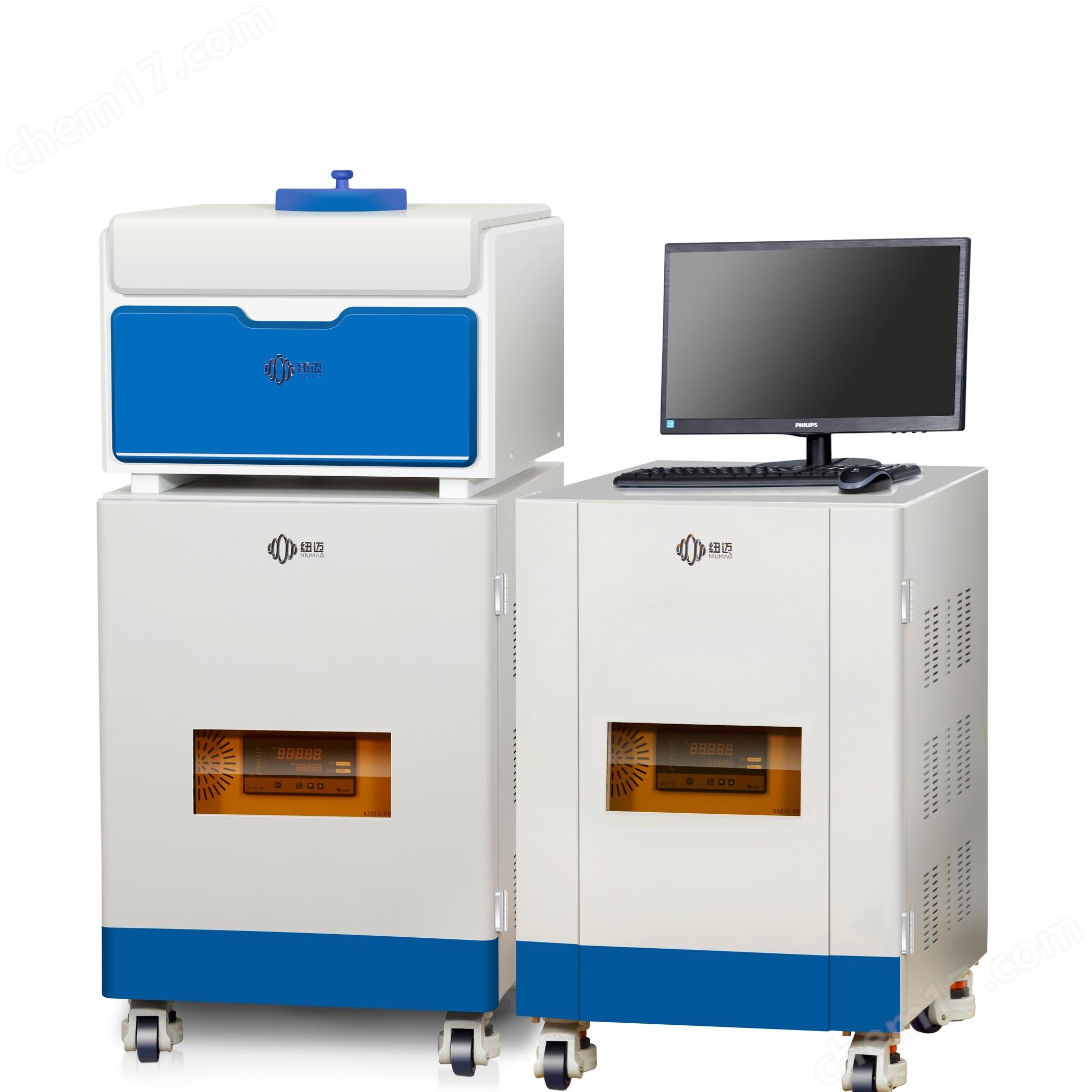
Polybenzoxazine vitrimer crosslinking degree tester
NegotiableUpdate on 07/07
- Model
- Nature of the Manufacturer
- Producers
- Product Category
- Place of Origin
Overview
Polybenzoxazine vitrimer cross-linking tester, integrating multiple functions. This device not only accurately measures T ₁ and T ₂ relaxation times, but also integrates magnetic resonance imaging technology to visually present the uniformity of the cross-linked network distribution inside the sample. In response to the problem of short relaxation and weak signal generated by polybenzoxazine materials in the early stage of curing or highly cross-linked state, the equipment is specially equipped with FLAT (Fast Low Signal Acquisition Technology) module to ensure the sensitivity and accuracy of data acquisition.
Product Details
In the field of high-performance thermosetting material research and development, polybenzoxazine has attracted much attention due to its outstanding thermal stability, low moisture absorption, and excellent dielectric properties. When it introduces dynamic covalent bonds to convert into vitrimer (glass body), the material not only maintains the properties of traditional phenolic resin, but also endows it with self-healing and reprocessing functions. However, the core property of Vitrimer material, crosslinking density, directly determines its mechanical strength, thermal stability, and processability. Traditional crosslinking degree testing methods (such as swelling method, DSC method) often take time, damage the sample, and have limited accuracy. The introduction of low field nuclear magnetic resonance technology (LF-NMR) has completely overturned this testing bottleneck.

The bottleneck of traditional testing methods
Before the popularization of low field nuclear magnetic resonance technology, researchers mainly relied on solvent swelling methods or dynamic thermomechanical analysis. The solvent swelling method requires soaking the sample in a solvent for a long time until equilibrium is reached, and the testing period can last for several hours or even days. Additionally, the solvent may disrupt the dynamic covalent bond equilibrium in Vitrimer, resulting in biased results. Although dynamic thermomechanical analysis can calculate crosslink density through modulus, this method is extremely sensitive to temperature, and Vitrimer's dynamic bonds undergo topological rearrangement at high temperatures, making data analysis exceptionally complex. The low efficiency and destructiveness of traditional methods can no longer meet the urgent demand for fast and non-destructive testing in modern material research and development.
Low field nuclear magnetic resonance technology: principles and core advantages
The core principle of low field nuclear magnetic resonance technology is based on the phenomenon of nuclear magnetic resonance (NMR), especially the detection of the magnetization and relaxation behavior of hydrogen atomic nuclei (protons). Under the action of an external constant magnetic field, protons in the sample absorb radio frequency pulse energy at a specific frequency and resonate. After the RF pulse ends, protons release energy back to their ground state, a process known as "relaxation". The relaxation time (T2) of protons in different chemical environments varies significantly.
In cross-linked polymer networks, regions with high cross-linking degree indicate restricted molecular chain movement and shorter proton relaxation time; In areas without cross-linking or with low cross-linking degree, the degree of freedom of proton movement is high and the relaxation time is relatively long. By analyzing the relaxation decay curve (such as CPMG sequence), these two states can be accurately distinguished, thereby quantifying the crosslinking density.
Compared to traditional methods, low field nuclear magnetic resonance technology has the following revolutionary advantages:
Non destructive and fast: No solvent extraction or sample destruction is required, and the entire testing process only takes a few minutes, greatly shortening the research and development cycle.
Accuracy and objectivity: Directly measuring the microscopic motion state inside molecules, avoiding subjective errors caused by manual operations, and ensuring data reproducibilityExtremely high.
Process monitoring capability: It can achieve in-situ and real-time monitoring of crosslinking kinetics during material solidification or reshaping processes, providing scientific basis for process optimization.
Polybenzoxazine vitrimer crosslinking degree testerIntegrating multiple functions into one. This device not only accurately measures T ₁ and T ₂ relaxation times, but also integrates magnetic resonance imaging technology to visually present the uniformity of the cross-linked network distribution inside the sample. In response to the problem of short relaxation and weak signal generated by polybenzoxazine materials in the early stage of curing or highly cross-linked state, the equipment is specially equipped with FLAT (Fast Low Signal Acquisition Technology) module to ensure the sensitivity and accuracy of data acquisition.
Its core advantage lies in the combination of precision sample online temperature control modules. Researchers can track the complete cross-linking process of polybenzoxazine from liquid resin to solid Vitrimer network in real-time under programmed temperature control conditions, and observe the rearrangement behavior of dynamic bonds at different temperatures. This online temperature analysis capability makes the equipment particularly suitable for online experimental research such as process monitoring, process optimization, formulation research, and aging and curing evaluation.

Basic Parameters
Product models: VTMR20-010V, VTMR20-010V-I
Magnet type: permanent magnet
Magnetic field strength: 0.50T ± 0.03T
Sample temperature control range: from room temperature to 130 ℃ (standard)
High end variable temperature module: -100 ℃ to 200 ℃ (optional)
Imaging function (optional)
Product Features
Complete the test in 2 minutes with high sensitivity;
Online, non-destructive, and fast technology;
No reagents required, experiments can be repeated;
Analysis of rubber, elastomers, and inorganic materials.
Product Application
1. Quantitative testing
·Cross link density, adhesive content
·Soft hard segment ratio
·Fluorine content test
2. Performance evaluation
·Research on Particle Dispersion and Stability
·Competitive adsorption performance evaluation
·Characterization of hydrophilicity and hydrophobicity
3. Magnetic resonance imaging
·Research on the Uniformity of Rubber and Polymers
·Internal structural defect detection
4. Customizable for different temperatures, etc
·Online detection of vulcanization, curing, and aging processes of elastic materials
·Evaluate the interaction process between materials and liquids
Use Cases:

Pre sales service: in-depth experience, precise selection
Neway has a professional customer experience center and welcomes customers to visit the site in person,Zero distanceContact and operate equipment to intuitively feel its performance and usability. Through on-site experience, combined withDeep CapitalProfessional explanations from consultants help clients accurately evaluate whether the equipment meets their application needs.
After sales support: fast response, professional guarantee
Quick response mechanism: We promise to respond within 4 hours and provide a solution within 8 hours. If remote solutions are not possible, engineers will arrive within 24 hours in provincial capitals and 72 hours in remote areas, including holidays. Ensure that users receive timely and effective handling when encountering problems,The largestMinimize the impact of equipment downtime.
Professional team configuration: We have a highly educated service team of nearly 20 people, with master's degrees accounting for over 60%. We have a strong technical foundation and customized service capabilities to ensure that complex problems are solved professionally and efficiently.
Multiple communication channels: support telephone QQ、 WeChat and other various methods provide convenient and flexible communication, and can respond to customer needs at any time.
User training empowerment: Neway has established a normalized training system. In addition to holding regular application training courses, it also provides flexible online and offline daily training. Users can obtain software and hardware training videos anytime and anywhere through "Newmark Analysis", "Newmark Service" WeChat official account and "Nuclear Magnetic Research Energy Station" applet, and continuously improve operating skills and application level,MaximizationEquipment value.
Proactive service culture: Adhering to the concept of "achieving customer success and taking responsibility", engineers actively follow up, proactively solve problems, help customers reduce unnecessary repair processes, and save time and energy. And continuously optimize service processes based on customer feedback, growing together with customers.
Device QR code identification: Each device is equipped with a QR code identification, and customers can quickly obtain online support entry by scanning the code, greatly improving service response efficiency and convenience.
Full dimensional service centers cover the whole country: Neway has 7 full dimensional service centers located in Shanghai, Suzhou, Chengdu, Guangzhou, Zhengzhou, Beijing, and Taiyuan, covering all regions of China, ensuring that service resources can quickly reach customers across the country.
Similar Product Recommend


